Loss of Pulse Detection vs Impala

AI Verdict
Choose Loss of Pulse Detection if…
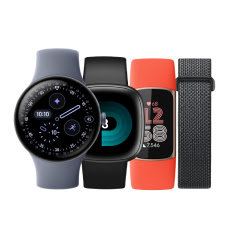
Choose Fitbit's Loss of Pulse Detection if you are an individual seeking a personal safety net that can automatically alert emergency services in the event of a potential loss of pulse and unresponsiveness. This feature is ideal for those who desire continuous, passive monitoring through their compatible wearable device for critical cardiac events, providing peace of mind and rapid assistance when incapacitated.
View Loss of Pulse Detection →Choose Impala if…
Choose AliveCor's Impala if you are a healthcare professional requiring a portable, AI-powered 12-Lead ECG device for rapid and accurate cardiac assessment in clinical or emergency settings. This tool is best suited for quickly acquiring diagnostic-quality ECGs with a reduced leadset, enabling swift detection of life-threatening cardiac conditions like heart attacks to inform immediate treatment decisions.
View Impala →Reviewed by Pouyan Golshani, MD — Interventional Radiologist
Quick Comparison
| Feature | Loss of Pulse Detection | Impala |
|---|---|---|
| Pricing | Unknown | Contact for pricing |
| Deployment | Unknown | Portable device, integrated with mobile applications/platforms. |
| BAA Available | Yes AI-estimated | Yes AI-estimated |
| FDA Status | Cleared AI-estimated | Cleared AI-estimated |
| HIPAA | Yes AI-estimated | Yes AI-estimated |
Head-to-Head
AI-generated assessment across six dimensions based on each tool's documented features and compliance posture. Grounded in public data — not a substitute for hands-on evaluation.
Usability
Loss of Pulse DetectionTool A is designed for passive, continuous monitoring by a general consumer, requiring minimal interaction once configured. Its automatic detection and alerts make it highly user-friendly for its target audience. Tool B requires active operation and placement of electrodes by a trained healthcare professional, making it less universally 'usable' in the consumer sense but appropriate for its clinical context.
Clinical Value
ImpalaTool B offers diagnostic-grade 12-Lead ECG data for healthcare professionals, enabling detailed assessment and detection of life-threatening cardiac conditions, including heart attacks. Its value lies in providing precise clinical information for professional diagnosis. While Tool A provides a critical safety net by detecting a potential loss of pulse and automatically alerting emergency services, Tool B offers a more comprehensive diagnostic capability for clinical decision-making.
Pricing & Value
Loss of Pulse DetectionTool A's feature is included with compatible devices, offering continuous, passive monitoring without additional subscription costs, providing clear and transparent value to the end-user. Tool B's pricing requires direct contact, indicating a professional-grade product with potentially higher upfront costs and opaque recurring fees, making its value proposition less transparent for comparison.
Enterprise Readiness
ImpalaTool B is explicitly designed for healthcare professionals and clinical workflows, making it suitable for deployment across various healthcare settings and integration with professional medical platforms. Tool A is primarily a consumer-focused feature on a wearable device, not designed for direct integration into hospital systems or large-scale clinical enterprise deployments.
Innovation
ImpalaTool B demonstrates significant innovation by providing a portable 12-Lead ECG that uses AI to derive a full diagnostic recording from a reduced lead set, significantly enhancing efficiency and accessibility of advanced cardiac diagnostics for professionals. Tool A innovates by leveraging consumer wearable technology for automatic, passive detection of a critical health event and automated emergency response, pushing the boundaries of personal safety tech, but Tool B's clinical diagnostic innovation is more impactful in a professional setting.
Support & Docs
ImpalaAs a professional medical device, Tool B is expected to offer dedicated clinical support, training, and comprehensive documentation tailored for healthcare professionals and clinical environments. Tool A, as a feature of a consumer device, would likely rely on general device support, which may not be specialized for critical medical applications.
Feature-by-Feature
Detail beyond the Quick Comparison summary. For pricing, deployment, BAA, FDA, and HIPAA see the Overview tab.
| Feature | Loss of Pulse Detection | Impala |
|---|---|---|
| Product Name | Loss of Pulse Detection | Impala |
| Company | Fitbit | AliveCor |
| Primary Use Case | Detects a potential loss of pulse and can automatically alert emergency services if the user is unresponsive. | Portable, AI-powered 12-Lead ECG device for healthcare professionals. |
| Key Detection Technology/Method | Utilizes PPG and accelerometry sensors for automatic loss of pulse detection. | Portable 12-Lead ECG acquisition; AI technology (KAIu2122 12L) for cardiac determinations; detects life-threatening cardiac conditions, including heart attacks. |
| Target User | User of compatible Fitbit/Pixel devices | Healthcare professionals |
| Emergency Response Feature | Automated emergency service calling if unresponsive; shares location with emergency services. | Not specified |
Videos
Demos, reviews, and walkthroughs featuring Loss of Pulse Detection and Impala.
Frequently Asked Questions
More Comparisons
More matchups featuring Loss of Pulse Detection or Impala
Backers
Who funded each tool's parent company.