OpenEvidence vs Rad AI Omni

AI Verdict
Choose OpenEvidence if…
Choose OpenEvidence if you are a U.S. healthcare professional seeking immediate, evidence-based answers to broad clinical questions across various specialties, and desire integrated tools for transcribing patient visits and auto-generating structured medical notes. This tool is ideal for point-of-care decision support and streamlining documentation workflows with transparent, referenced information from leading medical journals and guidelines.
View OpenEvidence →Choose Rad AI Omni if…
Choose Rad AI Omni if you are a radiologist looking to automate and optimize your reporting workflow, specifically for generating customized impressions and managing patient follow-up recommendations for incidental findings. This tool is best suited for enhancing efficiency, reducing burnout, and ensuring guideline adherence within a radiology-focused practice through its zero-click automation and error detection capabilities.
View Rad AI Omni →Reviewed by Pouyan Golshani, MD — Interventional Radiologist
Quick Comparison
| Feature | OpenEvidence | Rad AI Omni |
|---|---|---|
| Pricing | Free | Contact for pricing |
| Deployment | Cloud-based (web application) and mobile applications | Cloud-based |
Head-to-Head
AI-generated assessment across six dimensions based on each tool's documented features and compliance posture. Grounded in public data — not a substitute for hands-on evaluation.
Usability
OpenEvidenceOpenEvidence offers both web and mobile applications, making it highly accessible for physicians at the point of care. Its natural language question answering interface is designed for quick, referenced answers, and it has garnered positive feedback for its ease of use and ability to quickly synthesize information.
Clinical Value
OpenEvidenceOpenEvidence provides AI-powered clinical decision support with answers grounded in peer-reviewed medical literature from reputable sources like NEJM, JAMA, and Cochrane, reducing the risk of 'hallucinations' often seen in general LLMs. It also offers tools for clinical documentation and integrates with EHR systems like Epic, enhancing workflow. While Rad AI Omni significantly improves radiology reporting efficiency and accuracy, OpenEvidence's broader application across various medical specialties and its focus on evidence-based decision-making at the point of care give it a slight edge in overall clinical value.
Pricing & Value
OpenEvidenceOpenEvidence is free for verified U.S. healthcare professionals, making it highly accessible and offering significant value compared to traditional paid clinical reference tools. While it is ad-supported, this model allows for widespread adoption without direct cost to individual clinicians. Rad AI Omni operates on a custom enterprise pricing model, which, while potentially offering strong ROI for large organizations, lacks the immediate, free accessibility of OpenEvidence.
Enterprise Readiness
TieBoth tools demonstrate strong enterprise readiness. OpenEvidence offers enterprise pricing models for EHR integration and data insights, and it is embedded in Epic at Mount Sinai Health System. Rad AI Omni is designed for seamless integration into existing radiologist workflows, with a focus on enterprise deployments and a track record of widespread adoption across US health systems. Both are HIPAA compliant and cloud-based, indicating robust infrastructure for enterprise use.
Innovation
TieBoth tools showcase significant innovation in their respective domains. OpenEvidence innovates by providing real-time, referenced answers from a vast medical literature database and integrating documentation tools. Rad AI Omni leverages generative AI for zero-click automation of radiology reporting, including customized impressions and automated follow-up recommendations, which is a substantial innovation for radiology workflows. Both are pushing the boundaries of AI in healthcare, albeit in different areas.
Support & Docs
TieThe provided information does not offer specific details on the depth or accessibility of support and documentation for either OpenEvidence or Rad AI Omni. While both are established companies in the healthcare AI space, without explicit information on their support channels, user guides, or community forums, it is not possible to definitively pick a winner in this dimension.
Feature-by-Feature
Detail beyond the Quick Comparison summary. For pricing, deployment, BAA, FDA, and HIPAA see the Overview tab.
| Feature | OpenEvidence | Rad AI Omni |
|---|---|---|
| Name | OpenEvidence | Rad AI Omni |
| Company | OpenEvidence | Rad AI |
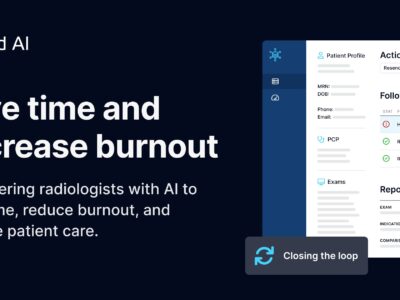
| Tagline | America's Official Medical Knowledge Platform | Empowering physicians with best-in-class AI radiology solutions to save time, reduce burnout, and improve patient care. |
| Categories | Clinical Decision Support & Reference, Documentation & Scribing | Clinical Decision Support & Reference, Documentation & Scribing, Radiology & Imaging AI |
| Specialties | Family Medicine, Hospital Medicine, Internal Medicine | Radiology |
| Key Features (Selection) | AI-powered natural language question answering for clinical queries, Answers grounded in peer-reviewed medical evidence (NEJM, JAMA, NCCN, Cochrane, PubMed), OpenEvidence Visits: transcribe patient visits and auto-generate structured medical notes | Rad AI Reporting: AI-powered platform for comprehensive and accurate report generation, Rad AI Impressions: Automated generation of customized radiology impressions, Rad AI Continuity: Automated management of patient follow-up recommendations for incidental findings |
| EHR Integration | Integrates with Electronic Health Record (EHR) systems like Epic | Seamless integration into existing radiologist workflows without additional steps. |
| Official Partnerships | Official AI Partner of The New England Journal of Medicine, JAMA, NCCN, and Cochrane | Not specified |
Videos
Demos, reviews, and walkthroughs featuring OpenEvidence and Rad AI Omni.
Frequently Asked Questions
More Comparisons
More matchups featuring OpenEvidence or Rad AI Omni
Backers
Who funded each tool's parent company.