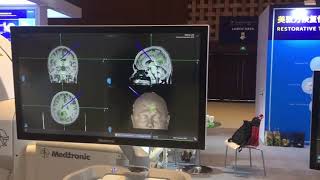
7D Surgical System Cranial Biopsy and Ventricular Catheter Placement Application

by 7D Surgical  · Based in Canada → — Image Guided Surgery to Empower Surgeons
Neurosurgery

Approximately $470,000 usd
Regulatory Status Disclosed

Overview

The 7D Surgical System Cranial Biopsy and Ventricular Catheter Placement Application is a revolutionary Machine-vision Image Guided Surgery (MvIGS) platform designed to enhance precision, speed, and safety in cranial neurosurgical procedures. Utilizing advanced optical technologies and machine vision algorithms, similar to those found in self-driving cars, the system provides real-time, radiation-free surgical navigation.

Unlike traditional image-guided surgery systems that rely on intermittent X-rays or intraoperative CT scans, the 7D Surgical System uses only visible light to create highly detailed three-dimensional images of the patient’s anatomy in seconds. Its proprietary Flash™ Registration technology dramatically reduces the patient registration workflow time to under 20 seconds, significantly improving operating room efficiency.

The system is embedded within an overhead surgical light, eliminating line-of-sight frustrations and providing the surgeon with complete sterile control via a foot pedal. It offers continuous position feedback and precise step-by-step workflow guidance for procedures like cranial biopsies and ventricular catheter placements, allowing surgeons to target lesions with pre-planned trajectories and track instruments in real-time.

The 7D Surgical System is designed to integrate seamlessly into existing OR workflows, offering a compact and agile solution that contributes to improved patient safety by reducing radiation exposure for both patients and staff, decreasing surgical time, and potentially leading to faster recovery times.

Reviewed by Pouyan Golshani, MD — Interventional Radiologist

Key Features

  • Machine-Vision Image Guided Surgery (MvIGS) technology
  • Radiation-free procedures (uses visible light for imaging)
  • Flashu2122 Registration for rapid patient registration (under 20 seconds)
  • High precision and accuracy for instrument placement
  • Real-time 3D image reconstruction of anatomy
  • Surgeon-controlled with foot pedal and sterile light handle
  • Integrated surgical light with embedded machine vision camera technology
  • Contactless workflow for patient registration
  • Ability to register multiple datasets independently (Linked Registrations)
  • Augmented Reality (AR) option for 'safe' zones and trajectories

Use Cases

  • Cranial biopsies
  • Ventricular catheter placement
  • General cranial surgery requiring image guidance
  • Spatial positioning and orientation of neurosurgical instruments
  • Spinal procedures (system also cleared for this, though prompt is cranial-specific)

What Physicians Need to Know

Application Focus
The 7D Surgical System Cranial Biopsy and Ventricular Catheter Placement Application is a stereotaxic image guidance system intended for the spatial positioning and orientation of neurosurgical instruments. It enables neurosurgeons to precisely target brain lesions during needle biopsy procedures and assists in the placement of cranial catheters.
Brain MRI/CT Analysis (for Surgical Guidance)
The system utilizes pre-operative MRI and CT scans for surgical planning and registration. It digitally matches a real-time image of the patient's anatomy with existing pre-operative scans to create a seamless, guided view. The 'Flash Registration' process rapidly digitizes the target anatomy, acquiring hundreds of thousands of virtual fiducial points from the skin surface or directly from the skull surface with a CT data set. 7D MRVisionu2122 can generate a synthetic CT from an MRI scan for surgical planning and navigation, eliminating radiation from the entire navigation workflow.
Triage Prioritization Speed (Indirect Impact)
The system significantly improves surgical workflow speed through its 'near-instantaneous Flash Registration,' which can take less than 20 seconds for de novo spinal registration, a substantial reduction compared to traditional image-guided surgery (IGS) systems that can take up to 30 minutes. This efficiency can lead to decreased surgical time and potentially reduced recovery times for patients.
Radiation-Free Procedures
A key feature of the 7D Surgical System is its use of visible light and machine vision algorithms, eliminating the need for intraoperative radiation exposure for both patients and staff, which is common with older technologies.
Precision and Accuracy
The system is designed to provide highly precise navigation for targeting brain lesions during biopsies and accurate placement of ventricular catheters. The FLASH EVD Navigation Platform aims to provide operating room accuracy for bedside catheter placement.
Machine Vision Technology
The core of the 7D Surgical System is its machine-vision image-guided surgery (MvIGS) platform, which leverages sophisticated camera technology and advanced machine-vision algorithms, similar to those found in self-driving cars.
Physician Tip

For cranial biopsy and ventricular catheter placement, the 7D Surgical System offers enhanced precision and a significantly faster workflow due to its rapid, radiation-free 'Flash Registration' technology. Physicians can leverage pre-operative MRI and CT scans for detailed planning, and the system's machine vision algorithms provide accurate, real-time guidance for instrument positioning. This can lead to reduced surgical times, improved patient safety by eliminating intraoperative radiation, and potentially better patient outcomes through highly accurate targeting.

The 7D Surgical System integrates seamlessly into existing surgical workflows by utilizing pre-operative MRI and CT imaging data for planning and registration. It supports the generation of synthetic CTs from MRI scans via 7D MRVisionu2122 for a completely radiation-free navigation workflow. The system's camera-based technology and machine vision algorithms are designed to work with various neurosurgical instruments, providing a versatile image-guided solution.

Details

Category Neurology AI, Surgical AI
Pricing Approximately $470,000 usd — One-time purchase of system hardware and software.
DeploymentOn-premise (Operating Room)
Compliance
BAA AvailableUnknown AI-estimated
HIPAA CompliantUnknown AI-estimated
FDA Status 1 AI-estimated

The 7D Surgical System Cranial Biopsy and Ventricular Catheter Placement Application received 510(k) clearance (K192945) from the U.S. Food and Drug Administration (FDA) on November 27, 2019. It is cleared as a stereotaxic image guidance system for the spatial positioning and orientation of neurosurgical instruments used in cranial surgery, specifically for procedures like biopsies and ventricular catheter placements.

Integrations
EHR Not specified
Specialties Neurosurgery

What the Web Says

The 7D Surgical System Cranial Biopsy and Ventricular Catheter Placement Application is a machine-vision image-guided surgery (MvIGS) system that uses advanced optical technologies and machine vision algorithms for cranial navigation. It aims to improve surgical workflow, patient safety, and efficiency by providing fast, accurate, and radiation-free guidance for procedures like brain biopsies and ventricular catheter placements. The system has received FDA 510(k) clearance and Health Canada approval for its cranial application.

Overall: Positive

Strengths

  • Radiation-free imaging, reducing exposure for patients and staff.
  • Fast and efficient patient registration, taking seconds compared to minutes with traditional systems.
  • High precision and accuracy in targeting lesions and placing instruments.
  • Eliminates line-of-sight frustrations due to embedded camera technology in the surgical light.
  • Contactless workflow for patient registration.
  • Ability to register multiple datasets independently without error propagation associated with traditional image fusion.

Limitations

  • Limited independent reviews from physicians, healthcare IT, or tech reviewers found in the search results.
  • No reviews found on G2 or Capterra.
  • Reddit discussions primarily focus on patient experiences with VP shunt surgery in general, not specifically the 7D Surgical System.
  • The system costs about $450,000, which, while less than some traditional systems, is still a significant investment.
  • Requires pre-operative MRI or CT data sets.

Based on reviews from: accessdata.fda.gov, YouTube, Guided Solutions, Bayhealth, Becker's Spine Review, AuntMinnie, PMC, CT Orthopaedic Institute | St. Vincent's Medical Center, NeuroSpine, PR Newswire, Reddit

Last updated: 2026-07-17

Ratings & Reviews

No reviews yet. Be the first to review this tool!

Rate 7D Surgical System Cranial Biopsy and Ventricular Catheter Placement Application

Clinical Value
Ease of Use
Integration
Support & Docs
Value for Money

Press & Coverage

accessdata.fda.gov
7D Surgical System Cranial Biopsy and Ventricular Catheter Placement Application 510(k) Premarket Notification (K192945)
This FDA 510(k) premarket notification details the clearance of the 7D Surgical System Cranial Biopsy and Ventricular Catheter Placement Application, outlining its intended use as a stereotaxic image guidance system for neurosurgical instruments during cranial procedures. The document highlights its equivalence to a previously cleared predicate device and the absence of a requirement for a clinical trial.
2019-11
Journal of Neurology (via PMC)
Artificial intelligence in neurology: opportunities, challenges, and policy implications
This peer-reviewed article discusses the role of artificial intelligence in neurology, mentioning the 7D Surgical System Cranial Biopsy and Ventricular Catheter Placement Application as an FDA-cleared stereotaxic image guidance system for neurosurgical instruments during cranial surgery. It was published in March 2024.
2024-03
Guided Solutions
7D Surgical receives approvals for Cranial Biopsy Kit
7D Surgical secured 510(k) clearance from the US FDA and Health Canada medical device license for its Cranial Biopsy Kit, enabling neurosurgeons to use image guidance for precise brain lesion targeting during needle biopsy procedures. The company also announced the commercial launch of the Universal Tracking Kit.
2020-01
accessdata.fda.gov
FLASH EVD System 510(k) Premarket Notification (K242480)
This regulatory document from December 2024 describes the FDA clearance for the FLASH EVD System, noting its substantial equivalence to the 7D Surgical System Cranial Biopsy and Ventricular Catheter Placement Application (K192945) for aiding in the placement of external ventricular drain catheters.
2024-12
accessdata.fda.gov
Zeta Cranial Navigation System 510(k) Premarket Notification (K230661)
This FDA 510(k) premarket notification from September 2023 details the clearance of the Zeta Cranial Navigation System, comparing its technological features and intended use to the predicate device, the 7D Surgical System Cranial Biopsy and Ventricular Catheter Placement Application (K192945).
2023-09
Lehigh Valley Health Network
7D Surgical System Brings Advanced Technology Close to Home
Lehigh Valley Hospitalu2013Dickson City is the first in Pennsylvania to offer the 7D Surgical System, providing radiation-free image-guided surgery for spinal and cranial navigation, utilizing machine-vision technology similar to self-driving cars.
2022-06
YouTube (7D Surgical Channel)
7D Surgical System u2013 Cranial Workflow Demonstration
This video demonstrates the 7D Surgical System's cranial workflow, highlighting its machine-vision image-guided surgery (MvIGS) technology for instantaneous patient anatomy registration using 3D optical technologies and machine vision algorithms.
2019-01
Orthofix
Surgical Navigation - Orthofix
Orthofix showcases its surgical navigation solutions, including the FLASH EVD Navigation Platform, which is designed to assist in cranial catheter placement and is based on the 7D Surgical System's technology. The page also mentions 7D MRVision for radiation-free spinal navigation.
unknown

Videos

Product demos, reviews, and walkthroughs for 7D Surgical System Cranial Biopsy and Ventricular Catheter Placement Application.

View all on YouTube

Frequently Asked Questions

The 7D Surgical System employs machine vision algorithms and camera-based technology, similar to self-driving cars, to create a radiation-free, real-time 3D image of the patient's anatomy for surgical navigation. This system rapidly co-registers with pre-operative CT/MRI data, enabling instantaneous patient registration in seconds and providing precise guidance for targeting brain lesions and placing catheters.
The 7D Surgical System, including its Cranial Biopsy Kit and Ventricular Catheter Placement Application, has received FDA 510(k) clearance. The FDA has established guidance for AI-enabled medical devices, including Predetermined Change Control Plans (PCCPs) for software updates, emphasizing transparency, data lineage, bias analysis, and robust post-market monitoring to ensure ongoing safety and effectiveness.
Alternatives include traditional image-guided navigation systems like Medtronic StealthStation and Brainlab neuronavigation, which may rely on intraoperative CT or fluoroscopy, exposing patients and staff to radiation. The 7D Surgical System differentiates itself by using visible light and machine vision, completely eliminating intraoperative radiation exposure and offering faster registration times compared to many legacy systems.
The 7D Surgical System typically costs around $450,000 to $470,000 USD, which is significantly less than many intra-operative CT-based navigation systems. Ongoing expenses primarily involve single-use reflective spheres as disposables, though hospitals should also factor in costs for staff training and the relatively small reimbursement for navigation use.
While the 7D system provides advanced AI-driven navigation guidance, it is not an autonomous system; human surgical expertise remains paramount. Broader challenges for AI in neurosurgery include ensuring data quality, mitigating algorithmic bias, achieving full transparency (explainability), and addressing ethical considerations, particularly for real-time intraoperative decision support and future autonomous robotic procedures.
The 7D Surgical System significantly enhances accuracy by digitizing hundreds of thousands of virtual fiducial points for precise anatomical registration, which is then co-registered with pre-operative imaging. Patient safety is improved by eliminating intraoperative radiation exposure through its visible light and machine vision technology, a key advantage over traditional fluoroscopy or intraoperative CT-based navigation systems.

Related Tools

Cercare Medical Oncology Virtual Expert
Cercare Medical
Neurology AI
Cercare Medical's Oncology Virtual Expert is an AI-powered brain tumor segmentation module that provides fast, consistent, and semi-automated tumor analysis from standard MRI data, designed for on-premise deployment within existing clinical radiology workflows.
CoLumbo C-Spine
Smart Soft Healthcare AD
Clinical Decision Support & Reference
CoLumbo C-Spine is an AI-powered software that processes and analyzes cervical spine MRI exams, assisting clinicians in diagnosis and assessment.
MeRT System
Wave Neuroscience
Mental & Behavioral Health AI
MeRT (Magnetic e-Resonance Therapy) is an advanced, personalized form of TMS that uses your own brainwave data to guide treatment. It's a non-invasive, drug-free option designed to help the brain communicate more efficiently so symptoms of conditions like depression, anxiety, PTSD, TBI, autism, and more can improve.
Brainomix 360 Hyperdensity
Brainomix Limited
Neurology AI
Brainomix 360 Hyperdensity is an AI-powered neuroimaging software tool that detects and quantifies brain hyperdensities on CT scans, forming a crucial part of the Brainomix 360 Stroke platform for rapid and accurate stroke assessment.
SOMNUM
HoneyNaps
Clinical Decision Support & Reference
SOMNUM is an AI-enabled medical software tool by Honeynaps Co., Ltd. that provides comprehensive sleep analysis to aid in the diagnosis and management of sleep disorders.
DETECT-ME/CFS project
DETECT-ME/CFS project (ME/CFS Research Foundation)
Clinical Decision Support & Reference
The DETECT-ME/CFS project is developing an AI-supported clinical decision support system to improve the rapid and reliable diagnosis of Myalgic Encephalomyelitis/Chronic Fatigue Syndrome.

See all Neurology AI tools →

Suggest an Edit → | Last Verified: 2026-04-17 | First Added: 2026-04-17
AI Tool Finder
AI-powered search. Results may not be comprehensive.