Brainlab Elements – Trajectory Planning (2.6)

by Brainlab AG  · Based in Germany → — Precision and Control for Advanced Surgical Planning
Neurology Neurosurgery Radiology

Contact for pricing
Regulatory Status Disclosed

Overview

Brainlab AG is a privately held German medical technology company headquartered in Munich, Bavaria. Founded in 1989, Brainlab develops advanced software and hardware solutions for radiotherapy, radiosurgery, and various surgical fields including neurosurgery, ENT, craniomaxillofacial, spine surgery, and traumatic interventions. Their products are designed to digitize, automate, and optimize clinical workflows, focusing on image-guided surgery, precision radiation therapy, digital operating room integration technologies, and cloud-based data sharing. The Brainlab Elements platform, which includes Trajectory Planning, offers a suite of state-of-the-art applications with advanced algorithms to assist clinicians in surgical targeting, planning, and verification, aiming to improve patient outcomes and treatment consistency.

Reviewed by Pouyan Golshani, MD — Interventional Radiologist

Key Features

  • Advanced 2D and 3D visualization for surgical planning
  • Flexible 3D lead and electrode modeling
  • Intuitive measurement tools for precise planning
  • Fast, automatic, and accurate co-registration between image modalities
  • Elements Distortion Correction Cranial for MRI distortion correction
  • Patient-specific anatomy segmentation (e.g., Basal Ganglia, Cranial)
  • Fibertracking with both probabilistic and deterministic algorithms
  • Secure server with Lock Mode for saving surgical plans
  • Automatic lead detection for post-operative accuracy verification
  • Integration with various surgical delivery platforms

Use Cases

  • Deep Brain Stimulation (DBS) planning
  • Stereoelectroencephalography (sEEG) planning
  • Cranial biopsy planning
  • Catheter placement procedures
  • Depth electrode placement
  • Cranial resection procedures (e.g., eloquent and non-eloquent tumors)

What Physicians Need to Know

Brain MRI/CT Analysis
Brainlab Elements converts traditional 2D medical scans, such as MRIs and CTs, into interactive 3D anatomical maps for surgical planning and navigation. It offers tools for contouring, image fusion, and visualization of neurological and vascular structures. The software supports multi-modal diagnostic imaging and provides a single environment to review and share relevant patient imaging. It also includes advanced 3D visualization for enhanced spatial anatomical orientation.
Large Vessel Occlusion Detection
While the Brainlab Elements – Trajectory Planning (2.6) tool itself focuses on trajectory planning for neurosurgery and radiosurgery, the broader field of neuroimaging utilizes AI and convolutional neural networks for automated detection of large vessel occlusions (LVOs) in CTA scans, which is crucial for ischemic stroke diagnosis and treatment.
Neurodegenerative Disease Screening
Brainlab Elements Fibertracking enables the visualization and analysis of brain white matter pathways using Diffusion Tensor Imaging (DTI) and constrained spherical deconvolution (CSD) analysis. This can be crucial for understanding neurological conditions and patient care.
Trajectory Planning
Brainlab Elements Trajectory Planning (2.6) is a software application designed to aid in image-guided surgery and radiation treatment planning. It allows for the definition of trajectories for various procedures, including stereotactic radiosurgery (SRS) and sEEG electrode placement. The software supports patient-specific planning by integrating combined MRI and DWI data. It also offers tools for visualizing and targeting specific structures, including user-built 3D electrode models for sEEG planning.
Radiosurgery Planning
Brainlab Elements includes modules for Cranial SRS and Spine SRS, designed for patient-tailored planning of radiosurgery treatments. It can create radiosurgery plans in less than 15 minutes and uses a patented integrated 4π algorithm to optimize beam trajectories, sparing healthy tissue and organs at risk. The software also evaluates Monte Carlo and pencil beam dose calculation algorithms for accuracy in radiosurgery planning.
Automated Contouring and Segmentation
Brainlab Elements Contouring provides tools to outline, refine, combine, and manipulate structures in patient image data. It also features Atlas Segmentation for automated, knowledge-based anatomical segmentation. The SmartBrush tool assists in intelligent tumor outlining with multi-planar volume definition.
Physician Tip

Brainlab Elements – Trajectory Planning (2.6) is a powerful tool for pre-surgical and radiation treatment planning, offering advanced visualization and automated features. Physicians should leverage its ability to convert 2D scans into interactive 3D anatomical maps for precise navigation and planning. The Fibertracking module, with CSD-based tractography, can provide more accurate visualization of white matter pathways, which is crucial for neurosurgical planning and avoiding critical areas. The automated contouring and segmentation tools, such as Atlas Segmentation and SmartBrush, can significantly streamline the planning workflow and improve accuracy. For radiosurgery, the Cranial SRS and Spine SRS modules offer rapid planning and dose optimization, which can lead to more efficient and safer treatments. Utilizing the software's integration capabilities with other Brainlab systems can further enhance workflow efficiency and reduce potential errors. It's important to note that while the software offers advanced AI features, its effectiveness relies on proper hardware, user expertise, and high-quality input images.

Brainlab Elements is designed to integrate seamlessly within the Brainlab product ecosystem. It offers scalable connections between clinical subspecialties like neurosurgery, spine surgery, orthopedics, and radiation oncology. The software can transfer DICOM data to and from PACS and other storage media devices. It integrates with platforms like Curve™ Image Guided Surgery and Buzz® Digital O.R. to enhance workflow efficiency. The Cirq robotic system can support sEEG electrode placement and integrates with Elements Trajectory Planning. Brainlab Elements also supports automatic registration for intraoperative MRI (iMRI), iCT, and other imaging modalities. The system is compatible with mobile devices and workstations, allowing for flexible access and collaboration. It can also integrate with third-party software components, as indicated by its legal information.

Details

Category Neurology AI, Surgical AI
Pricing Contact for pricing
DeploymentOn-premise (workstation)
Compliance
BAA AvailableUnknown AI-estimated
HIPAA CompliantUnknown AI-estimated
FDA Status Cleared AI-estimated
Integrations
EHR Not specified
Specialties Neurology, Neurosurgery, Radiology

What the Web Says

Brainlab Elements – Trajectory Planning (2.6) is a medical software designed for image-guided surgery and radiation treatment planning, particularly for cranial and spinal procedures. It aims to enhance precision, automate planning workflows, and improve patient-specific treatment outcomes. The software has received FDA clearance and CE marking, indicating its compliance with regulatory standards for medical devices.

Overall: Positive

Strengths

  • Enhances precision in image-guided surgery and radiation treatment planning.
  • Automates planning workflows, potentially reducing planning time significantly.
  • Provides advanced visualization and analysis of anatomical structures, including neural pathways.
  • Supports patient-specific planning by integrating various imaging data and offering customizable options.
  • Offers flexibility and scalability for different clinical needs and departmental infrastructures.
  • Demonstrates reliable accuracy in dose calculation for complex radiosurgery cases.

Limitations

  • Requires proper hardware and user expertise for effective operation.
  • Dependency on input image quality and user-set parameters for AI features.
  • Not intended for direct diagnosis or creating physical replicas from image data for diagnostic purposes.
  • Some older versions (e.g., 2.0) may require more manual optimization compared to newer versions.
  • Pricing information is not readily available and can be highly variable.
  • Limited freedom for users to intervene in highly automated planning workflows in some modules.

Based on reviews from: medicalnewsobserver.com, greydongilmore.com, fda.gov, frontiersin.org, physicianaitools.com, reddit.com, brainlab.com, medicalexpo.com, nih.gov, capterra.com, youtube.com, researchgate.net, aapm.org, postersessiononline.eu, scribd.com

Last updated: 2026-10-29

Ratings & Reviews

No reviews yet. Be the first to review this tool!

Rate Brainlab Elements – Trajectory Planning (2.6)

Clinical Value
Ease of Use
Integration
Support & Docs
Value for Money

Press & Coverage

fda.gov
Brainlab Elements – Trajectory Planning (2.6), Elements Stereotaxy, Elements Lead Localization, Elements Trajectory Planning Cranial
The FDA granted 510(k) clearance to Brainlab AG for Brainlab Elements – Trajectory Planning (2.6) on April 19, 2023, classifying it as a Neurological Stereotaxic Instrument.
2023-04
fda.report
Brainlab Elements - Trajectory Planning 2.6 GUDID Device
The GUDID (Global Unique Device Identification Database) entry for Brainlab Elements - Trajectory Planning 2.6, with Primary DI 04056481142674, was published on April 24, 2023.
2023-04
youtube.com
Brainlab Elements: Software Transforming Modern Medicine | The Future of Surgical Precision
This video from November 2025 highlights Brainlab Elements as a groundbreaking suite of medical software that converts 2D medical scans into interactive 3D anatomical maps, providing GPS-level precision for surgeons.
2025-11
brainlab.com
Brainlab Receives CE Mark for Elements Spine Planning
Brainlab announced on May 21, 2026, the CE marking and market launch of its Elements Spine Planning solution in the EU, an AI-based software designed to standardize and enhance preoperative planning in spine surgery.
2026-05
brainlab.com
Elements Spine Planning now FDA 510(k) cleared
Brainlab's Elements Spine Planning, a self-guided workflow for patient-specific spine planning with AI-assisted routine steps, received FDA 510(k) clearance as of October 20, 2026.
2026-10
researchgate.net
Individualised connectomic-guided radiosurgical thalamotomy for chronic pain
Research from 2026 discusses target refinement in Brainlab Elements Trajectory Planning and its integration with GammaPlan for individualized connectomic-guided radiosurgical thalamotomy for chronic pain.
2026-08
frontiersin.org
Evaluation of a reference beam model for Brainlab Elements stereotactic radiosurgery treatment planning system commissioning and end-to-end phantom testing
A study published in August 2026 evaluated a reference beam model for commissioning the Brainlab Elements treatment planning system for stereotactic radiosurgery, assessing Monte Carlo and pencil beam dose calculation algorithms.
2026-08
nih.gov
A practical, cross-platform workflow for cumulative-dose-aware re-irradiation in brain metastases
A December 2025 report outlines a cross-platform workflow for cumulative-dose-aware re-irradiation in brain metastases, utilizing Brainlab Elements and GammaPlan for prospective treatment planning.
2025-12

Videos

Product demos, reviews, and walkthroughs for Brainlab Elements – Trajectory Planning (2.6).

Loading videos...

View all on YouTube

Frequently Asked Questions

Brainlab Elements Trajectory Planning (2.6) leverages AI algorithms to assist with time-consuming routine planning steps, allowing clinicians to maintain control over the process. For instance, in spine planning, AI helps adjust alignment and provides real-time measurement updates using a patient-specific spine avatar. The software aims to enhance precision, efficiency, and decision-making by integrating AI as an intelligent and adaptive layer across a connected, data-driven ecosystem.
Brainlab Elements Trajectory Planning (2.6) has received FDA 510(k) clearance, indicating it is substantially equivalent to a predicate device for neurological stereotaxic instruments. It is classified under regulation number 882.4560, with a decision date of April 19, 2023. In Europe, Brainlab Elements Trajectory Planning is a Class IIb product according to the Medical Device Directive (MDD), signifying its compliance with essential requirements.
The primary limitations of Brainlab Elements Trajectory Planning (2.6) include its dependency on appropriate hardware and user expertise for effective operation. The software's advanced AI features rely heavily on the quality of input images and parameters set by the user. Additionally, while it aids in processing image data for surgical interventions and treatment planning, it is not intended for direct diagnosis or creating physical replicas for diagnostic purposes.
While specific direct alternatives for 'Trajectory Planning 2.6' are not detailed, Brainlab Elements as a suite competes with other treatment planning systems. For instance, studies have compared Brainlab Elements' Multiple Brain Mets (MBM) SRS technique with knowledge-based planning (KBP) using Eclipse treatment planning system. Brainlab Elements Cranial SRS has been noted to produce plans of higher or comparable quality in significantly shorter times compared to other planning software. The system is designed to be an open, modular platform that supports compatibility with third-party technologies.
Brainlab Elements Trajectory Planning (2.6) is used to define trajectories for various neurosurgical procedures, including biopsies and electrode placements. The software converts 2D medical scans into interactive 3D anatomical maps, providing GPS-level precision for navigating the brain. It allows surgeons to visualize critical brain structures and neural pathways, aiding in planning the safest route to a target and protecting vital areas. The workflow can integrate with robotic alignment systems like Cirq and instrument holders like VarioGuide for precise execution of planned trajectories.

Related Tools

Parkiwatch
Koios Care
Neurology AI
Parkiwatch by Koios Care is a Class IIa Software as a Medical Device (EU MDR 2017/745) for continuous, passive detection and quantitative assessment of kinematic patterns representative of tremor, bradykinesia, and dyskinesia in adults with Parkinson's Disease.
CortiCare (Virtual EEG Department)
CortiCare
Neurology AI
CortiCare offers 24/7 remote EEG monitoring and interpretation services, functioning as a virtual EEG department to assist hospitals and neurology practices in identifying seizures and other neurological conditions.
NeuroAstra
Avinya NeuroTech
Clinical Decision Support & Reference
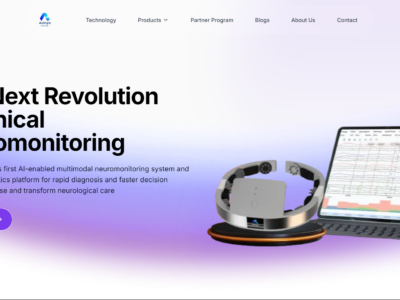
NeuroAstra is an AI-enabled EEG analysis and reporting software that provides a multimodal clinical EEG web platform with Co-Pilot AI to help neuro care teams detect abnormal trends faster and standardize reporting.
Cercare Medical Oncology Virtual Expert
Cercare Medical
Neurology AI
Cercare Medical's Oncology Virtual Expert is an AI-powered brain tumor segmentation module that provides fast, consistent, and semi-automated tumor analysis from standard MRI data, designed for on-premise deployment within existing clinical radiology workflows.
CoLumbo C-Spine
Smart Soft Healthcare AD
Clinical Decision Support & Reference
CoLumbo C-Spine is an AI-powered software that processes and analyzes cervical spine MRI exams, assisting clinicians in diagnosis and assessment.
MeRT System
Wave Neuroscience
Mental & Behavioral Health AI
MeRT (Magnetic e-Resonance Therapy) is an advanced, personalized form of TMS that uses your own brainwave data to guide treatment. It's a non-invasive, drug-free option designed to help the brain communicate more efficiently so symptoms of conditions like depression, anxiety, PTSD, TBI, autism, and more can improve.

See all Neurology AI tools →

More from Brainlab AG

(Elements) Cranial SRS
Brainlab AG
Neurology AI
Elements Cranial SRS by Brainlab AG is an advanced software for stereotactic radiosurgery planning in cranial cases, offering automated, indication-specific treatment plans with 3D visualization and advanced optimization algorithms for precise and efficient dose delivery.
(Elements) Dose Review
Brainlab
Oncology AI
Brainlab Elements Dose Review is an AI-powered software for radiation therapy planning, offering detailed dose analysis, plan comparison, and segmentation for various anatomical regions as part of the broader Brainlab Elements suite.
(Elements) Retreatment Review
Brainlab AG
Neurology AI
Elements Retreatment Review is an AI-powered software by Brainlab AG that streamlines retreatment planning for multiple brain metastases by integrating prior treatment data, new scans, and AI-driven tumor segmentation for optimal decision-making.
(Elements) Spine SRS
Brainlab AG
Oncology AI
Brainlab Elements Spine SRS is an advanced, AI-powered software for highly automated and precise treatment planning of spinal metastases using stereotactic radiosurgery (SRS) and stereotactic body radiation therapy (SBRT). It offers features like spinal curvature correction, automatic target delineation, and optimized dose calculation for superior spinal cord sparing.

View company profile →

Suggest an Edit → | Report an issue | Last Verified: 2026-04-18 | First Added: 2026-04-18
AI Tool Finder
AI-powered search. Results may not be comprehensive.