Brainlab Elements (7.0)

by Brainlab AG  · Based in Germany →Precision and control for advanced surgical and radiotherapy planning.
Neurosurgery Oncology Radiology

Contact for pricing
Regulatory Status Disclosed

Overview

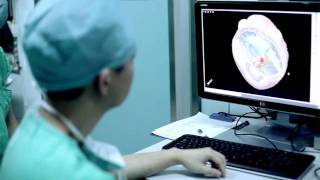
Brainlab Elements is a comprehensive suite of advanced software applications designed for medical image processing, surgical planning, and radiation treatment planning. It transforms traditional 2D medical scans, such as MRIs and CTs, into interactive 3D anatomical maps, providing surgeons with high-precision navigation capabilities. The platform supports a wide array of clinical subspecialties, including neurosurgery, spine surgery, orthopedics, and radiation oncology. By offering tools for accurate image fusion, patient-specific planning, and automated workflows, Brainlab Elements aims to enhance documentation, communication, and integration within the operating room and treatment planning processes, ultimately improving patient outcomes. The software integrates artificial intelligence features, such as AI Tumor Segmentation, to streamline complex tasks and further improve planning accuracy and efficiency.

Reviewed by Pouyan Golshani, MD — Interventional Radiologist

Key Features

  • 3D Visualization and Interactive Anatomical Maps
  • Image Fusion (CT/MR, DWI, BOLD MRI)
  • Patient-Specific Planning
  • Advanced Segmentation Tools (e.g., Basal Ganglia, Cranial, AI Tumor Segmentation)
  • Trajectory Planning (Cranial, Stereotaxy)
  • Fibertracking for Neural Pathways Visualization
  • Automated Radiosurgery Planning (e.g., Multiple Brain Metastases SRS, Cranial SRS, Spine SRS)
  • Intraoperative Structure Update
  • Retreatment Review and Planning
  • DICOM Data Transfer and Processing

Use Cases

  • Preoperative planning for neurosurgery (e.g., tumor removal, DBS, sEEG, biopsies)
  • Radiation treatment planning (radiosurgery, radiotherapy)
  • Spine surgery planning and navigation
  • Orthopedic surgery planning
  • Craniomaxillofacial and ENT surgery planning
  • Postoperative verification and assessment

What Physicians Need to Know

Brain MRI/CT Analysis
Brainlab Elements 7.0 processes medical image data from MRI and CT scans for surgical and radiation treatment planning. It offers tools for contouring, image fusion, and advanced visualization of neurological and vascular structures, converting 2D scans into interactive 3D anatomical maps. The software includes Elements Distortion Correction Cranial to significantly improve the accuracy of tractography by correcting MRI distortion. AI features are utilized for tumor segmentation on contrast-enhanced T1-weighted MR images, aiding in the review of recurring or new lesions.
Triage Prioritization Speed
The software incorporates built-in time-saving automation throughout surgical planning workflows. For instance, it can automate complex radiation plans for multiple brain tumors in minutes, a process that previously took significantly longer. This enhances workflow efficiency in planning and pre-treatment phases.
Mobile Accessibility
Brainlab Elements offers multi-platform flexibility, allowing clinicians to work online on preferred devices, including iPad and iPhone, or offline on a workstation. This ensures full software functionality and ease of planning and review for busy clinicians across various locations, including ancillary facilities, home offices, and O.R. suites.
Physician Tip

Brainlab Elements 7.0 serves as a powerful digital collaborator, amplifying surgeon skills by providing GPS-level precision for cranial and spinal surgeries. It is highly beneficial for pre-surgical planning, intraoperative targeting, and postoperative verification in stereotactic surgery. The advanced segmentation tools and white matter tractography, coupled with cutting-edge rendering and visualization, enable patient-specific planning and aid in interpreting unique anatomies. The automation of radiation planning for multiple brain metastases significantly streamlines workflow, allowing more focus on patient care.

Brainlab Elements 7.0 is designed for seamless integration within the Brainlab ecosystem, connecting with platforms like Curveu2122 Image Guided Surgery and Buzzu00ae Digital O.R. It facilitates scalable connections across clinical subspecialties such as neurosurgery, spine surgery, orthopedics, and radiation oncology. The software also integrates with intraoperative imaging devices like the Loop-Xu00ae robotic imaging device for automatic image registration and lead placement verification. Furthermore, it supports integration with Fujifilm's ARIETTA Precision ultrasound for automated rigid fusion between preoperative MRI and intraoperative ultrasound images.

Details

Category Neurology AI, Oncology AI, Surgical AI
Pricing Contact for pricing Not available
DeploymentOn-premise (workstation) and Cloud-based/Mobile access
Compliance
BAA AvailableUnknown AI-estimated
HIPAA Compliant Yes AI-estimated
FDA Status Yes AI-estimated

Brainlab Elements software applications are indicated for processing medical image data to support image-guided surgery and radiation treatment planning. Specific modules like Image Fusion, Contouring, Fibertracking, and Automatic Brain Metastasis Planning have received 510(k) clearance.

Integrations
EHR Not specified
Specialties Neurosurgery, Oncology, Radiology

What the Web Says

Brainlab Elements 7.0 is a comprehensive software suite designed for advanced medical image processing and treatment planning, particularly in neurosurgery, spine surgery, orthopedics, and radiation oncology. It converts 2D medical scans into interactive 3D anatomical maps, providing GPS-level precision for surgical planning and enhancing the accuracy and efficiency of radiotherapy. The software aims to democratize advanced care by automating planning work, making sophisticated treatments accessible to more facilities.

Overall: Positive

Strengths

  • Converts 2D scans into interactive 3D anatomical maps for enhanced visualization.
  • Provides GPS-level precision for cranial and spinal surgeries, improving safety and accuracy.
  • Automates significant portions of the planning process, reducing planning time by up to 80%.
  • Includes specialized modules like Fibertracking to visualize neural pathways, aiding in the protection of critical structures.
  • Offers multi-platform flexibility, allowing clinicians to plan and review on various devices, including mobile.
  • Seamlessly integrates with other Brainlab platforms like Curveu2122 Image Guided Surgery and Buzzu00ae Digital O.R. for optimized workflows.

Limitations

  • Requires proper hardware and user expertise for effective operation.
  • Advanced AI features are heavily dependent on the quality of input images and user-defined parameters.
  • Not intended for direct diagnostic purposes.
  • No specific contraindications, but usage is limited to situations requiring interpretation and manipulation of image data by medical professionals.
  • Some Reddit discussions about 'Brainlabs' refer to cognitive testing websites or potential scams, not directly related to Brainlab medical software, which could cause confusion.

Based on reviews from: accessdata.fda.gov, Medical News Observer, YouTube, Brainlab, SourceForge, Slashdot, PMC

Last updated: 2026-07-17

Ratings & Reviews

No reviews yet. Be the first to review this tool!

Rate Brainlab Elements (7.0)

Clinical Value
Ease of Use
Integration
Support & Docs
Value for Money

Press & Coverage

FDA
Brainlab Elements (7.0) FDA 510(k) Premarket Notification
Brainlab Elements (7.0) received 510(k) premarket notification from the FDA on June 13, 2025, for its suite of medical imaging software applications. This regulatory clearance covers various modules for image processing, co-registration, segmentation, and 3D visualization to assist in surgical and radiation treatment planning.
2025-06
RadAI Slice
Brainlab Elements (7.0) on FDA Radiology AI Device Database
Brainlab Elements (7.0) is listed on the FDA Radiology AI Device database, highlighting its AI capabilities, including a convolutional neural network for tumor segmentation. The platform processes medical image data from various modalities to support image-guided surgery and radiation treatment planning.
2023-07
Medgadget
Intraoperative Imaging Market Size, Share & 2031 Growth Trends
A market report on intraoperative imaging mentions Brainlab's Elements 7.0 suite receiving FDA clearance in 2025, indicating its impact on the growing market for advanced surgical and treatment planning technologies.
2026-07
510k Monitor
Brainlab AG u2014 FDA 510(k) clearances & recalls
This page lists FDA 510(k) clearances for Brainlab AG, including the clearance for Brainlab Elements (7.0) and its various modules on June 13, 2025.
2026-07
FDA
FDA 510(k) Summary for RT Elements 4.5 (referencing Brainlab Elements 7.0)
A 510(k) summary for RT Elements 4.5, dated June 17, 2025, references Contouring 5.0 as part of Brainlab Elements 7.0 (K243633), detailing its indications for radiation treatment planning. The document also highlights performance data for AI tumor segmentation.
2025-06

Videos

Product demos, reviews, and walkthroughs for Brainlab Elements (7.0).

View all on YouTube

Frequently Asked Questions

Brainlab Elements 7.0 incorporates AI for advanced tumor segmentation, particularly for cranial tumors on contrast-enhanced T1-weighted MRI scans. This AI-powered feature assists in fast and accurate delineation of lesions, significantly enhancing pre-planning for radiosurgery and retreatment review workflows.
Yes, Brainlab Elements 7.0 demonstrates compliance with safety and performance standards and has received FDA clearance, including 510(k) premarket notification. It adheres to regulations such as 21 CFR Part 807 for registration and listing, and 21 CFR Part 801 for labeling, ensuring its suitability for clinical use.
The AI features in Brainlab Elements 7.0 are highly dependent on the quality of input images and user-defined parameters. It's crucial to remember the software is intended to assist in image processing and planning, not for direct diagnosis or creating physical replicas for diagnostic purposes.
While Brainlab Elements 7.0 offers specialized features, alternatives in the market include Materialise Mimics, Realize Medical's Elucis, Invivo, OsiriX, and Synapse 3D for medical imaging and planning. Some competitors like AudaxCeph also integrate AI for specific applications.
Brainlab Elements systems are designed with HIPAA-compliant features, including authentication, accountability logs, and automatic log-off, to ensure patient data privacy and security. While the equipment stores patient information, it is often used as a standalone system or with secure data transfer protocols.
Brainlab offers flexible business models for its Elements suite, ranging from single licenses to multiple departmental offerings. The total cost typically includes a one-year licensing support agreement, with subsequent annual payments for licensing and service contracts.
Brainlab Elements is designed with standard interfaces and is compatible with various workflows and treatment systems, including PACS via DICOM 'Query/Retrieve'. However, Brainlab strongly recommends against installing third-party medical software on the same platform to avoid potential interference.

Related Tools

DETECT-ME/CFS project
ME/CFS Research Foundation (Sponsor: Federal Ministry of Health (BMG))
Clinical Decision Support & Reference
The DETECT-ME/CFS project is developing an AI-supported clinical decision support system to improve the rapid and reliable diagnosis of Myalgic Encephalomyelitis/Chronic Fatigue Syndrome.
Neurotrack
Neurotrack
Clinical Decision Support & Reference
Neurotrack is a cognitive care enablement platform that provides clinically validated, FDA class II device assessments and care planning support to identify and manage cognitive decline and dementia earlier and with greater accuracy.
LesionQuant
CorTechs Labs
Neurology AI
LesionQuant, an FDA-approved AI product by CorTechs Labs, is particularly useful for patients with multiple sclerosis. It provides brain structure data and quantifies the number, size, and location of lesions, comparing them to prior studies.
ExcelsiusGPS
Globus Medical
Neurology AI
ExcelsiusGPS™ is the first and only robotic navigation platform on the market that offers a comprehensive approach to spine and cranial procedures, from start to finish. The system enables repeatable and accurate trajectory alignment and navigation for placing screws, interbody implants, and cranial instruments.
Onera SleepMap
Onera B.V.
Neurology AI
Onera SleepMap is an AI-powered sleep analysis software that processes polysomnography data, part of Onera Health's innovative patch-based system for at-home and in-lab sleep studies. The system aims to make clinical-grade sleep diagnostics more accessible and user-friendly, providing comprehensive data comparable to traditional in-lab PSG.
JLK-NCCT
JLK-NCCT
Clinical Decision Support & Reference
JLK-NCCT is an AI software designed to assist in the analysis of non-contrast CT brain scans for the detection of acute ischemic stroke.

See all Neurology AI tools →

More from Brainlab AG

(Elements) Cranial SRS
Brainlab AG
Neurology AI
Elements Cranial SRS by Brainlab AG is an advanced software for stereotactic radiosurgery planning in cranial cases, offering automated, indication-specific treatment plans with 3D visualization and advanced optimization algorithms for precise and efficient dose delivery.
(Elements) Dose Review
Brainlab AG
Oncology AI
Brainlab Elements Dose Review is an AI-powered software for radiation therapy planning, offering detailed dose analysis, plan comparison, and segmentation for various anatomical regions as part of the broader Brainlab Elements suite.
(Elements) Retreatment Review
Brainlab AG
Neurology AI
Elements Retreatment Review is an AI-powered software by Brainlab AG that streamlines retreatment planning for multiple brain metastases by integrating prior treatment data, new scans, and AI-driven tumor segmentation for optimal decision-making.
(Elements) Spine SRS
Brainlab AG
Oncology AI
Brainlab Elements Spine SRS is an advanced, AI-powered software for highly automated and precise treatment planning of spinal metastases using stereotactic radiosurgery (SRS) and stereotactic body radiation therapy (SBRT). It offers features like spinal curvature correction, automatic target delineation, and optimized dose calculation for superior spinal cord sparing.

View company profile →

Suggest an Edit → | Last Verified: 2026-04-17 | First Added: 2026-04-17
AI Tool Finder
AI-powered search. Results may not be comprehensive.