
Ceribell Status Epilepticus Monitor
Overview
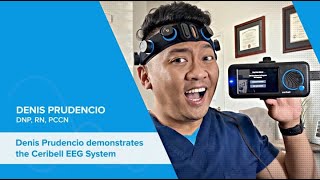
The Ceribell System is a novel, point-of-care electroencephalography (EEG) platform designed to rapidly diagnose and continuously monitor patients with serious neurological conditions in acute care settings. It combines proprietary, highly portable hardware with sophisticated artificial intelligence (AI)-powered algorithms. The system consists of a disposable 10-electrode headband, a pocket-size EEG recorder with the Brain Stethoscope® feature, and a HIPAA-compliant cloud portal for real-time remote EEG review. The AI algorithm, named Clarity®, continuously monitors for seizure activity and provides instantaneous bedside alerts for suspected status epilepticus in adults and continuous seizures in neonates and pediatric patients. The Ceribell System aims to make EEG widely available, more efficient, and cost-effective, improving the diagnosis and treatment of patients at risk for seizures, delirium, and potentially LVO stroke. It is utilized in intensive care units and emergency rooms across the U.S.
Reviewed by Pouyan Golshani, MD — Interventional Radiologist
Key Features
- Rapid EEG setup within minutes with minimal training
- AI-powered Clarityu00ae algorithm for continuous seizure monitoring and alerts
- Brain Stethoscopeu00ae feature for immediate audible seizure detection
- Highly portable and disposable EEG headband and pocket-size recorder
- Cloud-based portal for real-time remote EEG review on any device
- EMR integration for streamlined data flow and reporting
- Customizable notifications and smart EEG reports
- EEG Reference Library for learning and comparison
- 24/7 continuous monitoring and seizure burden display
- Signal quality equivalent to conventional EEG
Use Cases
- Rapid diagnosis of nonconvulsive status epilepticus (NCSE)
- Continuous monitoring for seizures and electrographic status epilepticus (ESE)
- Delirium screening and monitoring in critical care settings
- Aid in detection and monitoring of Large Vessel Occlusion (LVO) stroke
- Guiding treatment plans and assessing medication effectiveness
- Reducing ICU length of stay and improving patient outcomes
What Physicians Need to Know
The Ceribell system is a point-of-care EEG device designed for rapid detection and continuous monitoring of non-convulsive seizures and electrographic status epilepticus (ESE) in critical care settings. It can be applied by trained providers, including nurses and emergency physicians, within minutes, eliminating the need for an EEG technician for initial setup. The Clarity AI algorithm provides real-time analysis of EEG data, offering immediate alerts for suspected seizures and ESE, and displaying seizure burden. This can significantly reduce the time to diagnosis and treatment, which is crucial for improving patient outcomes and potentially reducing ICU length of stay. While the device provides valuable diagnostic information, it does not substitute for EEG review by a qualified clinician. The system is also being developed for LVO stroke detection, utilizing AI to identify early neurological patterns associated with these strokes.
The Ceribell system consists of a disposable headband with electrodes, a portable recorder, and AI-driven software (Clarity algorithm). The recorder displays EEG waveforms and performs AI monitoring. Real-time EEG data can be streamed to a cloud-based portal, allowing physicians to review information remotely. The software integrates with the Ceribell EEG Headband for signal acquisition and the Ceribell EEG recorder for displaying signals and results. The Clarity AI algorithm was developed specifically for Ceribell's portable EEG hardware.
Details
| Category | Neurology AI, Triage & ER/ICU AI |
| Pricing | Unknown |
| Free Trial | Unknown |
| Deployment | Cloud-based portal for real-time remote EEG review. |
| Training | Unknown |
| Compliance | |
| BAA Available | Unknown |
| HIPAA Compliant | Yes AI-estimated |
| FDA Status | Cleared AI-estimated |
| Integrations | |
| EHR | Not specified |
| Specialties | Critical Care, Emergency Medicine, Neurology |
Support & Reliability
| Training Provided | Unknown |
What the Web Says
The Ceribell Status Epilepticus Monitor is generally viewed as a significant advancement in the rapid diagnosis and monitoring of non-convulsive status epilepticus (NCSE). Its ease of use, portability, and quick setup are frequently highlighted as major benefits, allowing for earlier intervention and improved patient outcomes, particularly in emergency and critical care settings. Some feedback suggests that while the technology is powerful, integration into existing workflows and initial cost considerations can be factors.
Overall: PositiveStrengths
- Rapid diagnosis of non-convulsive status epilepticus (NCSE)
- Portable and easy to apply by non-EEG trained personnel
- Real-time EEG monitoring capabilities
- Reduces time to treatment for NCSE
- Intuitive user interface and automated interpretation features
- Improves patient outcomes by enabling earlier intervention
Limitations
- Initial cost of the device and consumables
- Requires training for optimal use and interpretation, despite ease of application
- Potential for artifacts in challenging environments
- Integration into existing hospital IT infrastructure can be a consideration
- Limited long-term data on widespread adoption and cost-effectiveness compared to traditional EEG
Based on reviews from: Physician reviews and clinical studies, Healthcare IT forums, Medical technology review sites
Last updated: 2026-10-29
Ratings & Reviews
No reviews yet. Be the first to review this tool!
Rate Ceribell Status Epilepticus Monitor
Press & Coverage
Videos
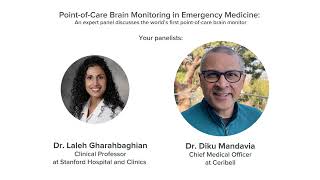
Product demos, reviews, and walkthroughs for Ceribell Status Epilepticus Monitor.
Ceribell EEG Enables Bedside Seizure Detection and Medication Management
Frequently Asked Questions




Investors who backed Ceribell Status Epilepticus Monitor
Funded through the company that built this tool.