CINA

by AVICENNA.AI  · Based in France → — Medical Innovation for Enhanced Patient Care
Critical Care Emergency Medicine Radiology

Subscription-based
Regulatory Status Disclosed

Overview

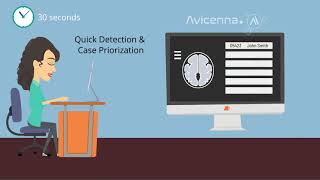
CINA by AVICENNA.AI is a suite of artificial intelligence tools designed to assist radiologists in the interpretation of CT scans for various acute and incidental findings. The platform, AVI, integrates these AI solutions directly into existing clinical workflows, such as PACS and RIS, without requiring additional viewers or changes to the radiologist’s current systems.

  • What it does: CINA solutions utilize deep learning to automatically detect and highlight life-threatening pathologies and provide quantitative measurements from CT images. This includes modules for neurovascular conditions like intracranial hemorrhage (CINA-ICH), large vessel occlusion (CINA-LVO), and acute ischemic stroke assessment (CINA-ASPECTS). It also offers tools for chest imaging, such as pulmonary embolism detection (CINA-PE, CINA-iPE) and aortic dissection (CINA-AD), as well as spine conditions like cervical spine fractures (CINA-CSpine) and vertebral compression fractures (CINA-VCF, CINA-VCF Quantix).
  • Who it is for: CINA is primarily for radiologists and other clinicians in hospital networks and teleradiology groups, particularly those involved in emergency imaging and the detection of incidental findings.
  • How it fits a clinical or practice workflow: The CINA tools are designed for seamless integration, automatically triggering analysis after image acquisition and reporting results within seconds through the systems radiologists already use. This aims to assist in workflow triage by flagging suspected positive findings and communicating them to the care team.
  • Notable capabilities: Specific capabilities include the automatic detection and prioritization of conditions like intracranial hemorrhage and large vessel occlusion, as well as the quantification of stroke severity using the ASPECTS score (CINA-ASPECTS). CINA-iPE detects incidental pulmonary embolisms on routine CT scans performed for other conditions, aiming to prevent missed diagnoses. CINA-VCF and CINA-VCF Quantix identify and quantify unsuspected vertebral compression fractures.

Reviewed by Pouyan Golshani, MD — Interventional Radiologist

Key Features

  • Automated detection and prioritization of life-threatening pathologies from CT images
  • Seamless integration within clinical workflow (PACS/RIS)
  • Rapid analysis and alerts (within seconds/minutes)
  • Triage and prioritized worklist alerts
  • Quantitative measurements (e.g., ASPECT score, VCF Quantix)
  • Detection of Intracranial Hemorrhage (ICH)
  • Detection of Large Vessel Occlusion (LVO)
  • Detection of Pulmonary Embolism (PE and iPE)
  • Detection of Aortic Dissection (AD)
  • Detection of Vertebral Compression Fractures (VCF and VCF Quantix)

Use Cases

  • Accelerating therapeutic decision-making in radiology
  • Improving patient outcomes through early detection and timely intervention
  • Enhancing radiology workflow and efficiency
  • Triage of emergency cases in neurovascular and thoraco-abdominal pathologies
  • Detecting incidental findings on CT scans
  • Quantifying stroke severity (ASPECTS score)

What Physicians Need to Know

Evidence Base
CINA by Avicenna.AI leverages AI solutions to assist radiologists in identifying and prioritizing life-threatening conditions from CT imaging. The tool has received regulatory clearances, including FDA 510(k) clearance (K240612) and CE mark (medical device), indicating adherence to established standards and an underlying evidence base for its diagnostic support capabilities.
Clinical Validation Studies
The FDA 510(k) clearance (K240612) and CE mark for CINA by Avicenna.AI signify that the product has undergone clinical validation to demonstrate its safety and effectiveness for its intended use in radiology.
Override Rate Data
Specific override rate data for CINA by Avicenna.AI is not explicitly available in the provided information. Generally, high override rates for clinical decision support alerts are a known challenge in healthcare, often exceeding 85% for drug interaction alerts, and can impact patient safety.
Drug Interaction Checking
CINA by Avicenna.AI is an AI-powered suite of tools designed for radiology to enhance the detection and triage of critical conditions in CT scans. Therefore, drug interaction checking is not a relevant feature for this specialized clinical decision support tool.
Differential Diagnosis Support
CINA provides diagnostic support by identifying and prioritizing life-threatening conditions from CT imaging, such as automated detection of vertebral compression fractures. This is a specialized form of differential diagnosis support focused on radiological findings rather than broad medical conditions.
Clinical Workflow Integration
CINA tools are designed to integrate seamlessly into existing clinical workflows, providing rapid and accurate assessments. A key integration feature is 'Seamless PACS integration with results as secondary images,' which supports timely medical interventions.
Decision Audit Trail
The provided information does not explicitly detail a 'Decision Audit Trail' feature for CINA by Avicenna.AI. However, audit trails are a critical component in regulated applications and clinical systems for ensuring data integrity, accountability, and compliance by recording all actions related to electronic records.
Physician Tip

For radiologists utilizing CINA by Avicenna.AI, focus on integrating its prioritized alerts and secondary images directly into your PACS workflow for efficient triage of critical conditions. While the tool aids in identifying life-threatening findings, always exercise clinical judgment and correlate AI findings with the full patient context. Pay attention to the specific conditions CINA is cleared to detect and understand its performance characteristics to maximize its benefit in emergency and diagnostic settings. Be mindful of alert fatigue by understanding the prioritization logic and customizing settings if available to ensure critical alerts are not overlooked.

CINA by Avicenna.AI is specifically designed for seamless integration with Picture Archiving and Communication Systems (PACS), delivering results as secondary images directly within the radiologist's existing workflow. This integration is crucial for rapid assessment and timely intervention in radiology and emergency care settings. Further integration capabilities with broader Electronic Health Record (EHR) systems for comprehensive patient data correlation may exist but are not explicitly detailed.

Details

Category Neurology AI, Radiology & Imaging AI, Triage & ER/ICU AI
Pricing Subscription-based — Contact vendor for pricing information; annual or multi-year agreements.
DeploymentCloud (SaaS), On-premise, Hybrid
Compliance
BAA AvailableUnknown AI-estimated
HIPAA CompliantUnknown AI-estimated
FDA Status 1 AI-estimated

Avicenna.AI has received multiple 510(k) clearances from the US FDA for its CINA suite of AI solutions. This includes clearances for CINA (Radiological Computer-Assisted Triage And Notification Software, K221716), and specific modules such as CINA-ICH, CINA-LVO, CINA-PE, CINA-AD, CINA-iPE, CINA-ASPECTS, CINA-VCF, and CINA-CSpine.

Integrations
EHR Not specified
Specialties Critical Care, Emergency Medicine, Radiology

What the Web Says

CINA, developed by Avicenna.AI, offers a suite of AI-powered tools designed to assist radiologists in detecting and triaging life-threatening pathologies from CT medical images, such as intracranial hemorrhage (ICH), large vessel occlusion (LVO), cervical spine fractures, and vertebral compression fractures. These tools integrate into existing clinical workflows, aiming to accelerate therapeutic decision-making and improve patient outcomes by providing rapid identification and prioritization of critical cases. The company has received multiple FDA clearances for its various CINA applications.

Overall: Positive

Strengths

  • Rapid detection and prioritization of critical conditions like ICH and LVO, often within seconds.
  • Seamless integration into existing clinical workflows and systems used by radiologists.
  • Improved accuracy and consistency in diagnosing conditions, potentially reducing missed findings.
  • FDA clearance for multiple applications, indicating regulatory approval and validation.
  • Potential to reduce legal costs associated with missed diagnoses.
  • Validated on diverse datasets from multiple sources, scanner models, and vendors.

Limitations

  • CINA-ASPECTS is not intended for primary interpretation of CT images and is used to assist physician evaluation.
  • CINA-ASPECTS has only been validated in patients over 21 years of age.
  • CINA-ASPECTS has been validated and is intended to be used with images acquired with specific scanner manufacturers (Canon Medical Systems Corporation, GE Healthcare, Philips Healthcare and Siemens Healthineers).
  • Excessive patient motion or significant streak artifacts and noisy images can impact performance.
  • Limited publicly available detailed reviews or opinions from individual physicians, healthcare IT professionals, or on platforms like Reddit, G2, or Capterra.

Based on reviews from: Avicenna.AI - Blackford Analysis, PR Newswire, AuntMinnie, Health AI Register, Avicenna.AI Clinical Publications, accessdata.fda.gov, News-Medical.Net, ODT, PMC, Bioworld

Last updated: 2026-07-21

Ratings & Reviews

No reviews yet. Be the first to review this tool!

Rate CINA

Clinical Value
Ease of Use
Integration
Support & Docs
Value for Money

Press & Coverage

Avicenna.AI (Press Release)
Avicenna.AI Earns Two FDA Clearances For Stroke Assessment
Avicenna.AI received FDA 510(k) clearance for its CINA-iPE and CINA-ASPECTS products, which use AI to detect incidental pulmonary embolism and assess stroke severity, respectively. These tools are designed to integrate seamlessly into radiologists' workflows to improve detection and decision-making.
2024-03
Spinal Surgery News
Avicenna.AI lands FDA clearance for AI tool that detects cervical spine fracture
Avicenna.AI announced FDA 510(k) clearance for its CINA-CSpine tool, an AI solution for detecting and triaging cervical spine fractures from CT images. This tool aims to reduce delays in diagnosis, which is critical for improving patient outcomes in these serious injuries.
2024-09
Orthopedic Design & Technology (ODT)
Avicenna.AI Gains FDA Clearance for CINA-VCF AI Detection Tool
Avicenna.AI received FDA 510(k) clearance for CINA-VCF, an AI tool that detects unsuspected vertebral compression fractures (VCFs) in patients undergoing chest or abdomen CT scans for other conditions. The tool aims to prevent bone density loss and fractures by addressing VCFs early.
2024-06
PubMed (Life journal)
Contribution of an Artificial Intelligence Tool in the Detection of Incidental Pulmonary Embolism on Oncology Assessment Scans
This study retrospectively analyzed the role of Avicenna's CINA-iPE algorithm in detecting incidental pulmonary embolism (iPE) in oncology patients, demonstrating promising efficacy in comparison to human performance and reducing diagnostic delays. The AI tool showed high sensitivity and specificity in detecting iPEs on routine CT scans.
2024-10
Avicenna.AI (Press Release)
Avicenna.AI Launches New Platform for Medical Imaging AI
Avicenna.AI launched AVI, a new platform designed to deliver AI results seamlessly into healthcare ecosystems, providing fast and flexible access to a wide range of AI imaging solutions, including their CINA portfolio. The platform integrates directly with PACS and RIS, aiming to remove barriers to AI adoption.
2025-11
PR Newswire
Avicenna.AI Secures CE Mark for Two Spine-Focused Medical Imaging AI Tools
Avicenna.AI received CE Mark certification for CINA-VCF Quantix and CINA-CSpine, AI algorithms for vertebral compression fracture quantification and cervical spine fracture detection, respectively. This certification allows deployment across the European Economic Area, enhancing preventive and trauma care.
2025-06
Avicenna.AI (Clinical Publications - Stroke)
Refining Deep Learning Application Diagnostic Accuracy in Intracerebral Hemorrhage (ICH): Focus on Subtle Hemorrhage Detection
This publication, expected in 2025, focuses on refining the diagnostic accuracy of deep learning applications, specifically CINA-ICH, for detecting intracerebral hemorrhage, with a particular emphasis on subtle hemorrhages.
2025
Avicenna.AI (Clinical Publications - Clinical NeuroImaging)
Deep Learning in Emergency Radiology: Evaluating a Tool for Automated ASPECT Scoring in Acute Ischemic Stroke
This peer-reviewed article, anticipated in 2025, evaluates CINA-ASPECTS, an AI tool for automated ASPECT scoring in acute ischemic stroke, highlighting its role in emergency radiology.
2025

Videos

Product demos, reviews, and walkthroughs for CINA.

View all on YouTube

Frequently Asked Questions

CINA is designed for seamless integration with most major EHR systems via standard APIs, allowing for real-time decision support directly within the patient chart. This minimizes disruption to your current clinical workflow and provides timely recommendations at the point of care.
Yes, CINA is fully HIPAA compliant, employing robust data encryption and access controls to protect patient privacy. Depending on its specific functionalities, CINA may be classified as a medical device and adheres to relevant regulatory guidelines, such as those from the FDA.
Common alternatives include other commercial CDSS platforms, internal hospital-developed tools, and evidence-based guideline resources. CINA differentiates itself through its advanced AI algorithms, customizable rule sets, and a focus on predictive analytics tailored to specific specialties.
CINA typically offers a tiered subscription model based on the number of users or modules implemented, with options for annual or multi-year contracts. Enterprise-level agreements often include volume discounts and dedicated support services.
While powerful, CINA's recommendations are based on the data it's trained on, which can reflect existing biases in medical literature or patient populations. It's crucial for physicians to use CINA as a supportive tool, exercising their clinical judgment, especially in rare or complex cases not well-represented in its knowledge base.
CINA's knowledge base is regularly updated through automated processes and expert review to incorporate the latest clinical guidelines and medical evidence. This ensures that the decision support provided remains current and reflects best practices.
CINA employs multi-layered security protocols, including end-to-end encryption, regular security audits, and strict access controls, to safeguard patient data. All data handling adheres to industry best practices and regulatory requirements.

Related Tools

Cercare Medical Oncology Virtual Expert
Cercare Medical
Neurology AI
Cercare Medical's Oncology Virtual Expert is an AI-powered brain tumor segmentation module that provides fast, consistent, and semi-automated tumor analysis from standard MRI data, designed for on-premise deployment within existing clinical radiology workflows.
CoLumbo C-Spine
Smart Soft Healthcare AD
Clinical Decision Support & Reference
CoLumbo C-Spine is an AI-powered software that processes and analyzes cervical spine MRI exams, assisting clinicians in diagnosis and assessment.
MeRT System
Wave Neuroscience
Mental & Behavioral Health AI
MeRT (Magnetic e-Resonance Therapy) is an advanced, personalized form of TMS that uses your own brainwave data to guide treatment. It's a non-invasive, drug-free option designed to help the brain communicate more efficiently so symptoms of conditions like depression, anxiety, PTSD, TBI, autism, and more can improve.
Brainomix 360 Hyperdensity
Brainomix Limited
Neurology AI
Brainomix 360 Hyperdensity is an AI-powered neuroimaging software tool that detects and quantifies brain hyperdensities on CT scans, forming a crucial part of the Brainomix 360 Stroke platform for rapid and accurate stroke assessment.
SOMNUM
HoneyNaps
Clinical Decision Support & Reference
SOMNUM is an AI-enabled medical software tool by Honeynaps Co., Ltd. that provides comprehensive sleep analysis to aid in the diagnosis and management of sleep disorders.
DETECT-ME/CFS project
DETECT-ME/CFS project (ME/CFS Research Foundation)
Clinical Decision Support & Reference
The DETECT-ME/CFS project is developing an AI-supported clinical decision support system to improve the rapid and reliable diagnosis of Myalgic Encephalomyelitis/Chronic Fatigue Syndrome.

See all Neurology AI tools →

More from Avicenna.AI

CINA CHEST
Avicenna.AI
Cardiology AI
CINA CHEST is an FDA-cleared AI-powered radiological triage and notification software by Avicenna.AI, designed for the rapid detection and prioritization of Pulmonary Embolism (PE) and Aortic Dissection (AD) on CT angiography scans.
CINA-ASPECTS
Avicenna.AI
Neurology AI
CINA-ASPECTS by Avicenna.AI is an FDA-cleared AI tool for rapid, automated stroke severity assessment using non-contrast CT scans, enhancing diagnostic accuracy and workflow for radiologists and stroke physicians.
CINA-CSpine
Avicenna.AI
Radiology & Imaging AI
CINA-CSpine by Avicenna.AI is an FDA-cleared AI-powered triage tool for the rapid detection and notification of acute cervical spine fractures on non-enhanced neck CT scans, enhancing diagnostic accuracy and patient care.
CINA-iPE
Avicenna.AI
Radiology & Imaging AI
CINA-iPE is an FDA-cleared AI-powered triage tool from Avicenna.AI that detects unsuspected pulmonary embolisms on CT scans performed for other health conditions, enabling radiologists to initiate early treatment and prevent missed diagnoses.

View company profile →

Suggest an Edit → | Last Verified: 2026-04-20 | First Added: 2026-04-20
AI Tool Finder
AI-powered search. Results may not be comprehensive.