D2P

by 3D Systems  · Based in United States → — Advanced Visualization and 3D Model Creation Software for Patient-Specific Healthcare
Neurosurgery Orthopedics Radiology

Contact for pricing
Regulatory Status Disclosed

Overview

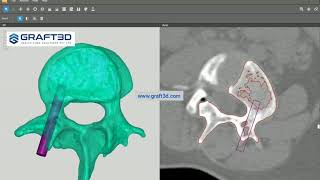
D2P™ (DICOM-to-Print) is an FDA 510(k) cleared medical device software developed by 3D Systems. It is designed to convert 2D medical imaging data, such as CT, MRI, and CBCT scans, into accurate 3D digital anatomical models. The software utilizes deep learning for automatic segmentation and includes advanced virtual reality (VR) visualization capabilities. D2P is intended for use as a software interface and image segmentation system for transferring DICOM imaging information to an output file, and for pre-operative surgical planning. The 3D-printed models generated from D2P output files are validated for diagnostic use when produced with specified 3D Systems printers and materials. Please note: This tool is a medical 3D printing and visualization software, not an AI tool for a physician directory.

Reviewed by Pouyan Golshani, MD — Interventional Radiologist

Key Features

  • DICOM viewer and analysis
  • Automatic and manual segmentation tools (deep learning driven)
  • 3D model editing tools (smoothing, thickening, thinning, trimming, hollow, shell, coloring, strength, labeling)
  • Virtual Reality (VR) visualization for non-diagnostic use
  • Seamless integration with 3D Systems printers and software (e.g., 3DSPRINT, CAD)
  • High-quality volume rendering and mesh coloring
  • Supports various imaging modalities (CT, MR, CBCT)
  • Export of 3D digital models in various file formats (STL, OBJ, PLY, DXF, IGES, 3DS, OBJ, VRML, PLY, XYZ)
  • Results overlay on patient images for precision
  • Consolidates all 3D model preparation steps into one workstation

Use Cases

  • Pre-operative surgical planning
  • Creation of diagnostic patient-specific anatomical models
  • Enhanced 3D visualization for medical staff and patient communication
  • Reducing time and effort for 3D model creation
  • Personalized medicine and surgical 3D printing
  • Medical education and research

What Physicians Need to Know

DICOM Support & Standards
D2P (DICOM-to-Print) software is designed to import and process DICOM images from various medical imaging modalities.
PACS Integration Method
D2P operates as a stand-alone modular software package where DICOM images are imported for 3D model segmentation and preparation. While it processes DICOM files, the specific method of direct PACS integration (e.g., as a PACS workstation plugin) is not explicitly detailed, suggesting standard DICOM file transfer for import.
Reading Room Workflow Impact
D2P aims to streamline the creation of patient-specific digital 3D anatomical models, enabling medical professionals to quickly generate models on their desktops. It minimizes the need for extensive technical expertise and external services, facilitating advanced visualization, surgical planning, and enhanced patient communication through 3D models and virtual reality (VR) visualization.
AI Model Architecture (deep learning approach)
D2P utilizes automatic segmentation tools driven by deep learning image processing technology to quickly and accurately create digital 3D anatomical models from medical imaging data.
Processing Speed (per study)
The software allows users to create digital 3D anatomical models within minutes, significantly reducing the time associated with model creation.
FDA Clearance Pathway (510k/De Novo)
D2P has received multiple U.S. Food and Drug Administration (FDA) 510(k) clearances, initially in March 2017 and an additional clearance in September 2019. It is classified as a Class II regulated medical device software, cleared for creating diagnostic patient-specific anatomic models and for pre-operative surgical planning.
Supported Modalities (CT/MRI/X-ray/US)
D2P supports various imaging modalities, including Computed Tomography (CT), Magnetic Resonance Imaging (MRI), and Cone Beam Computed Tomography (CBCT).
RSNA/ACR Validation
D2P technology was presented at the Radiological Society of North America (RSNA) Annual Meeting and Exhibition in 2017, showcasing its capabilities to clinicians and radiologists. No explicit mention of ACR validation was found.
Physician Tip

Leverage D2P for rapid, in-house creation of patient-specific 3D anatomical models from standard imaging data (CT, MRI, CBCT) to enhance pre-operative surgical planning, improve patient education, and facilitate communication with surgical teams. The integrated VR visualization can provide deeper anatomical understanding. Remember that while the models are diagnostic-quality, the software's primary role is for segmentation and model generation, not primary diagnostic interpretation of the original images.

D2P is a stand-alone software that imports DICOM files. It offers seamless connectivity with 3D Systems' own 3D printers and other applications like VR devices, surgical planning software, and CAD software, supporting various 3D file formats for export. While it integrates well within the 3D Systems ecosystem for printing diagnostic-quality models, direct, real-time integration with PACS for automated workflow may require manual DICOM file transfer.

Details

Category Radiology & Imaging AI, Surgical AI
Pricing Contact for pricing — Pricing is not publicly available; contact 3D Systems sales for details.
DeploymentStand-alone modular software package (workstation-based)
Compliance
BAA AvailableUnknown AI-estimated
HIPAA CompliantUnknown AI-estimated
FDA Status Yes AI-estimated

D2P software is FDA 510(k) cleared (K183489) as a Class II medical device. It is intended for use as a software interface and image segmentation system for transferring DICOM imaging information to an output file, and for pre-operative surgical planning. The 3D-printed models generated from D2P output files are validated for diagnostic use when printed in conjunction with specified 3D Systems printers and materials.

Integrations
EHR Not specified
Specialties Neurosurgery, Orthopedics, Radiology

What the Web Says

D2P (DICOM-to-Print) software by 3D Systems is an FDA 510(k)-cleared medical device that enables healthcare professionals to convert medical imaging data (like CT and MRI scans) into diagnostic-quality 3D digital models and physical 3D prints for pre-operative surgical planning and patient education. It aims to streamline the workflow from image acquisition to 3D model creation, making 3D printing more accessible in healthcare. The software also includes advanced features like deep learning for automatic segmentation and virtual reality (VR) visualization for enhanced understanding of anatomical structures.

Overall: Positive

Strengths

  • FDA 510(k)-cleared for diagnostic use and pre-operative surgical planning.
  • Quickly creates accurate 3D models from medical imaging data.
  • Consolidates 3D model segmentation and preparation steps into one workstation.
  • Includes advanced tools like deep learning for automatic segmentation and VR visualization.
  • Enhances surgical planning and patient education through detailed anatomical models.
  • Can significantly reduce time and effort associated with creating patient-specific anatomic models.

Limitations

  • High system requirements for Virtual Surgical Planning (VSP).
  • Not open-source, incurring additional costs.
  • Requires integration with Picture Archiving and Communication System (PACS) for improved workflow.
  • Some general complaints about 3D Systems (the parent company) include occasional postponed delivery dates and customer service not always being knowledgeable about prints.
  • Older Reddit discussions about 3D Systems (the company) mention an awful website and low employee satisfaction, though these are not specific to D2P.
  • Material costs for 3D Systems printers can be high.

Based on reviews from: SourceForge, G2, 3D Systems (official website/press releases), PubMed Central (PMC), Slashdot, YouTube, All3DP Pro, Reddit

Last updated: 2026-07-17

Ratings & Reviews

No reviews yet. Be the first to review this tool!

Rate D2P

Clinical Value
Ease of Use
Integration
Support & Docs
Value for Money

Press & Coverage

3D Systems
3D Systems Launches New D2P (DICOM to PRINT) Technology at Radiological Meeting
3D Systems introduced its D2P (DICOM to PRINT) technology at RSNA, enabling clinicians to quickly create accurate digital 3D anatomical models from medical imaging data. The company also unveiled Volume Virtual Reality (VR) software for immediate visualization of medical datasets in VR, enhancing 3D understanding for surgical planning.
2017-11
Imaging Technology News
3D Systems Earns Additional FDA Clearance for D2P Medical 3-D Printing Software
3D Systems received additional FDA 510(k) clearance for its D2P software, allowing clinicians to 3D print diagnostic patient-specific anatomical models. The updated software includes deep learning image processing and VR visualization, significantly reducing the time for 3D model creation.
2019-09
3D Systems
D2P Regulatory Information - 3D Systems
This page outlines the regulatory information for 3D Systems' D2P software, stating its intended use as a software interface and image segmentation system for transferring medical imaging information to an output file for pre-operative surgical planning. It also specifies that 3D-printed models generated from D2P are validated for diagnostic use when printed with specified materials and printers.
unknown
TCT Magazine
3D Systems launches on-demand service for 3D printed medical models - TCT Magazine
3D Systems launched a new On Demand Anatomical Modeling Service, connecting its D2P software with an online platform to enable medical professionals to quickly create 3D anatomical models. The service also integrates a Volume VR module for enhanced visualization of patient scans.
2025-11
PR Newswire
3D Systems Announces On Demand Anatomical Modeling Service
3D Systems announced its new On Demand Anatomical Modeling Service, providing medical professionals with access to 3D printed anatomical models from their digital files. The service streamlines the process from D2P software to physical model, enhancing surgical planning and patient education.
2018-06
accessdata.fda.gov
3D Systems, Inc. August 28, 2019 Kim Torluemke VP Quality & Regulatory, Healthcare 5381 South Alkire Circle LITTLETON, C - accessdata.fda.gov
This FDA 510(k) summary details the D2P software's intended use as a software interface and image segmentation system for transferring DICOM imaging information to an output file for pre-operative surgical planning. It also highlights the ability to use the electronic output to print physical anatomical models for diagnostic use across various medical applications.
2019-08
PMC (PubMed Central)
Comparison of segmentation software packages for in-hospital 3D print workflow - PMC
A comparative study evaluated segmentation software for in-hospital 3D printing, including D2P, finding that D2P and Mimics Innovation Suite (MIS) are capable of enhancing the workflow based on segmentation time and 3D mesh quality. The study suggests integration with PACS for improved efficiency.
2021-06
MDPI
Three-Dimensional Printing and Digital Flow in Human Medicine: A Review and State-of-the-Art - MDPI
This review article discusses the increasing use of 3D printing in medicine, highlighting its impact on patient communication, medical education, diagnosis, and surgical planning. It emphasizes the digital workflow involved, from 3D image acquisition to modeling and printing.
2022-12

Videos

Product demos, reviews, and walkthroughs for D2P.

View all on YouTube

Frequently Asked Questions

D2P, and comparable AI solutions, are designed to integrate seamlessly into existing clinical workflows by automating routine tasks and providing decision support, thereby reducing additional workload for physicians. Effective integration is crucial for adoption, with systems that align with common standards and are tailored to medical professionals' tasks being more readily welcomed. [4]
The D2Pu2122 software, for example, is FDA-cleared and primarily used to create patient-specific, diagnostic 3D anatomical models from medical imaging data. These models facilitate pre-operative surgical planning, enhance communication between medical staff and patients, and can be utilized across various platforms like VR systems and CAD software. [19, 20]
Healthcare AI tools like D2P are often regulated under frameworks for medical devices, including FDA clearance for diagnostic applications. Compliance extends to data privacy and security, such as HIPAA, and increasingly includes state-specific transparency and disclosure requirements for AI use in patient care. [2, 6, 12, 13]
Liability for AI-related errors in healthcare is an evolving area, often informally falling to clinicians, but with increasing calls for vendor responsibility and transparency. New regulations are emerging that may require patient consent or notifications when AI is used, potentially increasing liability risks for physicians if transparency is not provided by the AI developer. [4, 11, 13]
Alternatives to specialized AI solutions include traditional clinical expertise and established non-AI digital health tools for data management. For clinical decision support, physicians might rely on evidence-based guidelines, peer consultations, or general-purpose AI chatbots, though specialized AI tools are often preferred for accuracy and safety in medical contexts. [21, 24, 25, 26]
Pricing models for healthcare AI vary, including flat licensing fees, usage-based models (e.g., per patient or per test), and hybrid structures combining a base fee with variable components. Costs can range significantly based on complexity, customization, integration needs, and regulatory pathways, with some advanced solutions costing hundreds of thousands to millions of dollars. [1, 8, 14, 17]
Key limitations include concerns about AI reliability, potential for algorithmic bias leading to inaccurate or discriminatory outcomes, and a lack of transparency in how AI systems arrive at their decisions. There are also risks of over-reliance on AI, deskilling of healthcare professionals, and challenges with integrating systems into existing workflows. [3, 4, 5, 7, 9, 15, 18, 22, 23]

Related Tools

Surgical Reality Viewer
Surgical Reality
Oncology AI
Surgical Reality offers CE- and FDA-certified AI-powered 3D medical imaging and surgical planning software that transforms CT scans into patient-specific 3D models for thoracic surgery, enhancing precision in complex lung procedures.
Oxipit ChestLink
Oxipit (part of Sectra group)
Clinical Decision Support & Reference
Oxipit ChestLink is the world's first CE Class IIb-certified autonomous AI application for healthy chest X-ray reporting, capable of identifying normal studies with 99.9% sensitivity. It automates the reporting of normal chest X-rays, reducing radiologist workload and improving efficiency.
Cercare Medical Oncology Virtual Expert
Cercare Medical
Neurology AI
Cercare Medical's Oncology Virtual Expert is an AI-powered brain tumor segmentation module that provides fast, consistent, and semi-automated tumor analysis from standard MRI data, designed for on-premise deployment within existing clinical radiology workflows.
CARPL.ai
CARPL.ai
Developer Tools & APIs
CARPL.ai is a vendor-neutral Artificial Intelligence (AI) platform that allows radiologists to access, assess, and integrate radiology AI solutions in their clinical practice. It provides a single user interface, a single data channel, and a single procurement channel for the testing, deployment, and monitoring of AI solutions in clinical radiology workflows.
CoLumbo C-Spine
Smart Soft Healthcare AD
Clinical Decision Support & Reference
CoLumbo C-Spine is an AI-powered software that processes and analyzes cervical spine MRI exams, assisting clinicians in diagnosis and assessment.
SubtleHD-CT
Subtle Medical, Inc.
Radiology & Imaging AI
Subtle Medical's SubtleHD-CT is an AI software designed to enhance the quality and resolution of CT scans, reducing noise and improving image clarity. [7]

See all Radiology & Imaging AI tools →

Suggest an Edit → | Last Verified: 2026-04-17 | First Added: 2026-04-17
AI Tool Finder
AI-powered search. Results may not be comprehensive.