DIFFMASTER OCTAVIA AUTOMATIC HEMATOLOGY ANALYZER
Overview
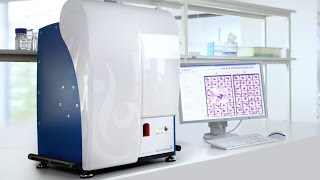
The DIFFMASTER OCTAVIA AUTOMATIC HEMATOLOGY ANALYZER, developed by CellaVision AB, was an early automated cell-locating device designed for in-vitro diagnostic use in clinical laboratories. Launched in early 2001, it aimed to automate and simplify the process of performing differential counts of white blood cells (WBC) and characterizing red blood cell (RBC) morphology, tasks traditionally conducted through manual microscopy. The system utilized a proprietary software system (Cytologica) combined with a sophisticated hardware platform to automatically locate and capture high-quality digital images of blood cells on peripheral blood specimens. It leveraged artificial neural networks for the pre-classification of leukocytes, presenting these images for review and verification by a skilled operator. While innovative for its time, the DiffMaster Octavia was CellaVision’s first product and was later discontinued, with approximately 80 systems sold before being succeeded by more automated and higher-throughput models like the CellaVision DM96.
Reviewed by Pouyan Golshani, MD — Interventional Radiologist
Key Features
- Automated cell locating on blood smears
- Differential count of white blood cells (WBC)
- Characterization of red blood cell (RBC) morphology
- Digital imaging of blood cells
- Software-based pre-classification using artificial neural networks
- Operator review and verification of cell classification
- Aimed at improving efficiency and diagnostic quality in hematology labs
- High image quality and user-friendly interface
Use Cases
- Routine analysis of peripheral blood samples in hematology laboratories
- Automated differential count of white blood cells
- Automated characterization of red blood cell morphology
- Preclassification of leukocytes in patients with hematological diseases
- Replacing or assisting manual microscopy for blood cell analysis
What Physicians Need to Know
The DiffMaster Octavia provides rapid and accurate preclassification of white and red blood cells, enhancing efficiency in hematology diagnostics. Physicians should note that while the system offers AI-assisted preclassification, a skilled technologist is still required to review and confirm or modify the suggested cell classifications, ensuring high-quality differential counts. This tool can lead to faster turnaround times for blood smear analysis, aiding in quicker diagnostic decisions, especially in conditions requiring urgent leukocyte classification, such as hematological diseases.
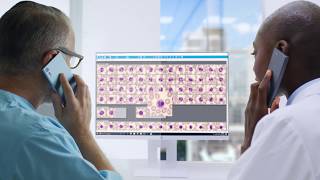
The DiffMaster Octavia is designed to integrate into laboratory workflows by enabling the sharing of patient information and facilitating telehematologic consultations via Ethernet connectivity. This implies compatibility with broader laboratory information systems (LIS/LIMS) for seamless data transfer and centralized review of results and images, which is crucial for efficient laboratory operations and patient management.
Details
| Category | Lab & Diagnostics, Pathology AI |
| Pricing | Unknown |
| Deployment | On-premise (physical analyzer) |
| Compliance | |
| BAA Available | Unknown AI-estimated |
| HIPAA Compliant | Unknown AI-estimated |
| FDA Status |
1 AI-estimated The DiffMaster Octavia™ Automatic Hematology Analyzer received FDA 510(k) clearance (K003301) on March 15, 2001. It is classified as a Class II automated cell-locating device (21 CFR 864.5260, product code JOY) intended for in-vitro diagnostic use. |
| Integrations | |
| EHR | Not specified |
| Specialties | Hematology, Laboratory Medicine, Pathology |
What the Web Says
The CellaVision DIFFMASTER OCTAVIA AUTOMATIC HEMATOLOGY ANALYZER was an automated hematology analyzer cleared by the FDA in 2001. It utilized digital imaging and artificial intelligence to pre-classify white blood cells and characterize red blood cell morphology on peripheral blood smears, aiming to improve efficiency in clinical laboratories. However, the product has since been discontinued, with only about 80 systems sold before CellaVision developed the higher-throughput DM96. Reviews indicate that while it offered automation and improved efficiency for routine samples, it had limitations with abnormal samples and specific cell morphologies.
Overall: MixedStrengths
- Automated morphological analysis of peripheral blood films.
- Improved efficiency and reduced turnaround time for routine films.
- Good correlation with manual differentiation for WBC analysis.
- Ability to take screenshots and save cases for sharing and education.
- Reduced labor costs and physical occupational health and safety hazards compared to conventional microscopy.
Limitations
- Discontinued product.
- Did not meet expected success, with low sales numbers.
- Limitations with body fluids, especially those with low WBC counts, often failing analysis.
- Difficulty in identifying certain RBC morphologies (e.g., HJ bodies) due to inability to focus up and down on the slide.
- Sometimes selected poor areas of the slide for RBC morphology analysis.
- Classification accuracy depended on the type of pathological changes in the blood sample, operating most effectively with non-pathological samples.
- Steep learning curve for new staff and experienced morphologists had trouble trusting it.
- Challenges with critical blood film abnormalities, including detection of platelet clumping and blast cells.
Based on reviews from: Medical AI Tools for Physicians, ResearchGate, Reddit, PubMed, American Journal of Clinical Pathology, J-Stage, FDA, Innolitics
Last updated: 2026-07-17
Ratings & Reviews
No reviews yet. Be the first to review this tool!
Rate DIFFMASTER OCTAVIA AUTOMATIC HEMATOLOGY ANALYZER
Press & Coverage
Videos
Product demos, reviews, and walkthroughs for DIFFMASTER OCTAVIA AUTOMATIC HEMATOLOGY ANALYZER.
CellaVision DM1200