MAGNETOM Prisma

by Siemens Medical Solutions USA  · Based in United States →The 3T PowerPack for Exploration
Neurology Neurosurgery Radiology

Contact vendor for pricing
Regulatory Status Disclosed

Overview

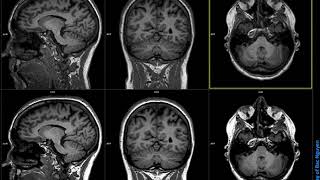
The MAGNETOM Prisma is a high-performance 3T Magnetic Resonance Imaging (MRI) scanner from Siemens Healthineers, designed to meet the demands of both advanced clinical applications and cutting-edge research. It delivers unparalleled image quality and exceptional gradient performance, offering extraordinarily high spatial and temporal resolution. This system is particularly adept at visualizing fine anatomical details and functional information across a wide range of studies.

Equipped with innovative technologies such as XR Gradients (80 mT/m at 200 T/m/s slew rate), Tim 4G integrated coil technology, and the syngo MR XA software platform, MAGNETOM Prisma provides advanced capabilities for comprehensive diagnostic and research imaging. Its robust design ensures maximum performance even under prolonged, high-strain conditions, making it a powerful tool for exploring new frontiers in medical imaging.

Reviewed by Pouyan Golshani, MD — Interventional Radiologist

Key Features

  • 3 Tesla (3T) magnet
  • XR Gradients (80 mT/m at 200 T/m/s slew rate)
  • Tim 4G integrated coil technology
  • syngo MR XA Software Platform
  • BioMatrix Technology
  • Quiet Suite
  • Parallel transmit technology TimTX TrueShape
  • Dot (Day optimizing throughput) engines
  • Zero Helium boil-off technology
  • Advanced shimming solutions

Use Cases

  • Functional MRI (fMRI)
  • Diffusion Spectrum Imaging (DSI)
  • Neuroimaging (brain functionality, white-matter fibers)
  • Cardiovascular imaging
  • Oncology studies (e.g., prostate, breast)
  • Musculoskeletal imaging
  • Advanced research (body physiology, organ morphometry, tissue metabolism, quantitative MRI)

What Physicians Need to Know

Brain MRI Analysis
MAGNETOM Prisma offers high-resolution 3T MRI for detailed anatomical and functional brain imaging, including Diffusion Spectrum Imaging (DSI) with up to 514 diffusion directions, Diffusion Tensor Imaging (DTI), perfusion imaging, and fMRI. It provides excellent anatomical detail, visualizing fine anatomical structures and functional information. The Dot (Day optimizing throughput) engine automates and standardizes exam workflows, enhancing efficiency and consistency. The Syngo D13 software includes InLine Automated Processing and Auto Align slice positioning for consistent and reproducible scanning. The system's advanced gradient performance and fast switching speed increase image quality, particularly in diffusion imaging.
AI-Assisted Image Reconstruction
The MAGNETOM Prisma, as a Siemens MRI system, can leverage AI-powered image reconstruction technologies such as Deep Resolve, which combines parallel imaging, Simultaneous Multi-Slice (SMS), and AI-powered reconstruction to drastically reduce scan times and enhance image quality. The SMS application itself can reduce 2D acquisition times for brain MRI examinations, including Diffusion Tensor Imaging (DTI), by as much as a factor of 8.
Seizure Detection (Imaging Focus)
The high-resolution 3T MRI capabilities of MAGNETOM Prisma are highly relevant for detecting epileptogenic zones in patients with MRI-negative focal epilepsy, uncovering previously undiscovered abnormalities such as focal cortical dysplasia and mesial temporal sclerosis, which are crucial for guiding surgical intervention for seizure freedom.
Neurodegenerative Disease Screening (Imaging Focus)
The system delivers high anatomical detail and supports advanced neuroimaging applications (e.g., DTI, fMRI, quantitative MRI) that are valuable for understanding and studying neurodegenerative diseases by revealing subtle structural and functional changes.
Large Vessel Occlusion Detection (Imaging Focus)
MAGNETOM Prisma's Angio Suite provides excellent MR Angiography capabilities for visualizing arteries and veins, which is essential for the detection of large vessel occlusions.
Physician Tip

Leverage the MAGNETOM Prisma's high spatial and temporal resolution for unparalleled anatomical and functional insights in complex neurological cases. Utilize advanced sequences like Diffusion Spectrum Imaging (DSI) and perfusion imaging for comprehensive assessment of brain microstructure and hemodynamics. Employ the Dot engine for standardized and efficient workflows, ensuring consistent image quality and optimizing patient throughput. The system's capabilities are particularly beneficial for pre-surgical planning in epilepsy and for in-depth research into neurodegenerative diseases. Integrate with compatible AI-powered reconstruction tools to further accelerate imaging and enhance diagnostic precision.

The MAGNETOM Prisma's open architecture and DICOM connectivity facilitate seamless integration with various post-processing platforms, Picture Archiving and Communication Systems (PACS), and research environments. It supports compatibility with MR-compatible EEG systems for multimodal data acquisition. The system is designed to work with advanced Siemens software platforms (e.g., Syngo MR E11/XA30) and can leverage Siemens Healthineers' AI-powered image reconstruction solutions like Deep Resolve to optimize image acquisition and quality.

Details

Category Neurology AI, Radiology & Imaging AI
Pricing Contact vendor for pricing Contact vendor for pricing
DeploymentOn-premise
Compliance
BAA AvailableUnknown AI-estimated
HIPAA CompliantUnknown AI-estimated
FDA Status 1 AI-estimated

The MAGNETOM Prisma 3T MRI system received 510(k) clearance (K231560) from the U.S. Food and Drug Administration in December 2013. It is classified as a Class II Magnetic Resonance Diagnostic Device (MRDD).

Integrations
EHR Not specified
Specialties Neurology, Neurosurgery, Radiology

What the Web Says

The Siemens MAGNETOM Prisma is a 3T MRI system highly regarded by physicians and researchers for its advanced capabilities in both diagnostic imaging and research. It offers exceptionally high spatial and temporal resolution, enabling detailed visualization of anatomical structures and functional information. The system is particularly noted for its powerful gradients and advanced imaging techniques, which contribute to faster scan times, higher resolution images, and fewer artifacts.

Overall: Positive

Strengths

  • Exceptionally high spatial and temporal resolution for outstanding image quality.
  • Powerful XR 80/200 gradients and fast slew rates, unmatched in commercial whole-body systems.
  • Reduced scan times and fewer artifacts.
  • Advanced applications like Diffusion Spectrum Imaging (DSI) and syngo ZOOMit for detailed anatomical insights and zoomed imaging.
  • Robust design for precision in demanding applications like fMRI.
  • Dot (Day optimizing throughput) engines for increased consistency, reproducibility, and automation in clinical and research workflows.

Limitations

  • 3T MRI systems are closed machines, which can be disconcerting for claustrophobic patients.
  • Potentially higher Specific Absorption Rate (SAR) compared to some other Siemens 3T systems.
  • Some users on Reddit found Siemens MRI software overwhelming compared to GE, suggesting a steeper learning curve.
  • One study noted an impact of the Trio to Prisma upgrade on some structural imaging measures, although overall reliability remained high.

Based on reviews from: MXR Imaging, Gizmodo, Siemens Receives FDA Clearance for Magnetom Prisma 3T MRI System, UCLA Brain Mapping Center, MR-TIP: Database, Center for Imaging Science (CIS) at Florida International University - CISMRI Site, Siemens MAGNETOM Prisma from Siemens designed to explore new frontiers in MRI, ResearchGate, Reddit

Last updated: 2026-07-21

Ratings & Reviews

No reviews yet. Be the first to review this tool!

Rate MAGNETOM Prisma

Clinical Value
Ease of Use
Integration
Support & Docs
Value for Money

Press & Coverage

Siemens Healthineers (via an archived news source)
Siemens Receives FDA Clearance for Magnetom Prisma 3T MRI System
Siemens Healthcare announced FDA clearance for the Magnetom Prisma, a 3T MRI scanner offering high spatial and temporal resolution for demanding applications. The system features XR Gradients and Dot engines for consistency in research and clinical work.
2013-12
PRgloo
New 3-Tesla MRI system unveiled by Siemens - PRgloo
Siemens Healthcare unveiled the MAGNETOM Prisma MRI system at RSNA 2012, with European availability planned for the second half of 2013. This 3-Tesla system combines high gradient strength and fast gradient slew rates for excellent image quality, especially in advanced research applications.
2012-11
Digital Health
MAGNETOM Prisma from Siemens designed to explore new frontiers in MRI
Siemens Healthcare's new MAGNETOM Prisma MRI system, launched at RSNA 2012, is set for European release later in 2013. It offers advanced gradient performance and Diffusion Spectrum Imaging (DSI) for detailed brain imaging and other research fields.
2013-01
healthcare-in-europe.com
MRI powerhouse breaks new ground in medical research - healthcare-in-europe.com
At RSNA 2012, Siemens launched the Magnetom Prisma 3.0 T, a sophisticated tool for basic and clinical research, emphasizing its powerful magnetic and gradient fields for unprecedented image quality and precision.
2012-11
DAIC
Siemens Announces First U.S. Installation of Magnetom Prisma 3T MRI System | DAIC
The Center for Magnetic Resonance Research at the University of Minnesota became the first U.S. facility to install Siemens Healthcare's Magnetom Prisma 3T MRI system in May 2014. The system's XR Gradients and Diffusion Spectrum Imaging (DSI) enable detailed brain imaging.
2014-05
DOTmed
FDA clears Siemens' new 3T MRI - DOTmed
Siemens Healthcare received FDA approval for its MAGNETOM Prisma 3 Tesla MRI scanner, designed for highly demanding research and clinical applications due to its high spatial and temporal resolution.
2013-12
24x7 Magazine
FDA Clears Siemens Magnetom MRI - 24x7
Siemens Healthcare announced FDA clearance for the Magnetom Prisma, a 3T MRI scanner featuring XR Gradients and Diffusion Spectrum Imaging for detailed brain imaging and other demanding applications.
2013-12
accessdata.fda.gov
Class 2 Device Recall MAGNETOM Prisma
A Class 2 Device Recall was issued for MAGNETOM Prisma MRI systems due to a potential open port in the quench venting system when using the optional horizontal outlet on the quench line assembly.
2026-06

Videos

Product demos, reviews, and walkthroughs for MAGNETOM Prisma.

View all on YouTube

Frequently Asked Questions

The MAGNETOM Prisma integrates AI through solutions like the AI-Rad Companion family, which automates tasks such as brain segmentation for morphometry analysis and prostate segmentation for biopsy support, reducing radiologists' workload. Additionally, Siemens' Dot engines provide automation and reproducibility for consistent image acquisition and research studies, streamlining workflows and improving efficiency.
Siemens Healthineers' AI-based software assistants, such as those in the AI-Rad Companion family, have received FDA clearance, indicating they meet specific safety and effectiveness standards for clinical use. The MAGNETOM Prisma itself is cleared by the FDA as a magnetic resonance diagnostic device, and its software adheres to medical device software standards like IEC 62304.
While the MAGNETOM Prisma offers advanced AI features, other manufacturers also provide AI-enabled MRI systems. For instance, Philips Ingenia Elition 3.0T MRI incorporates AI for performance in challenging diagnostic scenarios, and GE Healthcare also offers AI-powered MRI solutions.
The MAGNETOM Prisma, as a 3.0T MRI system, typically ranges from $1.6 to $2.2 million for a new unit, with refurbished options available at a lower cost. While specific AI feature pricing isn't detailed as separate line items in general overviews, Siemens often integrates AI into its syngo MR XA software platform and offers AI-enabled services, suggesting some functionalities may be bundled or available through service agreements.
AI in the MAGNETOM Prisma primarily serves a supportive role, automating repetitive tasks and optimizing workflows, but it does not replace human interpretation. While AI can assist in image analysis and provide decision support, complex case interpretation, nuanced diagnostic decisions, and the handling of potential artifacts in 3.0T systems still require the indispensable expertise of a trained physician.
The MAGNETOM Prisma, and Siemens' broader MRI portfolio, utilizes BioMatrix Technology, which incorporates sensors and tuners to automatically adapt scanning protocols to individual patient anatomy and physiology. This technology helps to compensate for patient-induced field disturbances and motion, aiming to ensure consistent image quality despite patient variability.

Related Tools

DETECT-ME/CFS project
ME/CFS Research Foundation (Sponsor: Federal Ministry of Health (BMG))
Clinical Decision Support & Reference
The DETECT-ME/CFS project is developing an AI-supported clinical decision support system to improve the rapid and reliable diagnosis of Myalgic Encephalomyelitis/Chronic Fatigue Syndrome.
Neurotrack
Neurotrack
Clinical Decision Support & Reference
Neurotrack is a cognitive care enablement platform that provides clinically validated, FDA class II device assessments and care planning support to identify and manage cognitive decline and dementia earlier and with greater accuracy.
LesionQuant
CorTechs Labs
Neurology AI
LesionQuant, an FDA-approved AI product by CorTechs Labs, is particularly useful for patients with multiple sclerosis. It provides brain structure data and quantifies the number, size, and location of lesions, comparing them to prior studies.
ExcelsiusGPS
Globus Medical
Neurology AI
ExcelsiusGPS™ is the first and only robotic navigation platform on the market that offers a comprehensive approach to spine and cranial procedures, from start to finish. The system enables repeatable and accurate trajectory alignment and navigation for placing screws, interbody implants, and cranial instruments.
Onera SleepMap
Onera B.V.
Neurology AI
Onera SleepMap is an AI-powered sleep analysis software that processes polysomnography data, part of Onera Health's innovative patch-based system for at-home and in-lab sleep studies. The system aims to make clinical-grade sleep diagnostics more accessible and user-friendly, providing comprehensive data comparable to traditional in-lab PSG.
JLK-NCCT
JLK-NCCT
Clinical Decision Support & Reference
JLK-NCCT is an AI software designed to assist in the analysis of non-contrast CT brain scans for the detection of acute ischemic stroke.

See all Neurology AI tools →

More from Siemens Medical Solutions USA

ACUSON Sequoia Diagnostic Ultrasound System
Siemens Medical Solutions USA
Radiology & Imaging AI
The ACUSON Sequoia Diagnostic Ultrasound System by Siemens Healthineers is a premium platform featuring BioAcoustic imaging, InFocus technology, and AI-powered tools to deliver consistent, high-resolution ultrasound imaging across diverse patient types and clinical applications.
AI Rad Companion (Engine)
Siemens Medical Solutions USA
Radiology & Imaging AI
Siemens AI-Rad Companion (Engine) is an FDA-cleared, AI-powered, cloud-based platform that streamlines radiology workflows and enhances diagnostic precision through automated image post-processing and structured reporting across multiple modalities.
AI-Rad Companion (Musculoskeletal)
Siemens Medical Solutions USA
Radiology & Imaging AI
AI-Rad Companion (Musculoskeletal) by Siemens Medical Solutions USA is an FDA-cleared AI-powered image processing software for quantitative and qualitative analysis of musculoskeletal conditions from CT DICOM images, supporting radiologists and physicians in diagnostic evaluation.
AI-Rad Companion Engine
Siemens Medical Solutions USA
Radiology & Imaging AI
The AI-Rad Companion Engine is an AI-powered, cloud-based platform by Siemens Medical Solutions USA that automates post-processing and enhances diagnostic precision in medical image interpretation across multiple modalities.

View company profile →

Suggest an Edit → | Last Verified: 2026-04-20 | First Added: 2026-04-20
AI Tool Finder
AI-powered search. Results may not be comprehensive.