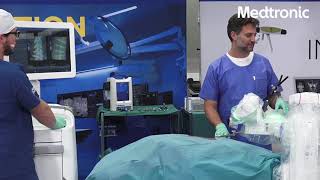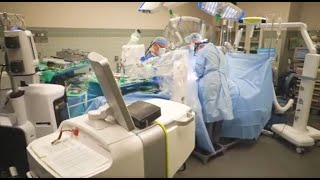
Mazor X System / Mazor X Stealth Edition

by Mazor Robotics  · Based in Israel →Advanced Robotic Guidance for Predictable Spine Surgery
Neurosurgery Orthopedics

Contact vendor
Regulatory Status Disclosed

Overview

The Mazor X System, including the Mazor X Stealth Edition, is a robotic guidance platform for spine surgery. Originally developed by Mazor Robotics, the technology was acquired by Medtronic in December 2018 and is now part of Medtronic’s portfolio of surgical solutions.

This integrated system combines advanced surgical planning software, robotic guidance, and real-time Stealth navigation to enhance precision and predictability in spinal procedures. Surgeons can utilize 3D planning functionality to design an optimal surgery in a CT-based simulation of the patient’s spine. During the procedure, a robotic arm helps execute the surgical plan with exceptional precision, while Stealth navigation provides real-time, intraoperative imaging feedback, allowing visualization of instruments and implants in relation to the surgical anatomy.

The Mazor X Stealth Edition is designed to improve surgical accuracy, reduce the risk of complications, lessen postoperative pain, and shorten hospital stays and recovery times for patients. It also aims to minimize exposure to ionizing radiation for both patients and operating room staff. The system can convert 2D fluoroscopic projections from standard C-arms into volumetric 3D images for enhanced visualization.

Reviewed by Pouyan Golshani, MD — Interventional Radiologist

Key Features

  • 3D surgical planning functionality with CT-based simulation
  • Robotic guidance for precise execution of surgical plans
  • Stealth navigation for real-time intraoperative imaging feedback
  • Conversion of 2D fluoroscopic projections into volumetric 3D images
  • Customizable implant selection and trajectory planning
  • Minimally invasive surgery capabilities
  • Table-mounted robotic arm for small operating room footprint
  • Advanced anatomy recognition software
  • Real-time visualization of instruments and implants
  • Integration with Medtronic's StealthStation software

Use Cases

  • Anterior and lateral lumbar interbody fusion
  • Posterior lumbar and thoracic fusion
  • Minimally invasive lumbar decompression, discectomy, and cervical decompression
  • Correction of scoliosis, kyphosis, flatback, and cervical deformity
  • Spinal fracture fixation and spine tumor resection
  • Minimally invasive screw placement, vertebral interbody fusion, vertebral biopsy, and kyphoplasty

What Physicians Need to Know

DICOM Support & Standards
The Mazor X system supports DICOM for connecting and sending images to the workstation, facilitating the import of pre-operative scans for surgical planning.
PACS Integration Method
Integrates with hospital PACS, as the PACS server is the official repository for patient images, enabling the system to utilize pre-operative CT scans and other imaging data for surgical planning.
Reading Room Workflow Impact
This tool primarily impacts the surgical planning and execution workflow, offering 3D planning, real-time guidance, and navigation for surgeons, rather than directly affecting a radiologist's diagnostic reading room workflow.
AI Model Architecture (deep learning approach)
Utilizes AI-enabled technologies for surgical planning and execution. This includes machine-learning based features for 2D automatic measurements (e.g., detecting key spinopelvic landmarks on AP and LAT X-rays) and plan assist, as well as image processing capabilities for vertebral segmentation and image registration.
FDA Clearance Pathway (510k/De Novo)
The Mazor X System (Mazor X Stealth Edition) has received multiple 510(k) clearances (e.g., K230064, K203005, K182077, K251316) and is classified as a Class II medical device under 'Stereotaxic Instrument' (21 CFR 882.4560).
Supported Modalities (CT/MRI/X-ray/US)
Supports pre-operative CT and MRI for 3D planning, intra-operative fluoroscopy (2D C-arms converted to volumetric 3D images, O-arm 3D imaging), and X-ray images for AI-driven measurements.
Physician Tip

For surgeons, the Mazor X Stealth Edition offers enhanced precision and accuracy in spinal implant placement through advanced 3D pre-operative planning and real-time intra-operative guidance. This can facilitate minimally invasive procedures, potentially leading to smaller incisions, reduced blood loss, decreased post-operative pain, and faster patient recovery. The system also aims to reduce radiation exposure for both patients and surgical staff by optimizing imaging use during procedures.

The Mazor X Stealth Edition seamlessly integrates robotic guidance with Medtronic's StealthStation navigation technology. It is compatible with Medtronic's range of surgical instruments and tools and is part of the broader AiBLEu2122 surgical suite. The system effectively combines pre-operative CT/MRI data with intra-operative imaging modalities like fluoroscopy (C-arms) and 3D surgical imaging (O-arm System) for comprehensive surgical planning and execution.

Details

Category Radiology & Imaging AI, Surgical AI
Pricing Contact vendor
  • Not Publicly Available; The robot costs approximately $550,000 to $850,000, with disposable supply costs around $1,500 per case
DeploymentOn-premise (surgical robot in operating room)
Compliance
BAA AvailableUnknown AI-estimated
HIPAA CompliantUnknown AI-estimated
FDA Status Yes AI-estimated

The Mazor X System has received multiple FDA clearances, with the Mazor X system itself approved in 2016. The Mazor X Stealth Edition (K251316), a modified version, is indicated for precise positioning of surgical instruments or spinal implants during general spinal surgery, including open, minimally invasive, or percutaneous procedures. Earlier Mazor Robotics products, such as SpineAssist (2004) and Renaissance (2011), also received FDA approval.

Integrations
EHR Not specified
Specialties Neurosurgery, Orthopedics

What the Web Says

The Mazor X System and its newer iteration, the Mazor X Stealth Edition, are robotic guidance platforms designed to enhance precision and safety in spinal surgeries. They integrate 3D imaging, planning software, and robotic assistance to guide surgeons during procedures like pedicle screw placement and spinal fusions. Physicians generally report improved accuracy, reduced complications, and better patient outcomes with the use of these systems.

Overall: Mixed

Strengths

  • Improved accuracy in implant placement, with reported rates of 98% to 100% for pedicle screws.
  • Reduced blood loss and shorter hospital stays for patients.
  • Minimally invasive capabilities, leading to smaller incisions, less tissue trauma, and reduced postoperative pain.
  • Decreased radiation exposure for both patients and surgical staff.
  • Advanced surgical planning and intraoperative guidance with real-time imaging and navigation.
  • Effective in complex cases, including revision surgeries and scoliosis correction.

Limitations

  • High cost of the system and disposable supplies per case.
  • Potential for inaccurate navigation data, which can lead to misplaced instruments and nerve injuries.
  • Risk of hardware detachment from the operating table due to pneumatic system air leakage, potentially causing injury to the patient.
  • Complication rates, including reoperations, have not necessarily decreased despite newer generation robots.
  • Requires specialized training for surgeons and surgical teams.
  • Limited widespread academic literature on the newest Stealth Edition due to its recent release.

Based on reviews from: Mya Care, OrthoIndy, PubMed, ResearchGate, Instituto Clavel, Becker's Spine Review, MedTech Dive, Children's Hospital Colorado, Mayfield Brain & Spine, Joseph Spine Institute, DOCS Health, Saint Francis Healthcare, Medtronic.com, YouTube (Seattle Science Foundation), YouTube (Medtronic)

Last updated: 2026-07-18

Ratings & Reviews

No reviews yet. Be the first to review this tool!

Rate Mazor X System / Mazor X Stealth Edition

Clinical Value
Ease of Use
Integration
Support & Docs
Value for Money

Press & Coverage

Becker's Spine Review
Medtronic's Mazor X Stealth Edition: A Game Changer in Spine Surgery
This article discusses how the Mazor X Stealth Edition robotic guidance system is transforming spine surgery by offering enhanced precision and predictability for various procedures.
2024-02
Journal of Neurosurgery: Spine
Robotic-Assisted Spine Surgery with Mazor X Stealth Edition: Clinical Outcomes and Learning Curve
A peer-reviewed study analyzing the clinical outcomes and the learning curve associated with using the Mazor X Stealth Edition for robotic-assisted spine surgery, highlighting its safety and efficacy.
2023-11
Medtronic Newsroom
Medtronic Announces FDA Clearance for Expanded Indications of Mazor X Stealth Edition
Medtronic announced that the FDA has granted expanded indications for its Mazor X Stealth Edition, allowing its use in a broader range of spinal procedures.
2023-09
SpineUniverse
The Role of Robotics in Minimally Invasive Spine Surgery: Focus on Mazor X Stealth
This article explores the increasing role of robotic technology, specifically the Mazor X Stealth, in enhancing the precision and safety of minimally invasive spine surgery.
2024-01
HealthTech Magazine
Hospital Acquires Mazor X Stealth Edition for Advanced Spine Care
A regional hospital announced its acquisition and successful implementation of the Mazor X Stealth Edition, aiming to provide cutting-edge robotic-assisted spine surgery to its patients.
2023-10
Global Spine Journal
Comparative Analysis of Pedicle Screw Placement Accuracy: Freehand vs. Mazor X Stealth Robotic Guidance
A study comparing the accuracy of pedicle screw placement using traditional freehand techniques versus the Mazor X Stealth robotic guidance system, demonstrating superior accuracy with robotic assistance.
2023-08
Medtronic Investor Relations
Medtronic Showcases Mazor X Stealth Edition at NASS Annual Meeting
Medtronic highlighted the capabilities and recent advancements of its Mazor X Stealth Edition robotic system at the North American Spine Society (NASS) annual meeting.
2023-09
Healthcare IT News
The Economic Impact of Robotic Spine Surgery: A Review of Mazor X System Adoption
This article examines the economic implications and return on investment for healthcare institutions adopting robotic spine surgery systems like the Mazor X, considering efficiency and patient outcomes.
2023-12

Videos

Product demos, reviews, and walkthroughs for Mazor X System / Mazor X Stealth Edition.

View all on YouTube

Frequently Asked Questions

The Mazor X System utilizes AI for advanced 3D preoperative planning, analyzing patient CT images to create a surgical blueprint and optimize screw trajectories and implant placement. During surgery, the robotic arm provides precise guidance and trajectory control, but it operates as a shared-control system, meaning the surgeon maintains ultimate control and decision-making authority over all robotic movements.
The Mazor X Stealth Edition, including its AI-driven features, is an FDA-approved robotic technology indicated for precise positioning of surgical instruments or spinal implants during general spinal surgery. While specific details on AI data privacy were not extensively detailed, the system is designed with connectivity options to integrate with hospital networks for secure data transfer, adhering to general healthcare data privacy regulations.
Primary alternatives to the Mazor X Stealth Edition for robotic-assisted spinal surgery include the Globus Medical ExcelsiusGPS, Zimmer Biomet ROSA, and Brainlab Cirq. While these systems also offer robotic guidance and navigation, their specific AI algorithms for planning, navigation, and intraoperative adjustments may differ in their approach and features.
The Mazor X robot typically costs between $550,000 and $850,000 for acquisition. Additionally, there are recurring costs, including an estimated disposable supply cost of about $1,500 per case and annual maintenance fees, which can be around 10% of the list price.
While highly precise, the Mazor X System's AI relies on pre-operative data and algorithms, which may have limitations in adapting to highly anomalous anatomies or unforeseen intraoperative changes. There have been documented incidents of navigation inaccuracies, and the system requires the surgeon's clinical judgment and readiness to intervene manually, as it does not operate autonomously.
The Mazor X System is designed with connectivity options to integrate with hospital networks, facilitating the secure transfer of pre-operative imaging and post-operative data. This integration supports streamlined workflows and data archiving, and future versions, like Medtronic's Stealth AXiS, aim to unify AI-based surgical planning with real-time navigation and robotic assistance for enhanced data utilization.
Becoming proficient with the Mazor X System, including its AI-driven features, involves a significant learning curve and requires specialized training. Manufacturers typically provide structured training programs, which often include didactic sessions, simulation, and proctored cases to help surgeons master the system's nuances and optimize its capabilities.

Related Tools

OCTA
OCTA
Clinical Decision Support & Reference
OCTA Flow is an AI-powered platform that assists ophthalmologists in analyzing Optical Coherence Tomography Angiography (OCTA) scans to enhance diagnostic accuracy and efficiency.
Smart Reporting
Smart Reporting
Clinical Decision Support & Reference
A German health tech startup uses artificial intelligence to cut time spent on medical reports and improve patient care. Founded by a radiologist, Smart Reporting aims to standardize reporting and minimize documentation time, addressing the looming threat of physician shortage in Europe.
RetiVue EntireEye Imaging
RetiVue, LLC
Ophthalmology AI
RetiVue manufactures ultrawidefield retinal cameras with automatic image capture, aiming to aid in the early documentation of eye disease and prevent blindness. Their EntireEye Imaging System offers both desktop and portable options, providing true color, high-detail images with a wide field of view for patients from infancy to adulthood.
LesionQuant
CorTechs Labs
Neurology AI
LesionQuant, an FDA-approved AI product by CorTechs Labs, is particularly useful for patients with multiple sclerosis. It provides brain structure data and quantifies the number, size, and location of lesions, comparing them to prior studies.
Augmentiqs Augmented Reality Microscope (ARM)
Augmentiqs Medical Ltd.
Clinical Decision Support & Reference
Augmentiqs integrates augmented reality into existing microscopes, providing real-time access to digital pathology software, AI algorithms, and telepathology capabilities directly within the microscope's field of view.
AI Optics Sentinel Camera
AI Optics
Ophthalmology AI
AI Optics' Sentinel Camera is an FDA 510(k)-cleared handheld retinal imaging system designed to capture high-quality images for retinal disease screening, with future plans for integrated AI-based screening software for diabetic retinopathy, glaucoma, and macular degeneration.

See all Radiology & Imaging AI tools →

Suggest an Edit → | Last Verified: 2026-04-18 | First Added: 2026-04-18
AI Tool Finder
AI-powered search. Results may not be comprehensive.