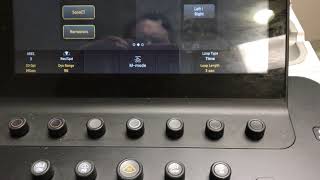
Philips EPIQ Diagnostic Ultrasound System
Overview
The Philips EPIQ Diagnostic Ultrasound System is a premium imaging platform designed to deliver high-resolution diagnostic capabilities across a variety of clinical applications. The system is built for healthcare facilities requiring advanced diagnostic imaging, including hospitals, dedicated imaging centers, and high-volume clinics. It supports multiple medical specialties such as cardiology, radiology, obstetrics and gynecology, pediatrics, and vascular medicine.
To optimize clinical and practice workflows, the EPIQ platform features a standardized user interface and transducer compatibility shared with other Philips systems. This design consistency simplifies staff onboarding and allows clinicians to transition between different machines with minimal training. The system integrates automated tools that reduce manual keystrokes, helping to accelerate exam times and standardize protocols across departments.
Notable capabilities of the EPIQ system include:
- Integrated AI Solutions: Automated features assist with image acquisition, view preselection, and quantitative measurements, which helps reduce user-to-user variability.
- xMATRIX Technology: Supports rapid volume acquisition and multiple imaging modes, including 2D, 3D/4D, and Live xPlane, using a single transducer.
- Advanced Quantification Tools: Features specialized software such as 3D Auto Color Flow Quantification and 3D Auto Tricuspid Valve Quantification to assist in cardiac assessments.
- Collaboration Live: Enables remote system access, real-time clinical consultation, and remote troubleshooting.
Reviewed by Pouyan Golshani, MD — Interventional Radiologist
Key Features
- AI-based capabilities for image acquisition and analysis, including AutoStrain and Smart View Select for cardiac assessment, and Auto ElastQ for liver elastography.
- Superior image quality with technologies like nSIGHT Imaging architecture, PureWave transducers, and Precision Beamforming.
- Elastography (Shear Wave and Strain) for quantitative assessment of tissue stiffness.
- Advanced 3D/4D imaging with TrueVue and FlexVue for photorealistic rendering and visualization of anatomical structures.
- Workflow automation tools such as AutoScan, SmartExam, and Auto Doppler optimization to reduce button pushes and enhance efficiency.
- Ergonomic design with articulating monitors (up to 24-inch HD display) and tablet-like touchscreen user interfaces for enhanced scanning comfort.
- Flow Viewer for 3D-like rendering of flow imaging data, providing clarity and boundary definition.
- MicroFlow Imaging (MFI) designed to detect slow and weak blood flow in tissue.
- xMATRIX transducer technology offering all imaging modes in a single transducer for versatile data acquisition.
- Tissue Specific Presets (TSPs) that automatically adjust over 7500 parameters to optimize the transducer for specific exam types.
Use Cases
- Comprehensive cardiovascular assessment, including adult and pediatric echocardiography, stress echo, and advanced cardiac analysis.
- Detailed obstetrics and gynecology imaging, including fetal assessment, women's health, and breast studies.
- General radiology applications such as abdominal, small parts (breast, thyroid, testicle), and musculoskeletal imaging.
- Vascular assessment and diagnosis, including peripheral vessel imaging.
- Point-of-Care diagnostics in emergency departments (ED), intensive care units (ICU), and for bedside checks.
- Liver health assessment through automated liver elastography (Auto ElastQ) and quantitative shear wave measurements.
Details
| Category | Radiology & Imaging AI |
| Pricing |
Contact vendor for pricing
|
| Deployment | On-premise (cart-based system) |
| Compliance | |
| BAA Available | Unknown AI-estimated |
| HIPAA Compliant | Yes AI-estimated |
| FDA Status |
1 AI-estimated Both Philips EPIQ and Affiniti Diagnostic Ultrasound Systems received 510(k) clearance (K212704) from the U.S. FDA on September 24, 2021, for diagnostic ultrasound imaging and fluid flow analysis of the human body across various indications for use, including abdominal, cardiac, fetal/obstetric, gynecological, vascular, and musculoskeletal applications. |
| Integrations | |
| EHR | Not specified |
| Specialties | Cardiology, Gastroenterology, Radiology |
What the Web Says
The Philips EPIQ Diagnostic Ultrasound System is an advanced imaging device used for various diagnostic ultrasound applications across multiple anatomical regions. It features AI-powered Auto Measure software for semi-automated 2D and Doppler measurements during echocardiography, aiming to enhance efficiency and consistency in assessments. The system is designed for use in clinics, hospitals, and point-of-care settings, and can be integrated with other Philips systems for image guidance during cardiovascular procedures.
Overall: PositiveStrengths
- AI-powered Auto Measure feature for semi-automated measurements in echocardiography, improving efficiency and consistency
- Versatile for diagnostic ultrasound imaging and fluid flow analysis in multiple anatomical regions
- Suitable for use in various clinical environments including hospitals, clinics, and point-of-care
- Can be integrated with Philips EchoNavigator for image guidance during cardiovascular disease treatment
- Offers 2D and/or 3D ultrasound imaging capabilities depending on the system model and configuration
- Designed with robust internal controls, including risk management and software verification and validation
Limitations
- No specific predicate devices were specified in one FDA document
- The system requires appropriately trained healthcare professionals for operation
- Some transducers may have higher frequencies compared to existing compatible transducers, though within FDA limits
- One FDA document mentions a Class 2 Device Recall for the Philips EPIQ Diagnostic Ultrasound System, though details are not provided in the snippet
- Limited information available from independent tech reviewers, Reddit, G2, or Capterra in the search results.
- The VeriSight/VeriSight Pro ICE catheters are for exclusive use with specific Philips EPIQ series ultrasound systems
Based on reviews from: FDA Radiology AI Device - X-ray Interpreter (RadAI Slice), accessdata.fda.gov, iData Research, PMC, ResearchGate
Last updated: 2026-07-19
Ratings & Reviews
No reviews yet. Be the first to review this tool!
Rate Philips EPIQ Diagnostic Ultrasound System
Press & Coverage
Videos
Product demos, reviews, and walkthroughs for Philips EPIQ Diagnostic Ultrasound System.
Philips Ultrasound EPIQ CVx 2D Optimisation