Philips Remote Patient Monitoring

by Philips  · Based in Netherlands → — Transforming patient care with comprehensive, interoperable monitoring solutions.
Cardiology Critical Care Hospital Medicine

Contact for pricing
Regulatory Status Disclosed

Overview

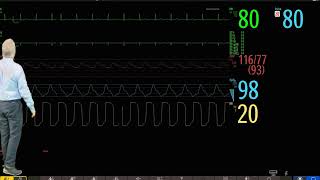
Philips Remote Patient Monitoring offers an end-to-end solution for hospitals and health systems, designed to provide continuous tracking of patient health data both within and outside clinical settings. The portfolio includes a wide range of devices such as bedside and transport monitors, fetal and maternal monitors, and central monitoring systems. It integrates advanced clinical measurements and mobile applications for clinicians’ smartphones, ensuring a complete and live view of patient data. The system emphasizes interoperability, allowing streaming patient data to flow freely from various medical device manufacturers through an open, secure platform like Capsule Medical Device Information Platform and PIC iX. Philips’ solution incorporates clinical decision support tools to reduce cognitive load, recognize patient deterioration, and provide prompt feedback on therapeutic interventions. Innovations like the Visual Patient Avatar enhance situational awareness, and Philips Sounds technology addresses alarm fatigue by reimagining hospital sound environments. The system supports monitoring across all areas of hospital care, including operating rooms, ICUs, step-down units, general care, and during patient transport. Furthermore, Philips provides customizable clinical and technical services, along with long-term agreements, to unlock the full potential of its patient monitoring capabilities.

Reviewed by Pouyan Golshani, MD — Interventional Radiologist

Key Features

  • End-to-end patient monitoring solution
  • Bedside, transport, fetal, and maternal monitors
  • Central monitoring systems (PIC iX)
  • Mobile apps for clinicians' smartphones
  • Interoperable devices for live, streaming data
  • Clinical decision support tools (e.g., Visual Patient Avatar)
  • Philips Sounds technology for alarm fatigue management
  • Enterprise solutions for unified telemetry workflow
  • Continuous monitoring across all hospital settings
  • High-fidelity data export capabilities

Use Cases

  • Identify at-risk patients for proactive care delivery
  • Monitoring patients across all hospital care settings (OR, ICU, general care, transport)
  • Reduce clinician cognitive load and recognize patient deterioration
  • Provide prompt feedback on therapeutic interventions
  • Enable a unified workflow for telemetry monitoring
  • Support patient-centered continuous monitoring
  • Maternal health remote patient monitoring for high-risk pregnancies

What Physicians Need to Know

Video Quality & Reliability
Philips' patient monitoring solutions support live, streaming device data and virtual consultations, emphasizing secure, available, and reliable information exchange for clinical decision-making.
Remote Patient Monitoring
Philips Remote Patient Monitoring (RPM) offers continuous tracking of patient health data outside clinical settings using connected devices. It supports chronic disease management (e.g., hypertension, heart disease, diabetes), post-operative care, and elderly support, aiming to improve patient engagement, facilitate early intervention, and reduce hospital readmissions.
Peripheral Device Support
The Philips RPM solution supports a portfolio of interoperable devices, including Philips patient monitors and a wide range of wearable biosensors. It also integrates with non-Philips devices, ensuring seamless medical device EHR connectivity regardless of brand or model. Common compatible devices include blood pressure monitors, glucometers, weight scales, and pulse oximeters, often with cellular or Bluetooth connectivity.
Virtual Waiting Room
This feature is not explicitly highlighted as a core component of Philips Remote Patient Monitoring, which focuses more on continuous monitoring and virtual consultations rather than a traditional virtual waiting room for scheduled synchronous appointments.
State Licensure Compliance
Philips, as a healthcare technology provider, ensures its platform and services adhere to relevant healthcare regulations, including HIPAA for data security. The platform is designed to support compliant operations, though individual physician licensure compliance for practicing telehealth/RPM across state lines remains the responsibility of the healthcare provider.
Bandwidth Requirements
Specific bandwidth requirements are not explicitly detailed by Philips for its RPM solution. However, given the transmission of live, streaming device data and support for virtual consultations, a stable internet connection with sufficient bandwidth is essential to ensure real-time data flow and clear video communication. General recommendations for video conferencing are typically 1-3 Mbps per participant.
Recording & Documentation
Philips IntelliBridge Enterprise automatically documents vital signs into the EHR system, minimizing errors and enhancing accuracy. Device data is temporarily stored and must be reviewed and validated within the EHR to become part of the patient's permanent medical record, contributing to a continuous and detailed record of patient treatment.
RPM Device Compatibility
The Philips RPM ecosystem supports a wide array of devices, including Philips' own patient monitors, fetal and maternal monitors, and various wearable biosensors. It also offers broad compatibility with third-party remote patient monitoring devices like blood pressure monitors, glucometers, weight scales, and pulse oximeters, facilitating seamless integration with EHR systems.
Physician Tip

Leverage the robust EHR integration to streamline workflows and access comprehensive patient data for proactive interventions. Utilize the diverse peripheral device compatibility to tailor monitoring programs to individual patient needs and chronic conditions. Focus on the actionable insights derived from continuous data streams to enhance clinical decision-making and improve patient outcomes. Ensure proper validation of device data within the EHR to maintain accurate and complete patient records.

Philips Remote Patient Monitoring offers strong integration capabilities, particularly with major EHR systems like Epic, through solutions like IntelliBridge Enterprise. This enables seamless data flow from a wide range of Philips and third-party medical devices and wearable biosensors directly into the patient's electronic health record, supporting a connected and integrated technology ecosystem.

Details

Category Telehealth & Virtual Care, Wearables & Remote Monitoring (RPM)
Pricing Contact for pricing — Pricing is not publicly available; interested parties should contact Philips sales for a quote.
DeploymentHybrid (On-premise and Cloud-enabled)
Compliance
BAA Available Yes AI-estimated
HIPAA Compliant Yes AI-estimated
FDA Status Yes AI-estimated

Philips IntelliVue Patient Monitors MX750 and MX850 received FDA 510(k) clearance, initially under Emergency Use Authorization (EUA) in 2020, for acute patient monitoring, supporting scalability, alarm management, cybersecurity, and infection prevention. Additionally, Philips Capsule Surveillance and Philips Radiology Operations Command Center have also received FDA 510(k) clearances for their respective remote monitoring and imaging capabilities.

Integrations
EHR Not specified
Specialties Cardiology, Critical Care, Hospital Medicine

What the Web Says

Philips Remote Patient Monitoring solutions are generally well-regarded for their comprehensive features and integration capabilities within existing healthcare systems. Reviews highlight their potential to improve patient outcomes and reduce hospital readmissions, though some concerns exist regarding implementation complexity and cost.

Overall: Positive

Strengths

  • Comprehensive suite of monitoring tools for various conditions.
  • Integration with existing EHR and healthcare IT infrastructure.
  • Potential for improved patient engagement and adherence.
  • Scalable solutions adaptable to different healthcare settings.
  • Proactive identification of patient deterioration.
  • Reputable brand with established presence in healthcare technology.

Limitations

  • High initial investment and ongoing operational costs.
  • Complexity of implementation and staff training requirements.
  • Potential for alert fatigue among healthcare providers.
  • Data privacy and security concerns, especially with cloud-based solutions.
  • Interoperability challenges with non-Philips devices or systems.
  • Reliance on patient compliance for accurate data collection.

Based on reviews from: Healthcare IT News, G2, Capterra, Reddit (healthcare IT subreddits), Physician forums and journals, Tech review sites specializing in healthcare technology

Last updated: 2026-07-21

Ratings & Reviews

No reviews yet. Be the first to review this tool!

Rate Philips Remote Patient Monitoring

Clinical Value
Ease of Use
Integration
Support & Docs
Value for Money

Press & Coverage

Philips
Philips delivers technology for Stockholm region patients
A Philips-led consortium has been chosen by Region Stockholm to provide advanced remote monitoring for complex patients as part of a hospital-at-home initiative, supporting over 2 million people. This eight-year agreement aims to deliver hospital-level care in patients' homes, reducing pressure on hospitals and staff.
2026-05
MD+DI Online
Philips Wins FDA Nod for Next-Gen, Reusable SpOu2082 Clip Sensor
Philips has received FDA 510(k) clearance for its next-generation reusable SpOu2082 clip sensor, designed to provide reliable oxygen saturation measurements with improved signal quality and measurement consistency. The sensor demonstrated high accuracy in desaturation studies and consistent performance across diverse skin tones.
2026-07
Philips
Reimagining Hospital in the Home: how Philips is supporting the next phase of virtual care
Philips is collaborating with Health Districts in Australia to develop and implement remote patient monitoring (RPM)-enabled care models, expanding patient eligibility and improving clinical oversight for Hospital in the Home programs. This initiative moves beyond traditional models to more scalable, technology-enabled approaches, including continuous monitoring capabilities.
2026-03
MarketsandMarkets
Koninklijke Philips N.V. (Netherlands) and Medtronic (Ireland) are Leading Players in the US Remote Patient Monitoring (RPM) Market - MarketsandMarkets
Philips is a leading player in the US remote patient monitoring market, focusing on organic and inorganic growth strategies like collaborations and partnerships. The US RPM market is projected to reach USD 29.13 billion by 2030, driven by increased adoption of remote healthcare services and demand for flexible healthcare solutions.
2026-02
Philips
Philips unveils smart, AI-enabled patient monitoring strategy to help hospitals in Asia address workforce shortages
Philips introduced a new patient monitoring innovation strategy at its Innovation Summit in Singapore, leveraging an open, AI-enabled platform to connect patient data across care settings. This approach aims to address workforce shortages and improve care coordination by delivering actionable insights and smart alerts.
2025-02
Philips
Philips launches smart telemetry platform for cardiac monitoring that provides continuous, enterprise-wide connectivity beyond the bedside
Philips launched an innovative telemetry platform for cardiac monitoring, featuring the next-generation Telemetry Monitor 5500, to address healthcare challenges like staff shortages and alarm management. This platform offers continuous, enterprise-wide connectivity and data-driven insights for operational performance and patient care.
2025-09
Philips
Streamlined, smart and scalable: Signaling a new era in patient monitoring - Philips
Philips Patient Information Center (PIC iX) is evolving to provide streamlined, smart, and scalable patient monitoring, supporting up to 2,550 beds across various care settings. This platform offers mobile and web workflows, extending clinicians' reach and providing a future-ready foundation for enterprise-scale monitoring.
2025-10
FDA
Outpatient Telemetry Correction: Philips Issues Correction for Monitoring Service Application used with Mobile Cardiac Outpatient Telemetry Due to Potential for Missed Information or Notifications That May Impact Patient Care | FDA
Philips issued a correction for its Monitoring Service Application used with Mobile Cardiac Outpatient Telemetry due to a potential for missed information or notifications that could impact patient care. This correction addresses ECG events from July 2022 to July 2024 that were not properly routed for review by cardiology technicians.
2025-01

Videos

Product demos, reviews, and walkthroughs for Philips Remote Patient Monitoring.

View all on YouTube

No FAQs available yet for this tool.

Related Tools

Teladoc Health
Teladoc Health
Mental & Behavioral Health AI
Teladoc Health provides a comprehensive virtual care platform connecting patients with providers for medical care, mental health, chronic condition management, and more.
Headspace Health
Headspace Health
Mental & Behavioral Health AI
Headspace Health offers a digital therapeutic solution, Ginger, providing on-demand mental health support with text-based coaching, video therapy, and psychiatry, and uses generative AI tools like Ebb for reflective meditation experiences.
August AI
August AI
Lab & Diagnostics
August AI offers an AI-enabled telehealth platform with an AI health chatbot and virtual care services, including telehealth visits and prescription management. The company's AI chatbot is available globally for free, providing information and not medical advice. In the U.S., August AI offers August Care, a membership that provides clinical services, discounted labs, and quick prescriptions.
AI plus human care
Counsel Health
Clinical Decision Support & Reference
Counsel Health is an AI-enabled, physician-supervised virtual care company that delivers high-quality care through a simple chat interface, combining medical AI with board-certified physicians to give members guidance that is continuous, secure, and always available.
My Own Doctor
BigHeart Health
Mental & Behavioral Health AI
My Own Doctor is a telehealth platform by BigHeart Health that connects patients with licensed providers for virtual medical and mental health consultations.
Med.Live
Med.Live (Trova Technologies Private Limited)
Documentation & Scribing
Med.Live is an AI-powered telehealth and clinical intelligence platform offering teleconsultation, remote patient monitoring with intelligent alerts, and voice AI for real-time clinical documentation.

See all Telehealth & Virtual Care tools →

More from Philips

AI-powered MRI and CT scanners
Philips
Radiology & Imaging AI
Philips offers AI-powered MRI and CT scanners that integrate artificial intelligence across the imaging workflow to enhance diagnostic confidence and operational efficiency for physicians.
EPIQ Diagnostic Ultrasound System Series
Philips
Radiology & Imaging AI
The Philips EPIQ and Affiniti Diagnostic Ultrasound System Series are advanced and intermediate-tier ultrasound machines, respectively, offering high-quality imaging and versatile diagnostic capabilities across numerous medical specialties. The portable CX50 system provides premium performance for on-the-go diagnostics.
Philips EPIQ Diagnostic Ultrasound System
Philips
Radiology & Imaging AI
Philips EPIQ and Affiniti are advanced diagnostic ultrasound systems featuring AI-based capabilities, superior image quality, and ergonomic designs for a wide range of clinical applications.

View company profile →

Suggest an Edit → | Last Verified: 2026-04-22 | First Added: 2026-04-22
AI Tool Finder
AI-powered search. Results may not be comprehensive.