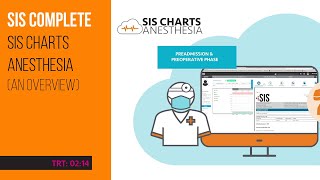
SIS System

by Surgical Information Sciences  · Based in United States → — Empowering surgeons with predictive insights for better patient outcomes.
General Surgery Orthopedics

Regulatory Status Disclosed

Overview

The SIS System, developed by Surgical Information Sciences, is a cutting-edge software-only medical device designed to provide physicians with crucial predictive insights for spinal surgery. At its core is the FDA-cleared SIS Score, an AI-powered tool that performs patient-specific risk assessments. This system analyzes a comprehensive set of patient data, including demographics, existing comorbidities, surgical history, and details of the planned surgical procedure, to generate a personalized risk score.

The primary function of the SIS Score is to predict the likelihood of a patient experiencing a major complication within 90 days following spinal surgery. This predictive capability serves as an invaluable adjunctive tool for healthcare professionals, empowering them to make more informed clinical decisions. It facilitates enhanced patient counseling, allowing surgeons to have more precise and data-driven discussions with patients about potential risks and expected outcomes.

By integrating the SIS System into pre-operative workflows, physicians can proactively identify high-risk patients, potentially leading to earlier interventions or adjustments in surgical planning. This not only aims to improve patient safety and reduce post-operative complication rates but also supports more efficient resource allocation within surgical practices. The system is designed to seamlessly integrate into existing clinical workflows, providing actionable intelligence at the point of care for spinal surgery specialists.

Reviewed by Pouyan Golshani, MD — Interventional Radiologist

Key Features

  • FDA-cleared SIS Score for spinal surgery risk assessment
  • Patient-specific predictive analytics for 90-day post-operative complications
  • Comprehensive data analysis (demographics, comorbidities, surgical history, planned procedure)
  • Adjunctive tool for clinical decision-making
  • Supports enhanced patient counseling and shared decision-making
  • Designed for integration into existing surgical workflows
  • Software-only medical device

Use Cases

  • Pre-operative risk stratification for spinal surgery patients
  • Informing surgical planning and patient selection
  • Facilitating data-driven patient counseling on surgical risks
  • Identifying high-risk patients for targeted pre-operative optimization
  • Improving patient safety and outcomes in spinal procedures

What Physicians Need to Know

Evidence Base (guidelines, literature scope)
Surgical Information Systems (SIS) support clinical decision-making through integrated analytics across workflows and documentation, and provide tools for surgical pathways and clinical outcome evaluations. [1, 32]
Clinical Validation Studies
Specific clinical validation studies for 'SIS System' directly related to its impact on general diagnosis and treatment decisions are not readily available. The system's focus is primarily on optimizing surgical workflows and documentation. [1, 10, 13]
Drug Interaction Checking
SIS Complete includes integrated tools for accurate medication reconciliation and can integrate with medication history solutions to improve accuracy and reduce manual data entry. [13, 20]
Differential Diagnosis Support
Differential diagnosis support is not a stated primary feature of Surgical Information Systems, which are focused on surgical workflows. [14, 21, 22, 23, 36]
Guideline Update Frequency
The frequency of updates for diagnostic and treatment guidelines within the 'SIS System' is not explicitly detailed in the available information.
Clinical Workflow Integration
SIS systems are designed for comprehensive clinical workflow integration, unifying scheduling, charting, documentation, and electronic orders in a single, integrated platform for ambulatory surgery centers. They also integrate with Electronic Medical Records (EMRs) for seamless data exchange across healthcare settings. [1, 10, 13, 34]
Decision Audit Trail
SIS captures clinical, financial, administrative, and archival data to manage surgical services and comply with quality monitoring requirements. It also supports audit tracking for various processes. [32, 33]
Physician Tip

Physicians utilizing a Surgical Information System (SIS) should leverage its strengths in streamlining surgical workflows, documentation, and medication reconciliation within the perioperative setting. While SIS enhances operational and clinical decision-making in surgery, it may not serve as a primary tool for general diagnostic or broad treatment decision support. For comprehensive diagnostic and treatment guidance, physicians should rely on dedicated clinical decision support systems or their integrated EHR functionalities. Ensure familiarity with how SIS integrates with the broader EHR to access complete patient information and other CDS tools.

Surgical Information Systems (SIS) are designed for robust integration with enterprise Electronic Medical Records (EHRs) to ensure a seamless flow of patient information across different healthcare settings. This interoperability facilitates accurate documentation and coordination throughout the surgical journey. SIS also integrates with diagnostic tools and medication history solutions to enhance preoperative planning, intraoperative navigation, and medication reconciliation. [10, 13, 20, 34]

Details

Category Clinical Decision Support & Reference, Surgical AI
Pricing Unknown
DeploymentCloud
Mobile AppNone
LanguagesEnglish
Target SizeSolo to large health systems
Compliance
BAA AvailableUnknown AI-estimated
HIPAA CompliantUnknown AI-estimated
FDA Status Cleared AI-estimated — 510(k) K241083, Device Name: SIS Score, Cleared: 06/14/2024
Integrations
EHR Not specified
Specialties General Surgery, Orthopedics

What the Web Says

SIS System (Surgical Information Systems) offers comprehensive IT solutions specifically designed for the perioperative environment, serving over 2900 facilities in the US and Canada. Their product suite includes perioperative Electronic Medical Records (EMRs), Anesthesia Information Management Systems (AIMS), ASC business management, and business intelligence solutions. SIS has consistently received high ratings from physicians, clinicians, and administrative staff in Ambulatory Surgical Centers (ASCs), earning the #1 ASC EHR vendor ranking by Black Book for multiple consecutive years and Best in KLAS awards for ASC Solutions.

Overall: Mixed

Strengths

  • Specifically designed for the perioperative environment and ASCs.
  • High client satisfaction and top ratings in ASC IT user satisfaction surveys.
  • Comprehensive features including EMR, AIMS, business management, and analytics.
  • Strong focus on improving operational, financial, and clinical outcomes.
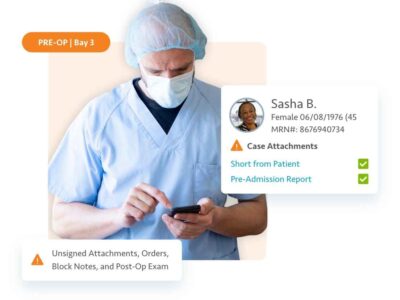
  • Mobile access to schedules, case attachments, and documents for physicians.
  • Automated coding and billing tools to assist with regulatory changes and revenue cycle stability.

Limitations

  • Some users have reported issues with consistency, efficiency, and accuracy in reporting.
  • Customer service has been described as not always helpful by some users.
  • Potential for clunky user interfaces and unclear functionalities.
  • Challenges with data integration with other hospital information systems.
  • Implementation and ongoing maintenance can be a significant financial burden.
  • Employee reviews sometimes mention poor management, lack of career advancement, and a shift to a profit focus over client quality.

Based on reviews from: FeaturedCustomers, Newswire, G2, Handshake, KLAS Research, Capterra, HST vs SIS: Best for Your ASC?, Indeed.com, Ambula Healthcare, Surgical Information Systems Client Stories, Built In

Last updated: 2026-07-19

Ratings & Reviews

No reviews yet. Be the first to review this tool!

Rate SIS System

Clinical Value
Ease of Use
Integration
Support & Docs
Value for Money

Press & Coverage

PR Newswire
Surgical Information Sciences Announces First Commercial Use of Recently Cleared Software for Improved Visualization of Brain Targets
Surgical Information Sciences (SIS) announced the first commercial use of its SIS System, which received 510(k) clearance from the U.S. Food and Drug Administration (FDA) for improved visualization of brain targets in deep brain stimulation (DBS) surgery. The system uses deep learning models to identify brain structures like the subthalamic nuclei (STN) and globus pallidus internus/externus (GPi/GPe) with approximately 70% better accuracy than atlas-based systems.
2021-05
University of Minnesota - Research & Innovation Office
Treating Parkinson's with Surgical Precision | Research & Innovation Office
This article highlights the first commercial use of the SIS System, developed by Surgical Information Sciences (SIS), a University of Minnesota startup. The system generates patient-specific 3D maps for precise targeting in Deep Brain Stimulation (DBS) for Parkinson's disease, offering 70% greater accuracy than previous methods.
2021-06
PR Newswire
Surgical Information Sciences Announces FDA 510(k) Clearance for Additional Anatomical Structures for its DBS Visualization Software
Surgical Information Sciences (SIS) received FDA 510(k) clearance for an updated algorithm in its SIS System, enhancing visualization capabilities for deep brain stimulation (DBS) surgery. The update includes deep learning models optimized for brain image segmentation and approval for visualizing the GPi/GPe, in addition to the previously approved STN.
2021-04
Applied Radiology
Updated Algorithm Provides New Visualization Capabilities for Deep Brain Stimulation Surgery | Applied Radiology
Surgical Information Sciences (SIS) announced FDA 510(k) clearance for an updated algorithm in its SIS System, offering new visualization capabilities for deep brain stimulation (DBS) surgery. This advancement includes deep-learning models for brain image segmentation and approval for the GPi/GPe, crucial targets for Parkinson's disease patients.
2021-04
NeurologyLive
Newly Announced VISION Study Aims to Improve Parkinson DBS Localization Through SIS Brain Visualization Software | NeurologyLive
Surgical Information Systems (SIS) initiated the VISION study (NCT05774041) to evaluate if its FDA-cleared SIS visualization technology can improve the accuracy of deep brain stimulation (DBS) in Parkinson's disease patients. The study will assess if using the SIS System results in less distance between the planned and actual implanted DBS lead locations.
2023-11
Parkinson's News Today
Trial to determine if SIS imaging system makes DBS more effective - Parkinson's News Today
Surgical Information Sciences has launched the VISION trial to assess if its imaging technology, cleared by the FDA, improves the accuracy of lead placement in Deep Brain Stimulation (DBS) for Parkinson's patients. The SIS System uses deep learning to visualize brain structures more precisely, aiming for better patient outcomes.
2023-11
accessdata.fda.gov
June 14, 2024 Surgical Information Sciences, Inc. Kelliann Payne Partner Hogan Lovells US LLP 1735 Market Street, Floor 23 P - accessdata.fda.gov
The FDA granted 510(k) clearance to Surgical Information Sciences for a modification to its SIS System, version 6.0.0. The primary change is the addition of new brain structures for prediction, specifically the ventral intermediate nucleus (Vim), based on pre-trained deep learning neural network models.
2024-06
accessdata.fda.gov
May 2, 2023 Surgical Information Sciences, Inc. Kelliann Payne Partner Hogan Lovells, US LLP 1735 Market Street, 23rd Floor
The FDA provided 510(k) clearance to Surgical Information Sciences for a modification to its SIS System, version 5.6.0. The updated device, based on deep learning neural network models, enhances the visualization of specific brain structures and the localization of implanted leads for surgical planning in neurological procedures.
2023-05

Videos

Product demos, reviews, and walkthroughs for SIS System.

View all on YouTube

No FAQs available yet for this tool.

Related Tools

DeepMind (Google)
Google DeepMind
Clinical Decision Support & Reference
AlphaFold is an AI system developed by DeepMind (Google) that accurately predicts protein structures and their interactions, significantly accelerating biological and medical research.
Tempus AI
Tempus AI
Clinical Decision Support & Reference
Tempus ECG-AI Platform uses artificial intelligence to analyze electrocardiogram data, offering advanced insights for cardiovascular diagnosis and management.
Cortex
Cortex
Clinical Decision Support & Reference
Cortex Workspace is a secure, HIPAA-compliant AI platform designed to streamline healthcare workflows and enhance decision-making for physicians.
SureMediks ProView
SureMediks (Rasimo Systems, LLC)
Clinical Decision Support & Reference
SureMediks is an AI-powered clinical decision support and metabolic health platform that automates care workflows for specialists, providing AI-generated patient summaries, automated chart review, and real-time biometric alerts.
SOAP Health
SOAP Health
Clinical Decision Support & Reference
SOAP Health is a Florida-based startup transforming patient intake with AI-powered diagnosis, offering a comprehensive solution that improves diagnosis accuracy and empowers patients and physicians.
Oxipit ChestLink
Oxipit (part of Sectra group)
Clinical Decision Support & Reference
Oxipit ChestLink is the world's first CE Class IIb-certified autonomous AI application for healthy chest X-ray reporting, capable of identifying normal studies with 99.9% sensitivity. It automates the reporting of normal chest X-rays, reducing radiologist workload and improving efficiency.

See all Clinical Decision Support & Reference tools →

More from Surgical Information Sciences

SIS Software
Surgical Information Sciences
Practice Management & Scheduling
Surgical Information Sciences provides AI-powered software for deep brain stimulation (DBS) surgical planning and comprehensive cloud-based solutions for Ambulatory Surgery Centers (ASCs) covering practice management, EMR, RCM, and compliance.
SIS Software Version
Surgical Information Sciences
Neurology AI
Surgical Information Sciences offers AI-powered software for precise 3D visualization and planning of deep brain stimulation (DBS) surgeries, providing patient-specific anatomical models of brain structures.

View company profile →

Suggest an Edit → | Last Verified: 2026-04-20 | First Added: 2026-04-20
AI Tool Finder
AI-powered search. Results may not be comprehensive.