StrokeSENS LVO

by Circle Neurovascular Imaging  · Based in Canada →AI-powered LVO detection for rapid stroke triage.
Emergency Medicine Neurology Radiology

Contact vendor for pricing
Regulatory Status Disclosed

Overview

StrokeSENS LVO is an AI-powered medical imaging software designed to revolutionize acute stroke diagnosis and treatment. It utilizes artificial intelligence to automatically identify suspected Large Vessel Occlusions (LVOs) on CT Angiography (CTA) head images within minutes of acquisition. The system then sends automated notifications to the stroke team, facilitating early engagement and rapid decision-making for time-sensitive cases. Beyond LVO detection, the broader StrokeSENS platform also includes StrokeSENS ASPECTS for automated Alberta Stroke Program Early CT Score (ASPECTS) assessment on non-contrast CT, aiding in the identification of early ischemic changes. This vendor-agnostic solution integrates seamlessly into existing radiological environments, streamlining clinical workflows and enhancing communication and collaboration among care team members.

Reviewed by Pouyan Golshani, MD — Interventional Radiologist

Key Features

  • AI-powered Large Vessel Occlusion (LVO) detection on CT Angiography (CTA)
  • Automated notification to stroke team of suspected LVO cases
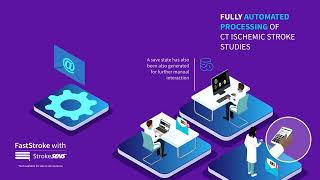
  • 0-click workflow for background processing of CT ischemic stroke studies
  • Automated email communication to the stroke team
  • Integration into existing radiological environments (PACS)
  • Remote access to imaging on web-enabled devices
  • Automated ASPECTS scoring on non-contrast CT (StrokeSENS ASPECTS)
  • Visualization of perfusion deficits (StrokeSENS mCTA Perfusion)
  • Vendor-agnostic
  • Fast processing time (10-60 seconds)

Use Cases

  • Early identification and triage of acute ischemic stroke patients with LVO
  • Streamlining stroke care pathways and clinical workflows
  • Augmenting image interpretation for stroke assessment
  • Facilitating communication and collaboration among stroke teams
  • Supporting effective patient transport decisions
  • Assisting healthcare workers in remote and rural areas without specialized expertise

What Physicians Need to Know

Stroke Detection Speed
Provides a time-to-notification of 0.75 u00b10.17 minutes (Min: 0.46 mins, Max: 1.23 mins) for suspected LVO cases. Processing time typically ranges from 10 to 60 seconds.
Brain MRI/CT Analysis
Utilizes AI for the analysis of CTA head images to identify characteristics consistent with Large Vessel Occlusion (LVO). It is part of a broader StrokeSENS platform that also includes automated ASPECTS scoring on non-contrast CT (NCCT) for early ischemic changes.
Large Vessel Occlusion Detection
Employs machine learning algorithms to accurately identify anterior Large Vessel Occlusions (LVO) on CTA. Demonstrated a sensitivity of 89.4% and specificity of 87.4% for LVO detection in studies.
Triage Prioritization Speed
Designed as a radiological computer-aided triage and notification software to flag and communicate suspected positive LVO findings, assisting in workflow prioritization. Automatically routes images for processing and analysis post-CTA scan.
ASPECTS Score Automation
While StrokeSENS LVO focuses on LVO detection, the StrokeSENS suite includes StrokeSENS ASPECTS, which automates the Alberta Stroke Program Early CT Score (ASPECTS) on non-contrast CT to standardize assessment of ischemic tissue.
Mobile Notification System
Capable of sending notifications to pre-configured destinations, including mobile devices, to alert clinicians of suspected LVOs, supporting early engagement of the stroke team.
Physician Tip

StrokeSENS LVO significantly accelerates the identification of large vessel occlusions on CTA, enabling quicker triage and potentially faster initiation of life-saving endovascular treatments. Physicians should integrate this tool into their acute stroke workflow to augment rapid decision-making, especially in settings where specialist interpretation may be delayed. The automated notifications ensure timely communication to the stroke team, facilitating a coordinated and efficient response. Remember that while the AI provides critical alerts, final diagnostic confirmation and treatment decisions remain the responsibility of the clinician.

StrokeSENS LVO is a DICOM-compliant software system that seamlessly integrates into existing radiological environments and standard reading platforms (PACS). It can be deployed locally on dedicated hardware or virtualized environments. The system automatically processes images right after acquisition and can send results and notifications to various pre-configured destinations, including email and mobile devices.

Details

Category Neurology AI, Radiology & Imaging AI, Triage & ER/ICU AI
Pricing Contact vendor for pricing Subscription-based, volume-based licensing; Contact vendor for details.
DeploymentLocally on dedicated hardware, Locally virtualized (virtual machine, Docker), Integration in standard reading environment (PACS), Integration via AI marketplace or distribution platform, Stand-alone third party application.
Compliance
BAA AvailableUnknown AI-estimated
HIPAA CompliantUnknown AI-estimated
FDA Status 1 AI-estimated

FDA 510(k) clearance #K212261 was received on October 14, 2021, for StrokeSENS LVO as a radiological computer-aided triage and notification software indicated for use in the analysis of CTA head images to flag and communicate suspected positive findings of Large Vessel Occlusion (LVO).

Integrations
EHR Not specified
Specialties Emergency Medicine, Neurology, Radiology

What the Web Says

StrokeSENS LVO is an AI-powered radiological computer-aided triage and notification software designed to identify Large Vessel Occlusions (LVO) on head CTA images. It aims to streamline stroke care by providing rapid detection and notification of suspected LVOs to clinicians, assisting in faster diagnosis and treatment. The software has demonstrated high accuracy, sensitivity, and specificity in detecting LVOs in various studies.

Overall: Positive

Strengths

  • High accuracy, sensitivity, and specificity in detecting LVOs.
  • Automated and rapid notification of suspected LVOs to stroke teams, supporting early engagement.
  • Assists hospital networks and trained clinicians in workflow triage.
  • Utilizes AI to streamline clinical workflow and enhance insights with accessible imaging.
  • Vendor-agnostic and integrates into existing radiological environments.
  • Performance does not differ significantly by patient age, sex, or CTA acquisition characteristics.

Limitations

  • Some AI algorithms for LVO detection have reported lower specificities, which could lead to an increased number of false positives.
  • Critical review of radiological images by a physician remains important despite AI assistance.
  • Limited information available from independent tech reviewers, Reddit, G2, or Capterra.
  • The burden on physicians to navigate an increased number of scans containing false positives could be a concern.

Based on reviews from: GE Healthcare, ResearchGate, PubMed, Semantic Scholar, accessdata.fda.gov, Circle Cardiovascular Imaging (Circle CVI), JournalFeed, Neurology Today, PMC

Last updated: 2026-07-17

Ratings & Reviews

No reviews yet. Be the first to review this tool!

Rate StrokeSENS LVO

Clinical Value
Ease of Use
Integration
Support & Docs
Value for Money

Press & Coverage

Circle Cardiovascular Imaging
StrokeSENSu2122 LVO: Facilitating Large Vessel Occlusion Detection
StrokeSENS LVO is a software tool that uses AI to identify suspected Large Vessel Occlusion (LVO) from CTA head images, aiming to simplify the stroke care pathway by flagging and prioritizing cases for vascular treatment. It integrates into existing radiological environments and provides real-time notifications.
unknown
GE Healthcare
WorldStrokeDay: GE Healthcare & Circle Neurovascular Imaging Announce A New Collaboration To Enhance Acute Stroke Care with AI
On World Stroke Day 2021, GE Healthcare announced a collaboration with Circle Neurovascular Imaging (Circle NVI) to integrate AI-powered solutions, including StrokeSENS LVO, into GE Healthcare's FastStroke processing platform to enhance acute stroke care. This partnership aims to make advanced imaging solutions more accessible to frontline clinicians globally.
2021-10
ResearchGate (Springer)
Validation of a machine learning software tool for automated large vessel occlusion detection in patients with suspected acute stroke
This study validated the StrokeSENS LVO machine learning algorithm for detecting anterior large vessel occlusions (LVO) on CTA images. The algorithm demonstrated high accuracy, sensitivity, and specificity in an independent dataset of 400 studies.
2022-05
MDPI (Journal of Clinical Medicine)
Artificial intelligence in acute ischemic stroke subtypes according to Toast Classification: A comprehensive narrative review
This narrative review discusses the application of AI in acute ischemic stroke, highlighting the StrokeSENS LVO model as a machine-learning tool that uses CTA images to evaluate intracranial internal carotid artery stenosis with high accuracy, sensitivity, and specificity.
2023-04
British Journal of Radiology (Oxford Academic)
Artificial intelligence in neuroradiology: a review of Food and Drug Administration-regulated algorithms
This review of FDA-cleared AI algorithms in neuroradiology lists StrokeSENS LVO as a computer-aided triage (CADt) algorithm from Circle Neurovascular Imaging (Canada) for detecting and flagging large vessel occlusion on CTA, with its FDA clearance date noted as October 21, 2021.
2026-05
Stroke (American Heart Association Journals)
Automatic Large Vessel Occlusion Detection On Computed Tomography Angiography Using A 3D Convolutional Neural Network
An abstract from February 2022 details the validation of StrokeSENS LVO, a 3D convolutional neural network (CNN) based algorithm, for automatic detection of large vessel occlusions (LVO) on CTA images of the head, demonstrating high accuracy on a large heterogeneous dataset.
2022-02
Journal of Medicine and Life Science
Machine learning application in ischemic stroke diagnosis, management, and outcome prediction: a narrative review
This review highlights StrokeSENS LVO (Circle Cardiovascular Imaging, Calgary, Canada) as one of several commercial software solutions utilizing machine learning algorithms for large vessel occlusion detection, noting its high sensitivity and accuracy in various studies.
2023-12
accessdata.fda.gov
StrokeSENS LVO 510k Submission
The FDA 510(k) submission for StrokeSENS LVO, dated October 21, 2021, details its indication as a radiological computer-aided triage and notification (CADt) software for analyzing CTA head images to flag suspected positive findings of Large Vessel Occlusion (LVO).
2021-10

Videos

Product demos, reviews, and walkthroughs for StrokeSENS LVO.

View all on YouTube

Frequently Asked Questions

StrokeSENS LVO is an AI-powered software designed to automatically identify suspected Large Vessel Occlusions (LVO) on CT Angiography (CTA) images. It integrates into existing radiological environments, such as PACS, and promptly sends automated notifications to the stroke team, aiming to streamline the stroke care pathway and expedite patient triage.
StrokeSENS LVO has received FDA 510(k) clearance and is CE Certified (Class IIa MDD), making it available for clinical use in regions including the USA, Canada, Australia, EU, and UK. The software is DICOM compliant and adheres to FDA guidance for cybersecurity in medical devices, ensuring robust data handling practices.
StrokeSENS LVO is intended as a computer-aided triage and notification tool, not for primary diagnosis; clinicians remain responsible for diagnostic interpretation. It demonstrated a sensitivity of 89.4% and specificity of 87.4% in a validation study, indicating a potential for both false positives and false negatives that require careful clinical review.
StrokeSENS LVO is one of several AI-powered solutions, alongside others like Aidoc LVO, Viz LVO, and Rapid LVO, all designed to accelerate LVO detection. These AI tools aim to improve upon traditional methods by providing rapid alerts and streamlining workflows, which can be crucial in time-sensitive stroke cases.
Pricing models for AI tools like StrokeSENS LVO commonly include a one-time license fee or a subscription, which may be based on the number of analyses performed or installations. Studies suggest that implementing AI for LVO detection can lead to significant healthcare cost savings, with one analysis estimating annual savings of $11 million by reducing missed diagnoses.
StrokeSENS LVO functions purely as a computer-aided triage and notification system, designed to flag suspected LVOs to expedite the workflow. It does not replace the need for a neuroradiologist or trained clinician to perform the definitive diagnostic review and interpretation of the full imaging studies.
StrokeSENS LVO was trained and validated using a heterogeneous dataset of 400 CTA images, encompassing both LVO and non-LVO cases from multiple international multi-center clinical trials. This dataset included diverse patient parameters such as age, sex, scanner vendor, and slice thickness, which helps to mitigate the risk of algorithmic bias and ensure broader applicability.

Related Tools

DETECT-ME/CFS project
ME/CFS Research Foundation (Sponsor: Federal Ministry of Health (BMG))
Clinical Decision Support & Reference
The DETECT-ME/CFS project is developing an AI-supported clinical decision support system to improve the rapid and reliable diagnosis of Myalgic Encephalomyelitis/Chronic Fatigue Syndrome.
Neurotrack
Neurotrack
Clinical Decision Support & Reference
Neurotrack is a cognitive care enablement platform that provides clinically validated, FDA class II device assessments and care planning support to identify and manage cognitive decline and dementia earlier and with greater accuracy.
LesionQuant
CorTechs Labs
Neurology AI
LesionQuant, an FDA-approved AI product by CorTechs Labs, is particularly useful for patients with multiple sclerosis. It provides brain structure data and quantifies the number, size, and location of lesions, comparing them to prior studies.
ExcelsiusGPS
Globus Medical
Neurology AI
ExcelsiusGPS™ is the first and only robotic navigation platform on the market that offers a comprehensive approach to spine and cranial procedures, from start to finish. The system enables repeatable and accurate trajectory alignment and navigation for placing screws, interbody implants, and cranial instruments.
Onera SleepMap
Onera B.V.
Neurology AI
Onera SleepMap is an AI-powered sleep analysis software that processes polysomnography data, part of Onera Health's innovative patch-based system for at-home and in-lab sleep studies. The system aims to make clinical-grade sleep diagnostics more accessible and user-friendly, providing comprehensive data comparable to traditional in-lab PSG.
JLK-NCCT
JLK-NCCT
Clinical Decision Support & Reference
JLK-NCCT is an AI software designed to assist in the analysis of non-contrast CT brain scans for the detection of acute ischemic stroke.

See all Neurology AI tools →

Suggest an Edit → | Last Verified: 2026-04-18 | First Added: 2026-04-18
AI Tool Finder
AI-powered search. Results may not be comprehensive.