Vital Signs

by Oxehealth Limited  · Based in United Kingdom →A global leader in vision-based patient monitoring and management.
Critical Care Emergency Medicine Hospital Medicine

Contact for pricing
Regulatory Status Disclosed

Overview

Oxehealth’s Vital Signs is a software medical device that operates as part of the Oxevision platform, providing contact-free, remote patient monitoring. It utilizes optical sensors and proprietary algorithms, leveraging deep learning, computer vision, and signal processing techniques, to measure vital signs such as pulse rate and breathing rate. The system also monitors patient activity and behavior, generating real-time alerts and comprehensive reports. Designed for fixed installation in single-occupancy rooms within various healthcare settings, including mental health facilities, acute hospitals, and long-term care, Oxevision aims to enhance patient safety, improve care quality, and increase operational efficiency by providing clinicians with objective data and insights. It is intended for use by appropriately trained staff and should not be the sole method for checking a subject’s physical health.

Reviewed by Pouyan Golshani, MD — Interventional Radiologist

Key Features

  • Contact-free pulse rate measurement
  • Contact-free breathing rate measurement
  • Automated activity alerts (e.g., out of bed, falls, room entry)
  • Secure, time-limited on-demand video feed for verification
  • Automated activity reports and vital signs trends
  • Personalization of risk-based notifications
  • Infrared vision for monitoring in all light conditions
  • Secure access via tablets and nursing station screens
  • Exportable reports for integration into electronic patient records
  • Continuous safety monitoring

Use Cases

  • Remote patient monitoring in mental health facilities
  • Monitoring in nursing homes and long-term care facilities
  • Acute hospital care
  • Reducing falls and self-harm incidents
  • Supporting care for vulnerable and elderly people
  • Monitoring patients in seclusion or restraint

What Physicians Need to Know

Key Capabilities
Contactless measurement of vital signs (pulse, breathing rate), sleep patterns, and patient activity through a patented infrared system. Includes safety notifications, vital sign trends, adaptive monitoring modes, digital rounding, and comprehensive compliance reporting with audit trails.
Clinical Utility
Enhances patient safety by aiding early risk detection and intervention, reducing self-harm, falls, and assaults. Improves physical health monitoring without disturbing patients, especially at night. Facilitates data-driven decisions, streamlines observations, and improves staff efficiency, leading to better patient outcomes and reduced costs in inpatient mental health settings.
Integration Options
Seamlessly integrates with Electronic Health Record (EHR) and Electronic Patient Record (EPR) systems, allowing for automatic upload of time-stamped data and structured entries.
Compliance Status
Features FDA-cleared software for vital signs and sleep monitoring. The platform is a registered medical device and adheres to international standards and regulatory frameworks, including ISO 27001, ISO 27701, and Cyber Essentials Certified Plus, ensuring secure and responsible data management.
Pricing Model
Not explicitly detailed for 'Vital Signs' alone, but the overall Lio Health platform demonstrates significant cost savings (e.g., approximately $700,000 annually for a 100-bed facility) and a rapid return on investment (around 4 months to break even). Pricing for similar remote patient monitoring platforms typically involves software platform fees, clinical monitoring fees, and implementation/training costs, with potential for flat fees or a percentage of reimbursement.
User Experience
Designed with a user-friendly interface accessible via portable tablets and nursing station screens. Staff report improved efficiency, accuracy, and compliance, while patients benefit from a calmer environment due to contactless monitoring and reduced nighttime disturbances.
Support Quality
Lio Health provides comprehensive end-to-end implementation support, including change management, detailed installation guides, and onsite assistance for training and addressing questions.
Implementation Complexity
The technology is designed for quick and minimally disruptive deployment, with typical unit installations completed within one to two weeks.
Evidence Base
Grounded in a robust, peer-reviewed evidence base, with its benefits validated by numerous scientific studies. Research indicates measurable improvements in safety (e.g., reduction in self-harm, falls, assaults) and efficiency, with data from large-scale deployments across hundreds of mental health facilities.
Physician Tip

Lio Health's 'Vital Signs' functionality, as part of its comprehensive platform, offers a significant advantage in inpatient mental health by providing continuous, contactless monitoring of vital signs, sleep, and activity. This allows for earlier detection of patient deterioration and potential safety risks, enabling timely interventions without disturbing patients. The digital rounding and compliance reporting features streamline workflows, reduce administrative burden, and provide valuable insights for improving care quality and operational efficiency. Physicians can leverage the data-driven insights to make more informed clinical decisions and ensure adherence to protocols, ultimately leading to a safer and more therapeutic environment for patients.

The platform's seamless integration with existing EHR/EPR systems is a key benefit, ensuring that all captured vital signs, observations, and activity data are automatically and consistently recorded in the patient's medical record. This eliminates manual data entry, reduces errors, and provides a unified view of patient information, enhancing care coordination and supporting comprehensive auditing and compliance efforts across the facility.

Details

Category Triage & ER/ICU AI, Wearables & Remote Monitoring (RPM)
Pricing Contact for pricing Annual license fee, installation, and cabling costs per ward.
DeploymentFixed-installation solution (hardware with software as a service - SaaS) within single occupancy rooms.
Compliance
BAA AvailableUnknown AI-estimated
HIPAA CompliantUnknown AI-estimated
FDA Status 1 AI-estimated

The Oxehealth Vital Signs device (K243687) received FDA clearance as a Class II medical device (21 CFR 870.2785) for noninvasive spot measurement of pulse rate and estimated breathing rate from video footage in single-occupancy rooms for subjects 12 years or older who do not require critical care.

Integrations
EHR Not specified
Specialties Critical Care, Emergency Medicine, Hospital Medicine

Ratings & Reviews

No reviews yet. Be the first to review this tool!

Rate Vital Signs

Clinical Value
Ease of Use
Integration
Support & Docs
Value for Money

Press & Coverage

HLTH
LIO Unveils Comprehensive Platform for Inpatient Mental Health Care
LIO, formerly Oxehealth, launched its next-generation platform for inpatient mental health services, integrating advanced digital rounding, ambient monitoring, and compliance tools. The platform uses a patented infrared system for contactless vital sign and sleep pattern measurement, and has expanded its U.S. footprint by 500% since early 2025.
2025-08
GlobeNewswire
LIO Launches Next-Generation Inpatient Mental Health Platform with Advanced Rounding, Monitoring, and Compliance Tools
LIO announced the launch of its new all-in-one platform for inpatient mental health services, featuring a compliance reporting suite, next-generation digital observations, and adaptive monitoring modes. The platform uses a patented infrared system for contactless measurement of sleep and vital signs through FDA-cleared software.
2025-08
LIO Health
Digital observations: a smarter, safer way to care
LIO Health's platform for mental health settings digitizes routine checks and delivers insights into vital signs, sleep, and activity without requiring patients to wear devices, aiming for enhanced risk management and a better patient experience. LIO was recognized as one of Britain's fastest-growing private technology companies in The Sunday Times 100 Tech 2026.
2025-06
LIO Health
How digitally supported monitoring is transforming value and safety in inpatient mental health
A case study by the Healthcare Financial Management Association (HFMA) highlights how LIO's digital transformation platform redefines observation workflows in inpatient mental health, allowing staff to remotely check vital signs and activity. This has led to significant improvements in safety, quality of care, and operational efficiencies, including reductions in self-harm and falls.
2026-06
Pulse 2.0
LIO: Interview With CEO Todd Haedrich
LIO CEO Todd Haedrich discusses the evolution of the company's technology from contact-free vital signs monitoring to a whole-hospital platform including digital observations, safety alerting, activity tracking, and sleep monitoring. LIO has achieved multiple FDA clearances, including for pediatrics, and secured 19 patents.
2026-05
LIO Health
The proven standard: Insights from the largest-scale evaluation of ambient monitoring in mental health
A 2026 multi-site evaluation, the largest-scale published research of ambient monitoring in mental health to date, assessed LIO across 29 units and six organizations. The study found significant reductions in self-harm incidents (-38.9%), falls (-36.6%), and assaults (-21.1%) with the use of LIO's contactless platform.
2026-05
Jones Day
Vital Signs: Digital Health Law Update | Winter 2026
This update covers numerous developments in digital health from 2025 and looks ahead to 2026, including trends in state AI regulation, FDA policy changes regarding real-world evidence for devices and drugs, and the voluntary Technology-Enabled Meaningful Patient Outcomes for Digital Health Devices Pilot (TEMPO).
2026-02
LIO Health
Next generation digital observations for mental health
LIO's next-generation digital observations tool streamlines safety rounds, helping teams document observations in mental health nursing up to 50% faster, freeing up thousands of hours annually for patient care. This tool is part of the LIO operating platform, connecting with ambient monitoring for vital sign and sleep data.
2025-10

Videos

Product demos, reviews, and walkthroughs for Vital Signs.

View all on YouTube

Frequently Asked Questions

AI vital sign monitoring systems can integrate with EHRs via APIs, enabling real-time data flow and automated documentation. This streamlines workflows by reducing manual entry, providing clinicians with a comprehensive patient view, and facilitating earlier interventions through predictive analytics.
AI vital sign solutions that influence diagnosis or treatment often require regulatory approvals like FDA 510(k) clearance, classifying them as Software as a Medical Device (SaMD). To ensure HIPAA compliance, these systems must adhere to strict data privacy and security rules, including de-identification of Protected Health Information (PHI), secure data transmission and storage, and robust Business Associate Agreements (BAAs) with vendors.
AI algorithms can have limitations, including potential biases if not trained on diverse datasets, leading to inaccuracies across varied patient populations. They may also struggle with artifacts, erroneous readings, or unusual physiological responses, requiring careful physician oversight to interpret complex clinical scenarios.
The cost of implementing AI vital sign monitoring varies, encompassing software licenses, infrastructure, data preparation, regulatory compliance, and staff training. Expected ROI can be significant, with reports of $3.20 for every $1 invested, driven by reduced hospital readmissions, improved diagnostic accuracy, and enhanced operational efficiency.
AI-driven analytics can offer continuous, real-time monitoring and predictive insights, often surpassing traditional intermittent manual checks in efficiency and early detection of deterioration. However, traditional methods might still be preferred in situations requiring direct human assessment, when AI systems lack sufficient validation for specific conditions, or in settings with limited technological infrastructure.
Yes, AI systems can predict patient deterioration by analyzing vital sign trends and historical data, often hours before clinical symptoms become apparent. While promising, the reliability in real-world settings depends on high-quality data, seamless integration, and continuous validation to minimize false alarms and ensure accurate, actionable insights.
Physician oversight remains crucial, as AI functions as a decision-support tool rather than a replacement for clinical judgment. While AI can highlight patterns and flag risks, physicians are responsible for interpreting these insights, considering the full patient context, and making final treatment decisions, thus augmenting rather than supplanting human expertise.

Related Tools

Savience Digital Triage
Savience Ltd
Patient Intake & Forms
Savience Digital Triage is a patient-centered, data-driven intake solution that optimizes every step of the triage journey, from arrival to clinical assessment, by allowing patients to self-stream via kiosks or mobile devices and feeding symptom and urgency questions directly into clinical workflows.
Sofia (Bed Management Module)
AiRISTA Flow
Practice Management & Scheduling
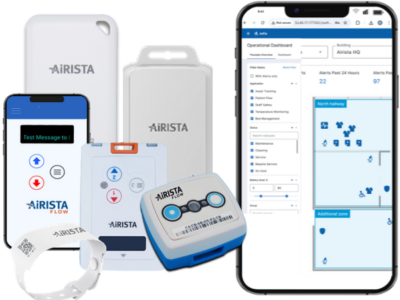
AiRISTA Sofia software platform with Bed Management provides an easy-to-use view of the location, condition, and availability of hospital beds, optimizing capacity management and streamlining workflows.
Artisight
Artisight
Documentation & Scribing
Artisight's Smart Hospital Platform uses AI-powered ambient intelligence, two-way audio/video, computer vision, and a multi-sensor network to create connected virtual care environments, improving patient safety and reducing clinical burden.
myTriageChecklist®
TriageLogic
Clinical Decision Support & Reference
myTriageChecklist® is a web-based AI-integrated solution that assists nurses in determining appropriate levels of care for patients over the phone by incorporating AI to ensure consistent and accurate assessments based on Schmitt-Thompson protocols.
Pulsara
Pulsara
Medical Phone & Communication
Pulsara is a secure, user-friendly app that unites the entire care team, even across different departments or organizations. By replacing multiple phone calls, radio reports, faxes, and pagers with one unified patient channel, Pulsara streamlines workflows, leading to reduced treatment times, lower costs, and enhanced experiences for both patients and caregivers.
Command Center
GE HealthCare
Practice Analytics & BI
GE HealthCare's Command Center is an AI-powered platform that optimizes hospital operations and patient flow through real-time visibility and predictive analytics.

See all Triage & ER/ICU AI tools →

More from Oxehealth

Oxehealth Vital Signs
Oxehealth Limited
Mental & Behavioral Health AI
Oxehealth Vital Signs is an AI-powered, contact-free patient monitoring system that remotely measures pulse and breathing rates, and tracks activity, to enhance safety and efficiency in inpatient healthcare settings.

View company profile →

Suggest an Edit → | Last Verified: 2026-04-18 | First Added: 2026-04-18

Investors who backed Vital Signs

Funded through the company that built this tool.

AI Tool Finder
AI-powered search. Results may not be comprehensive.