
Products

Loss of Pulse Detection
Fitbit
Cardiology AI
Fitbit's Loss of Pulse Detection is an FDA-cleared feature on compatible wearable devices that uses PPG and accelerometry to detect a potential loss of pulse and can automatically alert emergency services if the user is unresponsive.

See all 1 product →

About Fitbit

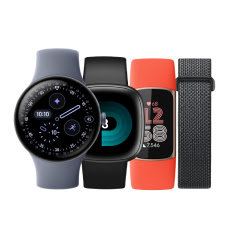
Fitbit, a subsidiary of Google LLC, is a leading provider of health and fitness solutions, primarily known for its connected wearable devices. These devices track various health metrics, including physical activity, sleep patterns, and heart rate. The company’s offerings extend beyond hardware to include software and interactive tools like the Fitbit and Fitbit Coach apps, guided health programs, and the Fitbit OS for smartwatches.

For physicians, Fitbit’s technology offers valuable insights into patients’ daily health and activity. The devices can monitor exercise intensity, heart rhythm, and sleep quality, providing data that can be crucial for managing conditions like congestive heart failure and identifying potential issues like sleep apnea. Recent advancements include the ability to link Fitbit data with electronic medical records (EMR) through Google’s Cloud Healthcare API, allowing doctors to access a more comprehensive and up-to-date patient profile. This integration, coupled with AI-driven health coaching, aims to provide personalized wellness guidance based on both wearable data and clinical history, potentially leading to more proactive and personalized patient care.

Fitbit’s focus on collecting and analyzing biometric data, combined with Google’s AI and machine learning capabilities, positions it as a significant player in the digital health landscape. The company is actively working to transform healthcare by providing tools that can help clinicians monitor patients, identify health trends, and facilitate timely interventions, particularly in areas like medication adherence and chronic disease management.

Focus Areas

Wearable technology digital health fitness tracking health monitoring sleep tracking heart rate monitoring atrial fibrillation detection stress management corporate wellness

Business Intelligence

TechnologyConnected wearable health and fitness devices with software and services, mobile applications (Fitbit app, Google Health Coach), Fitbit OS for smartwatches, cloud-native for data analytics and AI

What Physicians Need to Know

Wearable Technology & Fitness Tracking
Fitbit offers smartwatches and fitness trackers that continuously monitor physical activity, including step counts, calories burned, and active minutes. Devices like the Fitbit Edge provide advanced health and fitness tools in a sleek design with long battery life.
Sleep Monitoring
Fitbit utilizes AI-driven algorithms and data from motion detection, heart rate, and skin temperature sensors to provide detailed analysis of sleep quality, identifying sleep stages (light, deep, REM) and offering recommendations for improvement.
Heart Rate Monitoring & Irregular Heart Rhythm Detection (AFib)
Fitbit devices continuously track heart rate, heart rate variability (HRV), and resting heart rate. They employ AI algorithms to identify patterns that may indicate potential health issues and offer electrocardiogram (ECG) functionality for on-demand atrial fibrillation (AFib) checks.
Stress Management
Fitbit devices can track physiological responses related to stress, and the AI-powered Health Coach can provide personalized wellness guidance.
Continuous Glucose Monitoring Integration
Fitbit allows users to connect continuous glucose monitors (CGM) to the Fitbit app, enabling the AI coach to provide insights on how workouts or meals affect glucose levels.
AI-Powered Health Coaching
Fitbit's AI-powered Health Coach offers personalized support for fitness, sleep, and wellness goals. It can interpret medical records, lab results, and wearable data to provide tailored guidance, such as improving cholesterol levels.
Digital Health & Chronic Disease Management
Fitbit is actively involved in digital health programs, partnering with healthcare organizations to collect biometric data outside traditional clinical settings. Research indicates that Fitbit usage can help manage chronic conditions like sleep apnea, obesity, depression, diabetes, and high blood pressure.
Medical Record Integration
Users can link their medical records, including medications, lab results, and doctor visit history, to the Fitbit app. This allows the AI Health Coach to provide more comprehensive and personalized guidance.
Health Equity Research
Fitbit supports health equity research initiatives by providing devices and resources to studies addressing health disparities in underserved communities, focusing on areas like diabetes, maternal health, and mental well-being.
Physician Tip

Fitbit devices offer physicians a valuable tool for gaining continuous, long-term insights into patient health outside the clinic. Physicians can utilize Fitbit data, such as activity levels, sleep patterns, and heart rate, to provide personalized, data-driven fitness recommendations and monitor patient progress. The integration of Fitbit data with electronic health records (EHRs) is feasible and can facilitate patient-physician communication around exercise goals and overall health. The Fitbit ECG app can assist in detecting AFib, and with patient consent, healthcare partners can access AFib data through the Fitbit Web API, streamlining information sharing. The AI-powered Health Coach, with access to medical records, can help patients understand complex health information and prepare for doctor visits. Fitbit's involvement in health equity research also highlights its potential to contribute to understanding and addressing health disparities.

Fitbit's integration strategy is multifaceted, synchronizing devices with dedicated mobile and web applications via Bluetooth. It also collaborates with third-party apps and services, allowing users to centralize their health data. Notably, Fitbit has partnered with Google to refine EHRs and integrate continuous glucose monitoring. The Fitbit Web API allows healthcare partners to securely access patient data, including AFib information, with patient consent. Furthermore, Fitbit is working with companies like b.well Connected Health and Clear to enable seamless and secure linking of medical records from various providers to the Fitbit app.

Products by Fitbit

1 product in the directory

Loss of Pulse Detection
Fitbit
Cardiology AI
Fitbit's Loss of Pulse Detection is an FDA-cleared feature on compatible wearable devices that uses PPG and accelerometry to detect a potential loss of pulse and can automatically alert emergency services if the user is unresponsive.

What the Web Says

Fitbit generally receives positive reviews for its ability to motivate users and track various health metrics, including steps, sleep, and heart rate. Many users find the integration with their phones easy and appreciate features like notifications and calorie monitoring. However, there are recurring concerns about the durability and longevity of Fitbit devices, with some users reporting issues after about a year of use. The transition to Google's ecosystem has also been met with mixed feelings, with some users expressing dissatisfaction with changes to the app and features.

Overall: Mixed

Strengths

  • Easy integration with smartphones.
  • Effective for tracking steps, sleep quality, and heart rate.
  • Provides motivation through features like badges and activity reminders.
  • Helpful for monitoring calorie intake.
  • Offers useful notifications for calls, messages, and staying active.
  • Some models offer advanced features like ECG, SpO2, and skin temperature tracking.

Limitations

  • Durability issues, with devices reportedly stopping working or developing bugs after about a year.
  • Some users find the devices to be slow and experience synchronization problems over time.
  • Concerns about changes to the Fitbit app and features since the Google acquisition.
  • Certain advanced features may require a Fitbit Premium subscription.
  • Limited water resistance in some older models.
  • Some recommendations from the AI coach can feel generic and should not be treated as medical advice.

Based on reviews from: Capterra, Reddit, Healthcare IT Today, G2, Best Buy, PCMag, Wareable, ZDNET, WhistleOut

Last updated: 2026-10-22

Videos

News, demos, and interviews about Fitbit.

Loading videos...

Videos load interactively. If none appear, search YouTube for Fitbit →

View all on YouTube

Press & Coverage

Healio
Fitbit receives FDA clearance for algorithm to detect AF
Fitbit received FDA clearance for its photoplethysmography-based algorithm to detect atrial fibrillation in wearers of its devices, based on the Fitbit Heart Study.
2022-04
Reddit (r/gadgets)
Fitbit gets FDA clearance for passive heart rhythm monitoring | The feature will be available 'soon'
Google's Fitbit received FDA clearance for a feature that passively monitors wearer heart rhythms to flag signs of atrial fibrillation, a condition increasing stroke risk.
2022-04
Business Wire
Fitbit Receives Regulatory Clearance in Both the United States and Europe for ECG App to Identify Atrial Fibrillation (AFib)
Fitbit received 510(k) clearance from the U.S. FDA and CE marking in the EU for its ECG app to assess heart rhythm for atrial fibrillation.
2020-09
Healthcare Dive
Fitbit receives FDA clearance for ECG app - Healthcare Dive
Fitbit's new ECG app, cleared by the FDA and with CE mark in Europe, allows for heart rhythm tracking and flagging of atrial fibrillation, bringing it in line with other smartwatch manufacturers.
2020-09
Rhizome AI
Fitbit FDA Medical Device Authorizations: A Regulatory Overview - Rhizome AI
Fitbit holds five distinct FDA-authorized device functions, obtained through six submissions, including software-based digital health features and a body-composition scale.
2026-07
VectorShift Research
Alphabet acquires Fitbit — deal terms · VectorShift Research
Alphabet acquired Fitbit for $2.1 billion in January 2021 to expand into wearables and combine Fitbit's device and health-and-wellness expertise with Google's software, AI, and hardware.
2026-07
Google Blog
Google completes Fitbit acquisition
Google announced the completion of its acquisition of Fitbit, welcoming the team and highlighting Fitbit's role in building a community of over 29 million active users.
2021-01
MobiHealthNews
Report: Fitbit raises $30 million at $300 million valuation | MobiHealthNews
Fitbit raised an additional $30 million in its fourth round of funding, at a valuation of $300 million or more, to accelerate hiring and expand its global business.
2013-03

Frequently Asked Questions

Fitbit devices offer continuous tracking of key health metrics like activity, sleep, and heart rate, which can provide valuable insights for managing chronic conditions such as diabetes, hypertension, and cardiovascular disease. This data can help physicians monitor patient progress, identify trends, and personalize treatment plans, potentially leading to improved patient engagement and better health outcomes.
Fitbit prioritizes the privacy and security of user data, employing robust encryption and compliance with relevant healthcare regulations like HIPAA. While direct, seamless integration with all EMR systems is an ongoing industry-wide effort, Fitbit provides tools and APIs for secure data exchange, enabling healthcare providers to incorporate patient-generated health data into their clinical workflows with appropriate patient consent and security protocols.
Fitbit devices with ECG app functionality are capable of detecting irregular heart rhythms suggestive of atrial fibrillation (AFib) and provide notifications to users. While not a diagnostic tool, these features can aid in early detection and encourage users to seek medical attention, complementing clinical assessments. It's important to note that these features are designed for awareness and not as a substitute for professional medical diagnosis or treatment.
Fitbit aims to address health equity by designing user-friendly and accessible products, and by participating in research that includes diverse populations. They strive to make their technology broadly available and are involved in initiatives to understand and mitigate health disparities through digital health solutions.
Fitbit utilizes AI to provide personalized health coaching and actionable insights based on an individual's activity, sleep, and heart rate data. This can complement a physician's care plan by encouraging patients to adopt healthier habits and adhere to treatment recommendations. The AI coaching can serve as a continuous support system, reinforcing positive behaviors between clinical visits.
Fitbit has established partnerships with various healthcare organizations, research institutions, and employers to explore the utility of wearables in clinical settings and wellness programs. These collaborations often involve studies on the effectiveness of Fitbit devices in managing chronic conditions, promoting preventive care, and supporting remote patient monitoring, ultimately contributing to evidence-based digital health solutions.
Fitbit offers customized enterprise solutions with varying pricing structures depending on the scale and specific needs of healthcare providers or patient monitoring programs. These solutions often include bulk device purchasing, data analytics platforms, and dedicated support, with pricing typically determined through direct consultation and tailored proposals.

Investors

Who's funded Fitbit.

Related Companies

TimeDoc Health is a healthcare technology and services company that provides virtual care management solutions, primarily focusing on chronic care management (CCM), remote patient monitoring (RPM), and behavioral health integration (BHI). Their platform and services are designed to help healthcare organizations, including primary care providers, health systems, FQHCs (Federally Qualified Health Centers), and Medicare Advantage […]

Koios Care is a neurology-focused digital medicine company based in Antwerp, Belgium, specializing in AI-powered platforms. The company aims to revolutionize the management of neurological and chronic conditions, with an initial focus on Parkinson’s Disease. Koios Care’s platform utilizes everyday devices like smartphones and smartwatches to passively collect and analyze data, transforming it into objective, […]

Qure.ai is a leading healthcare AI company that leverages deep learning and artificial intelligence to revolutionize medical imaging diagnostics and make healthcare more accessible and affordable globally. The company develops AI-powered solutions for interpreting X-rays and CT scans, addressing critical health needs in areas such as lung, musculoskeletal, cardiovascular, and neurocritical health. Their technology assists […]

CureCompanion is a healthcare technology company that specializes in virtual care solutions, offering an integrated platform of hardware and software for telemedicine. Their technology goes beyond basic video conferencing, enabling healthcare providers to conduct comprehensive virtual examinations. This includes the ability to examine skin, eyes, ears, and throat using HD cameras, listen to heart and […]

Tortus AI is a healthcare artificial intelligence company that develops AI co-pilot systems for clinicians, aiming to reduce administrative burden and enhance patient care. Their flagship product, O.S.L.E.R. (Operating System Leverage in Electronic Records), is a voice-controlled AI assistant that listens to patient consultations and automatically drafts medical notes, letters, and clinical codes. This system […]

Mednition is a healthcare AI company that develops clinical decision support platforms to enhance patient care, primarily in emergency medicine. Their flagship product, KATE AI, is designed to empower emergency nurses by providing real-time risk intelligence and acuity guidance. KATE AI integrates seamlessly into existing electronic health record (EHR) workflows, continuously analyzing structured and free-text […]

AI Tool Finder
AI-powered search. Results may not be comprehensive.