CLARUS (700)

by Carl Zeiss Meditec  · Based in Germany → — Expanding insights with ultra-wide imaging. Color. Clarity. Complete.
Ophthalmology

Contact vendor
Regulatory Status Disclosed

Overview

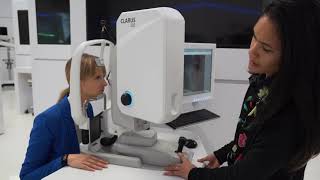
The ZEISS CLARUS 700 is a comprehensive, AI-enhanced ultra-widefield (UWF) retinal imaging system designed for eye care specialists. It combines UWF imaging with true color, excellent clarity, and a complete suite of imaging modalities to provide detailed views of the retina from the macula to the far periphery.

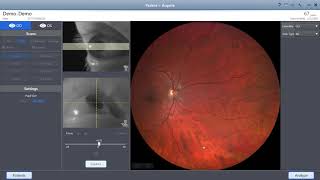
Powered by Broad Line Technology, the CLARUS 700 captures images that closely resemble the natural coloration of the fundus as seen during clinical examination, utilizing red, green, and blue Light Emitting Diodes (LEDs).

Key imaging modalities include True Color (with RGB channel separation), Fluorescein Angiography (FA), Fundus Autofluorescence (FAF-Green and FAF-Blue), Infrared (IR) imaging, and external eye imaging. It also offers advanced features like PrecisionFocus for rapid focusing on areas of interest, AutoBright for optimizing angiogram brightness, and AI-powered GazePoint technology to facilitate montaging by identifying the optic nerve as a focal point, ensuring sharper and more detailed UWF images.

The system is designed to maximize workflow efficiency, provide a comfortable patient experience, and assist in the diagnosis and monitoring of various retinal diseases, including age-related macular degeneration, diabetic retinopathy, and retinal vascular occlusions.

Reviewed by Pouyan Golshani, MD — Interventional Radiologist

Key Features

  • Ultra-widefield (UWF) imaging (up to 200u00b0 with montaging, 133u00b0 single capture)
  • True Color imaging with Red, Green, and Blue LED illumination
  • Fluorescein Angiography (FA)
  • Fundus Autofluorescence (FAF-Green, FAF-Blue)
  • Infrared (IR) imaging
  • External Eye imaging
  • AI-powered GazePoint technology for accurate gaze derivation and montaging
  • PrecisionFocus technology for enhanced region-of-interest examination
  • AutoBright software for optimized angiogram brightness
  • High resolution (up to 7.3 u00b5m detail)
  • Comprehensive suite of imaging modalities

Use Cases

  • Diagnosis and monitoring of retinal diseases (e.g., AMD, diabetic retinopathy, retinal vascular occlusions)
  • Visualization of vascular structures of the retina and choroid
  • Assessment of the peripheral retina for early disease detection
  • Documentation of ocular disease indications in various regions of the eye
  • Evaluation of macular pigment and pigment epithelium health
  • Comprehensive fundus examinations and treatment planning

What Physicians Need to Know

Retinal Image Analysis (Fundus/OCT)
The ZEISS CLARUS 700 is an advanced ultra-widefield (UWF) retinal imaging system that provides comprehensive fundus photography and diagnostic angiography. It captures true color images with red, green, and blue channel separation, fluorescein angiography (FA), autofluorescence (FAF-Green, FAF-Blue), infrared (IR) imaging, and external ocular surface imaging. While it does not perform OCT analysis directly, it integrates with ZEISS CIRRUSu2122 HD-OCT for a combined diagnostic approach.
Diabetic Retinopathy Screening Accuracy
The CLARUS 700's ultra-widefield fluorescein angiography is valuable for identifying diabetic retinopathy (DR) by enhancing visualization of the peripheral retina. A study indicated that CLARUS demonstrated 94.2% sensitivity for detecting any DR and 86% sensitivity for referable DR, outperforming another UWF system in a comparative analysis, and produced fewer unassessable images.
Glaucoma Detection
CLARUS 700 aids in glaucoma disease management through high-resolution true color imaging, stereo imaging, measurement, and registration capabilities. Its AI-powered GazePoint feature automatically locates the optic nerve head, which is beneficial for glaucoma assessment. The system also integrates with ZEISS Glaucoma Workplace software.
Age-Related Macular Degeneration Screening
The CLARUS 700 supports Age-Related Macular Degeneration (AMD) screening and disease management using high-resolution true color, FAF-Blue, and FAF-Green imaging. It can document various indications of ocular disease. The device's fundus images have been used as a reference standard in studies evaluating AI-driven AMD screening algorithms.
Autonomous vs Assistive Diagnosis
The AI features of CLARUS 700, including PrecisionFocus, AutoBright, and GazePoint, are designed as assistive tools to enhance image capture and quality. For instance, GazePoint utilizes a deep learning algorithm to automatically locate the optic nerve head and derive patient gaze, making montage algorithms more robust. This indicates an assistive role rather than autonomous diagnostic capabilities.
Point-of-Care Deployment
The CLARUS 700 is described as a 'table-top fundus camera', designed for comprehensive imaging within a clinical setting. Its features emphasize workflow efficiency and comprehensive imaging capabilities within a practice, rather than portable or remote point-of-care deployment.
Screening Program Integration
The device's ability to capture high-quality, multi-modal images and its integration into ZEISS's broader 'Retina Workflow' and 'Integrated Diagnostic Imaging platform' suggest it is intended as a core component of screening and management programs within a clinical environment. Its high sensitivity for DR detection further supports its role in screening.
Sensitivity & Specificity Data
In a comparative study for Diabetic Retinopathy detection, CLARUS 700 demonstrated 94.2% sensitivity for detecting any DR and 86% sensitivity for referable DR, with superior specificity compared to another ultra-widefield system.
FDA De Novo vs 510(k) Pathway
The CLARUS 700 initially received FDA 510(k) clearance in 2019. It has subsequently received additional 510(k) clearances for new functionalities, such as Indocyanine Green Angiography (ICGA) in April 2025.
Physician Tip

Leverage the CLARUS 700's true color and multi-modal imaging (FA, FAF, IR) to gain a comprehensive view of retinal pathologies from the macula to the far periphery. Utilize the AI-enhanced capture features like PrecisionFocus, AutoBright, and GazePoint to optimize image quality and streamline workflow, especially for challenging cases or patients with poor fixation. Integrate CLARUS images with OCT data via the ZEISS Integrated Diagnostic Imaging platform for a holistic patient assessment, particularly for conditions like AMD and glaucoma. The high sensitivity for DR detection makes it a robust tool for diabetic eye screening programs.

The ZEISS CLARUS 700 is designed for seamless integration within the ZEISS Retina Workflow and the broader Integrated Diagnostic Imaging platform. It combines exam data from devices like the CLARUS and CIRRUSu2122 HD-OCT to provide a unified view for more efficient and insightful treatment decisions. It also integrates with ZEISS Glaucoma Workplace software. This connectivity supports an end-to-end 'screening-to-treatment' solution.

Details

Category Ophthalmology AI
Pricing Contact vendor — Pricing information is not publicly disclosed. Contact Carl Zeiss Meditec sales for a quote.
DeploymentOn-premise (device-based)
Compliance
BAA Available Yes AI-estimated
HIPAA Compliant Yes AI-estimated
FDA Status Yes AI-estimated

The CLARUS 700 received initial FDA 510(k) clearance in July 2019. It subsequently received an updated 510(k) clearance (K243878, dated April 17, 2025) for new functionality, specifically Indocyanine Green Angiography (ICGA), as an active, software-controlled, high-resolution ophthalmic imaging device for in-vivo imaging of the human eye.

Integrations
EHR Not specified
Specialties Ophthalmology

What the Web Says

The ZEISS CLARUS 700 is an ultra-widefield (UWF) retinal camera that offers true color imaging and a comprehensive suite of modalities, including fluorescein angiography (FA) and indocyanine green angiography (ICGA) functionality. It is designed to provide high-resolution images of the retina, from the macula to the far periphery, aiding in the diagnosis and monitoring of various retinal diseases. Physicians generally praise its image quality, true color representation, and ease of use, particularly in a non-mydriatic setting.

Overall: Positive

Strengths

  • True color imaging provides natural-looking fundus photographs, similar to direct observation.
  • High resolution and clarity across a wide field of view (up to 200u00b0 with montaging, 133u00b0 single capture).
  • Multiple imaging modalities available on a single platform (true color, FAF blue/green, FA, external photography, infrared imaging, ICGA).
  • Features like PrecisionFocus, AutoBright, and GazePoint (AI-based) enhance image quality, optimize brightness, and facilitate montaging, improving workflow efficiency.
  • Can detect more referable retinopathy and peripheral lesions compared to conventional imaging.
  • Generally well-tolerated by patients, including children, and often reduces the need for pupil dilation.

Limitations

  • Some users have reported issues with the CLARUS 500 model, including software glitches and hardware problems, raising concerns about the 700.
  • One Reddit user was not impressed with a demo, citing struggles to get clear photos and low image quality.
  • The device gives off a bright flash that some patients may not like.
  • Montaging multiple images to achieve ultra-widefield views can be difficult, especially with uncooperative patients like babies.
  • The Optos camera may capture a larger retinal area in a single image and has a wider field of view in some comparisons.
  • The cost of the machine can be a significant barrier.

Based on reviews from: RetinaToday, Review of Optometry, Ophthalmic Photographers' Society, Insight, Eyetube, YouTube, Reddit, ResearchGate, Stock Titan, Optometry Times, Review of Ophthalmology, Retinal Physician, PMC, Medilex, amedeo lucente, Revista Mu00e9dica de la Universidad Autu00f3noma de Sinaloa, SciELO Mu00e9xico

Last updated: 2026-07-17

Ratings & Reviews

No reviews yet. Be the first to review this tool!

Rate CLARUS (700)

Clinical Value
Ease of Use
Integration
Support & Docs
Value for Money

Press & Coverage

Carl Zeiss Meditec AG
ZEISS CLARUS 700 Receives NMPA Approval in China
ZEISS Medical Technology announced that its CLARUS 700 retinal imaging system has received National Medical Products Administration (NMPA) approval in China, expanding advanced retinal diagnostic capabilities with ultra-widefield, high-resolution images in True Color and Fluorescein Angiography.
2025-06
Medical Device Network
Zeiss secures China's NMPA approval for CLARUS 700 system
Zeiss Medical Technology has received NMPA approval in China for its CLARUS 700 retinal imaging device, which offers comprehensive ultra-widefield retinal imaging in true color with superior quality and includes fluorescein angiography.
2025-06
Optometry Times
ZEISS fundus imaging device receives NMPA approval in China | Optometry Times - Clinical News & Expert Optometrist Insights
ZEISS Medical Technology's CLARUS 700 fundus imaging device has received NMPA approval in China, enabling eye care providers to capture ultra-widefield, high-resolution retinal images with fluorescein angiography.
2025-06
Market Scope
Chinese Regulators Approve Clarus 700 Ultra-Widefield Fundus Camera from Zeiss
China's National Medical Products Administration (NMPA) has approved the Zeiss CLARUS 700 high-definition, ultra-widefield fundus imaging system, an enhanced version of the 500 model that offers true color and a full range of fundus imaging modalities, including fluorescein angiography.
2025-06
Newswire.ca (Carl Zeiss Meditec AG)
ZEISS expands DORC portfolio and further strengthens digital footprint with improved workflow efficiency and digital visualization
ZEISS announced that the CLARUS 700 with ICGA (Indocyanine Green Angiography) modality has received 510k clearance and CE approval, providing high-resolution early-phase to late-phase ultra-widefield imaging with new features like standalone ICG and simultaneous FA-ICG capture.
2025-10
FDA.gov
Carl Zeiss Meditec, Inc. Tanesha Bland Sr. Regulatory Affairs Specialist 5300 Central Parkway Dublin, California
This FDA 510(k) summary for the CLARUS 700 ophthalmic camera outlines its indications for use, including capturing, displaying, annotating, and storing images to aid in the diagnosis and monitoring of retinal diseases, with true color and autofluorescence imaging modes.
2025-04
PMC (PubMed Central)
Non-contact widefield neonatal retinal imaging for retinopathy of prematurity using the Clarus 700 high resolution true colour reflectance imaging - PMC
This peer-reviewed article illustrates the role of non-contact widefield retinal imaging of retinopathy of prematurity (ROP) using the CLARUS 700, demonstrating its ability to capture high-resolution, true-color images for accurate diagnosis and grading of ROP severity.
2022-10
Carl Zeiss Meditec AG
Study Spotlight: Enhancing Diabetic Eye Screening with ZEISS CLARUS
A study highlighted the ZEISS CLARUS 700's high-performance imaging in diabetic eye screening, showing a strong performance in detecting diabetic retinopathy with greater accuracy and precision compared to other devices.
2025-03

Videos

Product demos, reviews, and walkthroughs for CLARUS (700).

View all on YouTube

Frequently Asked Questions

The CLARUS 700 incorporates AI-based algorithms like GazePoint for automatic optic nerve detection and gaze angle derivation, AutoBright for optimizing image brightness, and PrecisionFocus for targeted focusing. These features streamline image acquisition, reduce chair time, and improve workflow efficiency for comprehensive fundus imaging.
The CLARUS 700 has received FDA 510(k) clearance and NMPA approval in China, and it meets the ISO 10940:2009 standard for ophthalmic instruments. While its AI primarily optimizes image capture, data privacy for patient images is managed through integration with platforms like ZEISS FORUM, ensuring secure handling of diagnostic data.
The CLARUS 700 is recognized for its true color and high-resolution ultra-widefield imaging, often compared to systems like Optos California. Its AI features, such as GazePoint and AutoBright, specifically enhance image acquisition and clarity, offering superior detail and color representation in many cases, though some competitors may offer a wider field of view.
The cost for a CLARUS 700 can vary significantly, with prices ranging from approximately $7,779 for refurbished units to over $58,000 for new systems, depending on configuration and vendor. While specific ROI figures are not provided, its AI-enhanced efficiency features, such as reduced chair time and streamlined workflow, contribute to potential cost savings and increased patient throughput.
The AI in CLARUS 700 is designed to assist with image capture and optimization, such as adjusting focus and brightness, rather than providing autonomous diagnostic interpretations. Therefore, comprehensive physician oversight remains essential for accurate diagnosis, clinical decision-making, and interpreting the acquired high-resolution images.

Related Tools

RetiVue EntireEye Imaging
RetiVue, LLC
Ophthalmology AI
RetiVue manufactures ultrawidefield retinal cameras with automatic image capture, aiming to aid in the early documentation of eye disease and prevent blindness. Their EntireEye Imaging System offers both desktop and portable options, providing true color, high-detail images with a wide field of view for patients from infancy to adulthood.
AI Optics Sentinel Camera
AI Optics
Ophthalmology AI
AI Optics' Sentinel Camera is an FDA 510(k)-cleared handheld retinal imaging system designed to capture high-quality images for retinal disease screening, with future plans for integrated AI-based screening software for diabetic retinopathy, glaucoma, and macular degeneration.
RetCAD
Thirona
Ophthalmology AI
RetCAD is a CE-certified AI software product from Thirona that analyzes color fundus images for the presence of Age-related Macular Degeneration (AMD) and Diabetic Retinopathy (DR), aiding in early detection and grading of these vision-threatening conditions.
Google Health (Ophthalmology AI)
Google Health
Ophthalmology AI
Google Health leverages AI and technology to improve healthcare globally, focusing on early disease detection, personalized wellness, and supporting healthcare professionals with advanced tools and research.
Optivate AI Scribe
Optivate
Documentation & Scribing
Optivate's AI Scribe is designed specifically for ophthalmology, capturing clinical encounters in real-time to generate structured, accurate documentation and reduce charting time.
Cybersight AI
Orbis International
Clinical Decision Support & Reference
Cybersight AI is an AI-powered clinical decision support tool from Orbis International, designed to quickly and efficiently detect diabetic retinopathy, glaucoma, and other common eye diseases from fundus images. It is available for free in low- and middle-income countries, empowering nurses and technicians in underserved regions to conduct screenings and improve patient referral compliance.

See all Ophthalmology AI tools →

More from Carl Zeiss Meditec

CLARUS
Carl Zeiss Meditec
Ophthalmology AI
CLARUS by Carl Zeiss Meditec is an FDA-cleared ultra-widefield retinal imaging system providing high-resolution, true-color images and multiple angiography modalities for comprehensive eye disease diagnosis and monitoring.

View company profile →

Suggest an Edit → | Last Verified: 2026-04-18 | First Added: 2026-04-18
AI Tool Finder
AI-powered search. Results may not be comprehensive.