Google Cloud Translation API

by Google  · Based in United States →Accelerate global growth with quality translation at scale, powered by Gemini.
Emergency Medicine Family Medicine Internal Medicine

Google cloud translation api offers a free tier and pay-as-you-go pricing for its various translation products.
Documentation Provided

Overview

The Google Cloud Translation API is a powerful, scalable service that allows physicians and healthcare organizations to translate text and documents between thousands of language pairs. Leveraging Google’s advanced neural machine translation (NMT) technology, it aims to provide highly accurate and fluent translations, which is critical in a healthcare setting where precision can impact patient care and safety.

For physicians, this API can be integrated into various healthcare applications, EHR systems, or patient communication platforms. It facilitates multilingual patient interactions, helps translate medical records from international patients, and supports global research collaborations. The API offers both basic text translation and more advanced features like document translation, which can handle complex layouts and preserve formatting.

Key benefits for healthcare include improved patient understanding and engagement for non-English speaking populations, streamlined administrative processes involving multilingual documentation, and enhanced accessibility to medical information. While the API provides robust translation capabilities, healthcare providers should always consider the context and potential need for human review, especially for critical medical decisions or sensitive patient information, to ensure complete accuracy and cultural appropriateness.

Reviewed by Pouyan Golshani, MD — Interventional Radiologist

Key Features

  • Neural Machine Translation (NMT)
  • Text translation
  • Document translation (PDF, DOCX, PPTX, XLSX)
  • AutoML Translation for custom models
  • Glossary support for domain-specific terminology
  • Language detection
  • Batch translation
  • Integration with other Google Cloud services

Use Cases

  • Translating patient intake forms and medical histories
  • Enabling multilingual patient-provider communication
  • Translating medical research papers and clinical trial documents
  • Localizing healthcare application interfaces
  • Processing international medical records
  • Supporting global telehealth initiatives

Details

Category Developer Tools & APIs
Pricing Google cloud translation api offers a free tier and pay-as-you-go pricing for its various translation products.
  • The Basic v2 API and Advanced v3 API for standard Neural Machine Translation (NMT) cost $20 per million characters
  • The Advanced v3 API also offers document translation at $0.08 per page
  • AutoML Translation for custom models is priced at $80 per million characters, with a tiered discount to $30 per million at very high volumes, plus $45 per hour for training
  • Adaptive Translation costs $25 per million input characters + $25 per million output characters, and the TextTranslation LLM model costs $10 per million input characters + $10 per million output characters
  • There is a free tier of 500,000 characters per month for NMT translation
  • New GCP accounts also receive a $300 trial credit that expires after 90 days
Free TrialUnknown
DeploymentCloud-based API.
Mobile AppNo dedicated mobile app for the API, but the API can be integrated into mobile applications.
API AvailableUnknown
Data ExportUnknown
Languages249 languages as of 2026 for Neural Machine Translation (NMT) model, and over 50 languages for Translation LLM and Adaptive Translation.
TrainingUnknown
Target SizeGoogle Cloud Translation API serves a wide range of businesses, from small businesses (74.5% have 1-10 employees) to large enterprises (760 companies with 10,001+ employees).
Compliance
BAA AvailableUnknown AI-estimated
HIPAA Compliant No AI-estimated
FDA Status Unknown AI-estimated — unknown
SOC 2 Yes AI-estimated
GDPR Yes AI-estimated
Integrations
EHR Not specified
Specialties Emergency Medicine, Family Medicine, Internal Medicine

Social Proof

Customers187,279 customers for Google Cloud Translation API. Other sources indicate 1,894 verified companies using Google Cloud Translation API as of 2026, and over 158,303 companies using Google Translate API.
Notable
Eli LillyAdeccoMedtronicSchneider ElectricU.S. NavyBoeingSephoraUNICEF.

Support & Reliability

Training ProvidedUnknown

What the Web Says

The Google Cloud Translation API is generally well-regarded for its ease of integration, broad language support (over 100 languages), and fast, scalable translations. It's often praised for its ability to automate translation workflows and reduce manual effort. However, a recurring concern across various reviews is the accuracy of translations, particularly for specialized, technical, or nuanced content, and for less common language pairs. Pricing for high-volume usage is also a common point of criticism.

Overall: Mixed

Strengths

  • Easy to integrate with existing applications and workflows.
  • Supports a wide range of languages (over 100, some sources say 189).
  • Delivers fast and scalable translations.
  • Automates translation processes, reducing manual effort.
  • Good for general business, project, and use cases.
  • Offers a free tier for smaller deployments.

Limitations

  • Translation accuracy issues, especially for less common language pairs, specialized, or technical content.
  • Pricing can be expensive for high-volume translation tasks.
  • May require human proofreading for critical or nuanced content.
  • Output quality may trail competitors like DeepL for European languages.
  • Limited control over the base translation model without investing in custom AutoML training.
  • Concerns about HIPAA compliance and patient data privacy in healthcare settings.

Based on reviews from: TechnologyChecker.io, G2, Slashdot, Capterra, Reddit, No Barrier, Slator, APIbenchmarks

Last updated: 2026-09-06

Ratings & Reviews

No reviews yet. Be the first to review this tool!

Rate Google Cloud Translation API

Clinical Value
Ease of Use
Integration
Support & Docs
Value for Money

Press & Coverage

Medium (by NRT0401)
Google Cloud Translation API: Bridging Language Barriers with AI
This article explores the features and applications of Google Cloud Translation API, highlighting its use in healthcare for translating patient information, medical records, and care instructions to improve communication and quality of care. It also mentions customization for industry-specific needs through AutoML Translation.
2024-10
Google Cloud Blog
Sharing the latest updates to Google Cloud's Translation AI
Google Cloud announced updates to its Translation AI, now supporting 189 languages and offering both Basic and Advanced API options. The Advanced API leverages Gemini-powered Translation models and Adaptive Translation for nuanced, high-quality translations, including customization with glossaries and fine-tuning.
2024-11
Jaide Health
Medical translation now available on Google Cloud Marketplace - Jaide Health
Jaide Health launched its Interpreter and Translator solutions on Google Cloud Marketplace, aiming to make healthcare more accessible by providing HIPAA-compliant, AI-driven medical interpretation and translation. This simplifies procurement for healthcare providers to leverage existing Google Cloud commitments.
2025-03
Digital Health News
Google Cloud Expands Healthcare AI Partnerships to Address Burnout & Improve Care Delivery - Digital Health News
Google Cloud is expanding its healthcare partnerships to integrate generative AI into daily workflows, helping providers access clinical information faster and improve patient experiences. One mentioned use case includes converting research articles into audio files and content translation.
2025-04
TechnologyChecker.io
Companies Using Google Translate API in 2026 - TechnologyChecker.io
This article highlights companies using Google Translate API, including medical device manufacturer Medtronic and pharmaceutical giant Eli Lilly, which built an internal translation tool on Google Cloud Translation. It notes the API's widespread language support and accuracy.
2026-04
ResearchGate
Google translate in healthcare: preliminary evaluation of transcription, translation and speech synthesis accuracy | Request PDF - ResearchGate
A study evaluating Google Translate's accuracy in interpreting healthcare sentences from English to Spanish found variable accuracy depending on sentence length, with speech synthesis accuracy ranging from 26.6% to 90.6%. While readily accessible and free, caution is advised for critical medical communications.
2026-05
Google Cloud Documentation
Cloud Translation release notes | Google Cloud Documentation
Recent release notes for Google Cloud Translation highlight enhancements to the Translation LLM, including support for full finetuning with LoRA, improved latency and quality, and expanded language support. Glossary now also supports Translation-LLM and Adaptive Translation.
2026-08
Google Cloud
Cloud Translation | Google Cloud
Google Cloud Translation API offers both Basic and Advanced editions, leveraging neural machine translation and Gemini-powered Adaptive Translation for nuanced accuracy across 189 languages. Advanced features include domain-specific translation, formatted document translation, and batch translation.
unknown

Videos

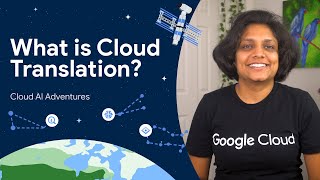
Product demos, reviews, and walkthroughs for Google Cloud Translation API.

View all on YouTube

Frequently Asked Questions

The Google Cloud Translation API offers REST and gRPC APIs, allowing developers to integrate it into various applications. You would typically use a client library in your preferred programming language (e.g., Python, Java, Node.js) to send text for translation and receive the translated output. This integration would require development work to connect your EHR's data flow with the API calls.
Google Cloud is HIPAA compliant, and the Translation API can be used in a HIPAA-compliant manner. However, it's crucial to ensure that your implementation adheres to HIPAA regulations, including proper data de-identification or appropriate Business Associate Agreements (BAAs) with Google. You are responsible for configuring your use of the service to meet compliance requirements.
The Google Cloud Translation API is priced based on usage, typically per character translated. There are different tiers, with costs decreasing as your translation volume increases. Google also offers a free tier for initial exploration. For high-volume clinical use, it's important to estimate your character count and review the detailed pricing page on the Google Cloud website to project costs accurately.
While the Google Cloud Translation API is highly advanced, it may occasionally struggle with highly specialized medical jargon, rare diseases, or extremely nuanced conversational context without additional customization. It's important to test the API with your specific medical vocabulary and consider using features like custom glossaries to improve accuracy for domain-specific terms. It's also not a substitute for professional medical interpretation in critical situations.
Alternatives include Amazon Translate and Microsoft Translator, both of which offer similar neural machine translation capabilities and have compliance frameworks for healthcare data. Each platform has its own strengths in terms of supported languages, customization options, and pricing. It's recommended to evaluate each alternative based on your specific needs for accuracy, language pairs, integration complexity, and compliance assurances.
Yes, the Google Cloud Translation API offers custom glossaries, allowing you to provide your own translations for specific medical terms, acronyms, or phrases to ensure consistent and accurate output. Additionally, for more advanced needs, the Translation Hub (built on the Translation API) allows for further customization and fine-tuning of translation models with your own data, which can significantly improve accuracy for highly specialized medical content.
The Google Cloud Translation API is trained on a vast amount of text data, including medical content, which allows it to handle a wide range of medical specialties. However, for highly niche or evolving terminologies within a specific specialty, leveraging custom glossaries is highly recommended. This allows you to 'teach' the API your preferred translations for specialized terms, ensuring greater accuracy and consistency in your specific medical domain.

Related Tools

FAITH project
AI Agent
Clinical Decision Support & Reference
The FAITH project focuses on Federated Artificial Intelligence for Trusted Healthcare, aiming to develop secure and privacy-preserving AI solutions for healthcare, including potential applications for physician directories.
TupleLeap AI
TupleLeap AI
Developer Tools & APIs
The AI platform for modern enterprises. Deploy intelligent AI agents across your entire organization. Plus train custom Small Language Models on YOUR enterprise data — fully private, 10x cheaper than GPT-4.
NodeScientist
NodeScientist
Developer Tools & APIs
NodeScientist provides an AI Agent Platform with specialized AI agent swarms for industries like Healthcare, Finance, Sales & Marketing, focusing on compliance, accuracy, and scalability for enterprise needs.
Microsoft Translator via Azure
Microsoft
Developer Tools & APIs
Microsoft Translator via Azure provides instant, AI-powered translation across over 100 languages, ideal for enhancing multilingual communication in healthcare settings.
Stepes
Stepes
Developer Tools & APIs
Stepes is a leading provider of professional Chinese medical translation services, helping health science companies achieve international success, one accurately translated Chinese medical document at a time. They offer a cloud-based translation management system that uses the latest web 3.0 technology and AI to help clients manage all their Chinese medical translation activities end-to-end and online. Stepes is also noted for its expertise in Chinese medical terminology translation, having helped translate medical dictionaries into Simplified Chinese that are approved by China's CFDA.
John Snow Labs (Adverse Drug Reaction Detection Models)
John Snow Labs
Developer Tools & APIs
John Snow Labs' Adverse Drug Reaction Detection Models automatically detect Adverse Drug Reactions or Events (ADR / ADE) from multichannel unstructured data, including transcriptions of calls, CRM notes, clinical notes from EMRs or PDFs, social media posts, and biomedical literature. The models classify text to determine if it describes an adverse event, identify and normalize drugs and symptoms through entity recognition, and establish relationships between symptoms and drugs.

See all Developer Tools & APIs tools →

More from Google

Gemini for Google Workspace
Google
Documentation & Scribing
Google Gemini for Google Workspace is an AI assistant integrated into Google's productivity suite, offering features like writing, summarization, and data analysis to enhance efficiency for physicians and healthcare professionals.
Google Cloud AI (with BAA)
Google
Clinical Decision Support & Reference
Google Cloud AI provides a powerful suite of machine learning and AI tools developed to help healthcare businesses optimize operations, gain insights from data, and enhance patient care. It offers solutions for improved diagnostics, personalized treatment, workflow automation, and cost optimization, all built on a secure and compliant platform.
Google Gemini
Google
Clinical Decision Support & Reference
Google Gemini is a powerful AI assistant with advanced capabilities for writing, summarization, and research, applicable to physician productivity and administrative support. It is a multimodal AI, capable of processing text, images, audio, and video, and has specialized versions like Med-Gemini for healthcare applications.
Google Med-PaLM 2
Google
Clinical Decision Support & Reference
Google Med-PaLM 2 is a large language model specifically built for healthcare, fine-tuned with medical data to assist with clinical decision support, summarization, and medical Q&A. It has achieved expert-level performance on medical licensing exams and is developing multimodal capabilities to interpret medical images and other data.

View company profile →

Suggest an Edit → | Last Verified: 2026-09-06 | First Added: 2026-09-06

Investors who backed Google Cloud Translation API

Funded through the company that built this tool.

AI Tool Finder
AI-powered search. Results may not be comprehensive.