EyeArt

by Eyenuk  · Based in United States → — AI Eye Screening for Autonomous Disease Detection
Endocrinology Family Medicine Ophthalmology

Contact us for pricing
Regulatory Status Disclosed

Overview

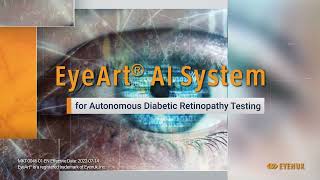
The EyeArt AI Eye Screening System by Eyenuk is an extensively validated artificial intelligence (AI) technology designed for the autonomous detection of diabetic retinopathy (DR). It enables healthcare providers, including those in primary care, diabetes centers, and optometric offices, to quickly and accurately identify patients with referable DR during a regular exam. The system autonomously analyzes patient retinal images, acquired using integrated fundus cameras, and provides easy-to-read reports in under 60 seconds. This allows for immediate, on-site screening without the need for expert human grading or eye dilation in most cases, streamlining the diagnostic process and improving patient compliance with annual screenings.

EyeArt is designed to integrate seamlessly into clinical workflows and is compatible with multiple camera models. Beyond diabetic retinopathy, the system also has CE marking in the European Union for the detection of age-related macular degeneration (AMD) and glaucomatous optic nerve damage. Eyenuk’s mission is to accelerate the world’s transition to predictive and preventative healthcare by screening every eye for timely diagnosis of life- and vision-threatening diseases.

Reviewed by Pouyan Golshani, MD — Interventional Radiologist

Key Features

  • Autonomous AI detection of more than mild and vision-threatening diabetic retinopathy (DR)
  • Rapid results in under 60 seconds
  • Compatible with multiple fundus cameras (Canon CR-2 AF, CR-2 Plus AF, Topcon NW400)
  • Cloud-based system with thin client software
  • Easy-to-read, actionable PDF reports
  • Real-time image quality feedback and upgraded assessment module
  • Can be operated by nurses or technicians with minimal training
  • RESTful API for seamless integration with EHR/EMR/PACS
  • ISO 13485:2016 Certified Quality Management System
  • Detection of AMD and glaucomatous optic nerve damage (EU CE Mark Class IIb)

Use Cases

  • Diabetic retinopathy screening in primary care settings
  • On-site DR screening in diabetes centers and optometric offices
  • Telemedicine-enabled diabetic eye screening
  • Early detection and accelerated referral of vision-threatening DR
  • Improving patient compliance with annual diabetic eye exams
  • Screening for age-related macular degeneration (AMD) and glaucoma (EU)

What Physicians Need to Know

Retinal Image Analysis (Fundus/OCT)
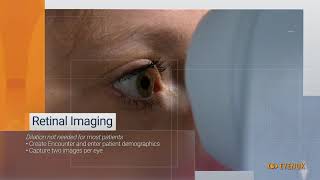
EyeArt primarily analyzes color fundus images, specifically two images per eye (optic nerve head-centered and macula-centered). It is indicated for use with Canon CR-2 AF, Canon CR-2 Plus AF, and Topcon NW400 fundus cameras.
Diabetic Retinopathy Screening Accuracy
In a pivotal clinical trial, EyeArt demonstrated 96% sensitivity and 88% specificity for detecting more than mild Diabetic Retinopathy (DR), and 97% sensitivity and 90% specificity for vision-threatening DR. A large real-world study (REVERE, over 100,000 patient visits) reported 91.3% sensitivity and 91.1% specificity for referable DR, and 98.5% sensitivity for treatable DR. It did not miss any cases of vision-threatening DR in a comparative study against ophthalmologists' dilated exams.
Glaucoma Detection
EyeArt (version 3.0) has received CE marking as a Class IIb medical device in the European Union for detecting glaucomatous optic nerve damage from retinal images. It is not currently FDA-cleared for autonomous diagnosis of glaucoma in the US, but Eyenuk offers an assistive-AI function for ophthalmologists for such diseases.
Age-Related Macular Degeneration Screening
EyeArt (version 3.0) holds CE marking as a Class IIb medical device in the European Union for detecting age-related macular degeneration (AMD) using retinal image analysis. Similar to glaucoma, it is not currently FDA-cleared for autonomous AMD diagnosis in the US, with an assistive-AI function available.
Autonomous vs Assistive Diagnosis
EyeArt is an autonomous AI system for diabetic retinopathy screening, providing results without direct physician oversight. It is the first and only FDA-cleared AI technology for autonomous detection of both more than mild and vision-threatening DR. For AMD and glaucoma, it has autonomous CE marking in the EU, but in the US, Eyenuk provides an assistive-AI function for ophthalmologists.
Point-of-Care Deployment
The system is designed for in-clinic, real-time screening at point-of-care locations such as primary care practices, diabetes centers, and optometric offices. It can be operated by clinical support staff with minimal training, generating reports in under 60 seconds.
Screening Program Integration
EyeArt is built for seamless integration into clinical workflows and screening programs, including national health systems (e.g., Norway's DIPS Arena EMR) and collaborations with programs like the English National Diabetic Eye Screening Programme (NDESP) and EyeCare America. It supports integration with EHR/EMR and PACS via a RESTful API.
Sensitivity & Specificity Data
Pivotal Clinical Trial for DR: 96% sensitivity / 88% specificity for more than mild DR; 97% sensitivity / 90% specificity for vision-threatening DR. REVERE 100K Study for DR: 91.3% sensitivity / 91.1% specificity for referable DR; 98.5% sensitivity for treatable DR. UK NDESP images showed 100% sensitivity for vision-threatening and proliferative retinopathy.
FDA De Novo vs 510(k) Pathway
EyeArt received its initial FDA 510(k) clearance (K200667) in August 2020 for diabetic retinopathy, leveraging IDx-DR (which received De Novo authorization) as its predicate device. A subsequent 510(k) clearance (K223357) in June 2023 expanded its compatibility to include the Topcon NW400 camera.
Physician Tip

EyeArt provides an autonomous, rapid screening solution for diabetic retinopathy, significantly increasing access to timely detection, especially in primary care settings. While FDA-cleared for autonomous DR detection, for AMD and glaucoma, its autonomous capabilities are CE marked in the EU, but in the US, it serves as an assistive tool for ophthalmologists. Physicians should be aware of the specific camera models supported and ensure proper image acquisition for optimal accuracy. The system's high sensitivity for DR is crucial for identifying at-risk patients for referral, thereby helping to prevent vision loss.

EyeArt offers robust integration capabilities, including a RESTful API for seamless connection with Electronic Health Records (EHR), Electronic Medical Records (EMR), and Picture Archiving and Communication Systems (PACS). It is designed to fit into existing clinical workflows, enabling automated image analysis and report generation directly within a patient's regular exam, and has demonstrated successful integration into national health system EMRs.

Details

Category Ophthalmology AI
Pricing Contact us for pricing
  • Reimbursable in the U.S
  • under Category 1 CPT code 92229; estimated national average physician fee approximately $45.69, with variations by locality (up to $62.93)
DeploymentCloud-based with a thin client software installable on Windows PCs with internet access.
Compliance
BAA AvailableUnknown AI-estimated
HIPAA CompliantUnknown AI-estimated
FDA Status 1 AI-estimated

The EyeArt AI System received U.S. FDA 510(k) clearance (K200667 in August 2020, K223357 in June 2023) for autonomous detection of more than mild and vision-threatening diabetic retinopathy. It is cleared for use with Canon CR-2 AF, Canon CR-2 Plus AF, and Topcon NW400 cameras.

Integrations
EHR Not specified
Specialties Endocrinology, Family Medicine, Ophthalmology

What the Web Says

EyeArt, developed by Eyenuk, is an FDA-cleared AI system designed for autonomous detection of diabetic retinopathy (DR) and vision-threatening DR. It analyzes retinal images to identify patients who need referral to an eye-care specialist, making point-of-care screening possible in various clinical settings without an ophthalmologist on-site. The system has been extensively validated in clinical studies, demonstrating high sensitivity and specificity for detecting DR.

Overall: Positive

Strengths

  • High clinical accuracy with reported sensitivity above 90% for referable DR.
  • FDA clearance as a Class II medical device provides regulatory and clinical confidence.
  • Hardware agnostic, compatible with most major retinal camera brands.
  • Provides immediate results, enabling same-visit counseling and reducing follow-up appointments.
  • Can be used by non-specialist staff like nurses or technicians with minimal training.
  • Demonstrated to be cost-effective and safe for implementation in diabetic eye screening programs.

Limitations

  • Screens only for diabetic retinopathy and does not detect other eye diseases.
  • Image quality dependency; poor images can lead to ungradable results.
  • Lack of public pricing, requiring direct engagement with sales.
  • Identified as a screening tool, not a diagnostic device, requiring specialist confirmation for positive results.
  • Low real-world usage in the US despite FDA approval, partly due to modest reimbursement rates and high initial costs.
  • Some ophthalmologists' dilated exams show higher specificity for ruling out disease.

Based on reviews from: AIToolsBox, Review of Ophthalmology, AI-based DR Screening System Exhibits High Diagnostic Accuracy but Low Usage, UK National Screening Committee Report Singles Out Eyenuk's EyeArt as the Only Diabetic Eye Screening AI Technology Ready for Live Clinical Implementation in the National Health Service, Study Shows Real-World Significance of EyeArt AI Eye Screening System From Eyenuk, Eyenuk, Inc., Ophthalmology Innovation Source, A pilot cost-analysis study comparing AI-based EyeArtu00ae and ophthalmologist assessment of diabetic retinopathy in minority women in Oslo, Norway - PMC, Study Finds Eyenuk Artificial Intelligence Detects Diabetic Retinopathy with Far Greater Sensitivity than Ophthalmologists' Dilated Exams, The Value of Automated Diabetic Retinopathy Screening with the EyeArt System - PMC, Patient and Provider Experience with Artificial Intelligence Screening Technology for Diabetic Retinopathy in a Rural Primary Care Setting - PMC, Ophthalmology - The Physician AI Handbook, AI technologies for detecting diabetic retinopathy | Advice - NICE

Last updated: 2026-07-18

Ratings & Reviews

No reviews yet. Be the first to review this tool!

Rate EyeArt

Clinical Value
Ease of Use
Integration
Support & Docs
Value for Money

Press & Coverage

Eyenuk, Inc.
Eyenuk Secures World's First National Health System Deployment of Autonomous AI Eye Screening Technology
Eyenuk's EyeArt AI Eye Screening System has been selected for deployment in the South-Eastern Norway Regional Health Authority, marking the first time a national health system has broadly adopted autonomous AI for eye disease detection. This initiative aims to increase timely retinal examinations for people with diabetes from 55% to over 95%.
2025-09
PR Newswire
New FDA Clearance Makes Eyenuk the First Company with Multiple Cameras for Autonomous AI Detection of Diabetic Retinopathy
Eyenuk received FDA clearance for its EyeArt AI system to be used with multiple retinal cameras, expanding access for diabetic retinopathy screening in primary care clinics. This clearance also includes real-time image quality feedback and an upgraded image quality assessment module for improved patient experience.
2023-06
Ophthalmology Times
Study Finds Eyenuk Artificial Intelligence Detects Diabetic Retinopathy with Far Greater Sensitivity than Ophthalmologists' Dilated Exams
A study published in Ophthalmology Science found that Eyenuk's EyeArt AI system detected diabetic retinopathy with significantly greater sensitivity (96.4%) compared to ophthalmologists' dilated exams (27.7%). The AI system also provided actionable results for over 97% of eyes, mostly without requiring dilation.
2022-09
Eyenuk, Inc.
Eyenuk Announces Publication of Strong EyeArt Pivotal Clinical Trial Results in JAMA Network Open
Eyenuk announced the publication of its EyeArt pivotal clinical trial results in JAMA Network Open, demonstrating exceptional accuracy of the system in a prospective, multicenter clinical trial.
2021-11
Eyenuk, Inc.
Eyenuk Announces FDA Clearance for EyeArt Autonomous AI System for Diabetic Retinopathy Screening
Eyenuk received 510(k) clearance from the U.S. FDA for its EyeArt autonomous AI System for diabetic retinopathy. This makes EyeArt the first FDA-cleared AI technology for autonomous detection of both more than mild and vision-threatening diabetic retinopathy.
2020-08
Eyenuk, Inc.
British Journal of Ophthalmology Publishes Strong EyeArt Accuracy Results
The British Journal of Ophthalmology published research showing Eyenuk's EyeArt AI system achieved 92%-100% sensitivity in diabetic retinopathy detection with multiple retinal imaging platforms in an independent study of over 1,200 patients in the UK.
2020-05
Eyenuk, Inc.
Eyenuk Receives Regulatory Approval in Colombia
Eyenuk's EyeArt AI System for autonomous diabetic retinopathy detection received regulatory approval from INVIMA, Colombia's governmental regulatory agency. This opens up a significant Latin American market for diabetic eye testing.
2020-12
Eyenuk, Inc.
Eyenuk, Inc. Receives Health Canada Approval for EyeArtu2122, an AI-enabled Cloud-based Automated Diabetic Retinopathy Screening Software
Eyenuk received a Medical Device License from Health Canada for its EyeArtu2122 AI-enabled cloud-based diabetic retinopathy automated screening software system. This approval allows Eyenuk to commercialize EyeArtu2122 throughout Canada.
2018-03

Videos

Product demos, reviews, and walkthroughs for EyeArt.

View all on YouTube

Frequently Asked Questions

EyeArt is an FDA-cleared autonomous AI system designed to detect more than mild and vision-threatening diabetic retinopathy from retinal images. It integrates into clinical workflows by allowing staff to capture fundus images with compatible cameras, which the system then analyzes to produce a report in under 60 seconds, facilitating real-time screening in primary care or eye care settings.
Yes, EyeArt received FDA 510(k) clearance in August 2020 for autonomous detection of diabetic retinopathy and vision-threatening diabetic retinopathy. The system is designed to be compliant with HIPAA and GDPR, and has undergone independent audits for HIPAA compliance to ensure data security and patient privacy.
EyeArt is specifically indicated for diabetic retinopathy screening and does not detect other ocular diseases like glaucoma or age-related macular degeneration. While highly sensitive, it can produce false positives or false negatives, and its accuracy may be reduced by poor image quality or conditions like cataracts, necessitating physician review and potential referral.
EyeArt is one of three FDA-cleared autonomous AI systems for diabetic retinopathy screening in the U.S., alongside LumineticsCore and AEYE-DS. Studies have shown EyeArt to have high sensitivity for detecting referable DR, often outperforming general ophthalmologists in detection, though some comparisons with human grading indicate varying specificity.
EyeArt is reimbursable in the U.S. under Category 1 CPT code 92229, with a national average physician fee estimated around $45.69 in 2022, though this can vary by geographic locality. However, modest reimbursement rates and initial costs for equipment and IT integration have been identified as barriers to widespread adoption in clinical practice.

Related Tools

RetiVue EntireEye Imaging
RetiVue, LLC
Ophthalmology AI
RetiVue manufactures ultrawidefield retinal cameras with automatic image capture, aiming to aid in the early documentation of eye disease and prevent blindness. Their EntireEye Imaging System offers both desktop and portable options, providing true color, high-detail images with a wide field of view for patients from infancy to adulthood.
AI Optics Sentinel Camera
AI Optics
Ophthalmology AI
AI Optics' Sentinel Camera is an FDA 510(k)-cleared handheld retinal imaging system designed to capture high-quality images for retinal disease screening, with future plans for integrated AI-based screening software for diabetic retinopathy, glaucoma, and macular degeneration.
RetCAD
Thirona
Ophthalmology AI
RetCAD is a CE-certified AI software product from Thirona that analyzes color fundus images for the presence of Age-related Macular Degeneration (AMD) and Diabetic Retinopathy (DR), aiding in early detection and grading of these vision-threatening conditions.
Google Health (Ophthalmology AI)
Google Health
Ophthalmology AI
Google Health leverages AI and technology to improve healthcare globally, focusing on early disease detection, personalized wellness, and supporting healthcare professionals with advanced tools and research.
Optivate AI Scribe
Optivate
Documentation & Scribing
Optivate's AI Scribe is designed specifically for ophthalmology, capturing clinical encounters in real-time to generate structured, accurate documentation and reduce charting time.
Cybersight AI
Orbis International
Clinical Decision Support & Reference
Cybersight AI is an AI-powered clinical decision support tool from Orbis International, designed to quickly and efficiently detect diabetic retinopathy, glaucoma, and other common eye diseases from fundus images. It is available for free in low- and middle-income countries, empowering nurses and technicians in underserved regions to conduct screenings and improve patient referral compliance.

See all Ophthalmology AI tools →

Suggest an Edit → | Last Verified: 2026-04-18 | First Added: 2026-04-18
AI Tool Finder
AI-powered search. Results may not be comprehensive.