
Hippocratic AI
Overview
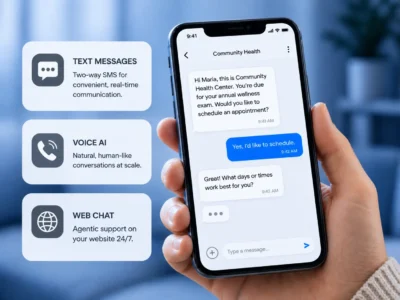
Hippocratic AI is a generative AI platform that delivers non-diagnostic, patient-facing voice agents designed to support healthcare organizations, payors, and pharmaceutical companies. Powered by the Polaris large language model (LLM) constellation architecture, the platform automates routine clinical and administrative outreach to help extend care team capacity and reduce administrative burdens.
The platform is built for a wide range of medical specialties—including primary care, cardiology, oncology, OB/GYN, and pediatrics—and operates across outpatient, inpatient, and remote care settings. Its primary use cases include:
- Care Management & Post-Discharge Support: Conducting follow-up calls for post-surgical recovery, joint replacements, and pneumonia recovery to monitor symptoms and review medication adherence.
- Administrative Workflows & Intake: Managing patient intake history collection, scheduling appointments, and assisting with patient assistance program enrollments.
- Quality Improvement & Preventive Outreach: Executing seasonal campaigns for flu vaccinations, mammogram screening reminders, and colorectal cancer screening coordination.
- Clinical Trial Support: Assisting with longitudinal patient follow-up, documenting adverse events, and providing trial protocol guidance.
In a typical clinical workflow, Hippocratic AI agents interact directly with patients over the phone to collect data, deliver educational information, and identify potential issues. The system is designed to recognize clinical cues and automatically escalate complex patient responses or safety concerns to human clinicians for intervention.
Reviewed by Pouyan Golshani, MD — Interventional Radiologist
Key Features
- Safety-focused Generative AI Agents (Polaris Constellation Architecture)
- AI Front Door for patient access
- Nurse Co-Pilot for clinical support
- Escalation protocols for high-risk situations
- Multilingual support (15+ languages including Spanish, French, Mandarin, Vietnamese, Emirati Arabic, Japanese)
- Integration with major EHR platforms (Epic, Cerner, Salesforce, Athenahealth)
- AI Agent App Store for clinician-created and monetized agents
- Empathy inference for natural and culturally aware conversations
- Real-time patient-AI voice conversations with ultra-low latency
- Non-diagnostic, patient-facing task automation
Use Cases
- Pneumonia Post-Discharge Recovery Support
- Annual Wellness Visit Outreach and Support
- Colorectal Cancer Screening Outreach
- Patient Intake History Collection
- Appointment Scheduling and Confirmation
- Adverse Event Detection Support
- Chronic Disease Management and Medication Adherence
- Clinical Trial Coordination and Support
- Patient Education and Follow-up
- Readmission Prevention
What Physicians Need to Know
Leverage Hippocratic AI to offload low-risk, non-diagnostic tasks such as appointment scheduling, routine reminders, basic information gathering, and post-discharge follow-ups, thereby freeing up significant clinician time (e.g., 1-4 hours per nurse per shift) for complex patient care and direct physical presence. Utilize the AI's personalized, empathetic, and multi-language support to enhance patient engagement, improve health literacy, and boost adherence to treatment plans. Employ the AI to scale preventative care outreach and ensure comprehensive follow-up for at-risk populations, preventing patients from falling through care gaps. Review the complete transcripts of AI-patient conversations for oversight and context, and rely on the system's escalation protocols for seamless transfer to human professionals when complex or critical issues arise.
Hippocratic AI is designed for deep integration within existing healthcare ecosystems, connecting directly with major EHR systems like Epic, Cerner, and Salesforce. It supports modern interoperability standards including HL7 v2, FHIR, and RESTful APIs, facilitating robust two-way data flow with thousands of other applications. The 'Polaris constellation' architecture and orchestration features ensure seamless integration with diverse clinical workflows. Strategic partnerships, such as with Nsight Health, demonstrate its capability to integrate with intelligent care platforms and remote patient monitoring devices for real-time, event-driven patient responses.
Details
| Category | Patient Engagement & Education |
| Pricing |
Usage-based
|
| Deployment | Cloud-based (deployed on AWS); integrates with existing EHR platforms. |
| Compliance | |
| BAA Available | Unknown AI-estimated |
| HIPAA Compliant | Unknown AI-estimated |
| FDA Status |
Unknown AI-estimated Hippocratic AI's agents are designed for non-diagnostic, patient-facing clinical tasks and do not diagnose or prescribe. Therefore, explicit FDA clearance as a medical device for the platform is not applicable in the same way as diagnostic tools. |
| Integrations | |
| EHR | Not specified |
| Specialties | Family Medicine, Hospital Medicine, Internal Medicine |
What the Web Says
Hippocratic AI is generally viewed as a promising venture in healthcare AI, focusing on large language models (LLMs) specifically designed for healthcare applications. Reviewers often highlight its potential to improve administrative efficiency, enhance patient care through better information access, and address staffing shortages. The company emphasizes safety and accuracy, aiming to achieve physician-level competency in non-diagnostic tasks.
Overall: PositiveStrengths
- Focus on healthcare-specific LLMs, trained by medical professionals.
- Potential to automate administrative tasks, freeing up physician time.
- Aims for physician-level accuracy in non-diagnostic functions.
- Strong emphasis on safety and reducing medical errors.
- Potential to address healthcare staffing shortages.
- Backed by significant venture capital and partnerships with health systems.
Limitations
- Early stage company, long-term impact and widespread adoption are yet to be seen.
- Challenges in integrating new AI technologies into existing healthcare IT infrastructure.
- Concerns about data privacy and security with sensitive patient information.
- Potential for over-reliance on AI and deskilling of human healthcare professionals.
- Regulatory hurdles and the need for robust validation in a critical field.
- The 'non-diagnostic' limitation might restrict its immediate clinical utility for some.
Based on reviews from: TechCrunch, Forbes, STAT News, VentureBeat, Healthcare IT News, Reddit (r/medicine, r/healthcare)
Last updated: 2026-07-21
Ratings & Reviews
No reviews yet. Be the first to review this tool!
Rate Hippocratic AI
Press & Coverage
Videos
Product demos, reviews, and walkthroughs for Hippocratic AI.
AWS Startup Stories: Hippocratic AI | Amazon Web Services


Frequently Asked Questions





Investors who backed Hippocratic AI
Funded through the company that built this tool.