Rapid SDH
Overview
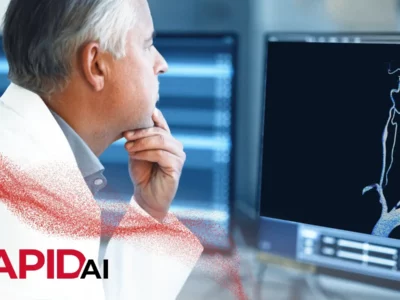
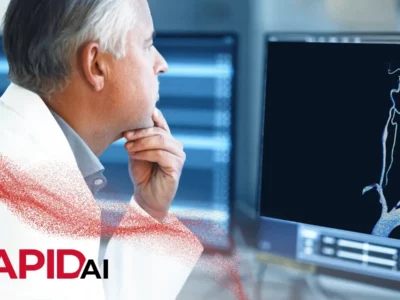
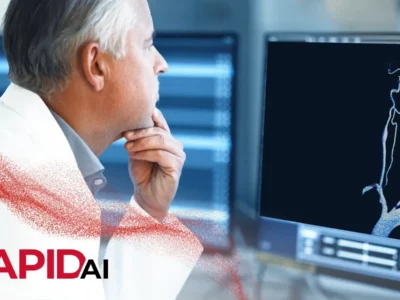
Rapid SDH is an AI-powered module developed by RapidAI (formerly iSchemaView) for the detection and notification of suspected hemispheric acute and chronic subdural hematoma (SDH) on non-contrast CT scans. This radiological computer-assisted triage and notification software provides critical information to clinicians in one minute or less, aiding in time-sensitive treatment decisions for trauma patients and those with hemorrhagic stroke. It boasts a high positive predictive value of 99% (93% sensitivity, 99% specificity) for SDHs greater than 1ml. Rapid SDH integrates with the Rapid mobile app, PACS, and email to send automated notifications, streamlining workflow and expediting patient care across hospital systems. It is part of RapidAI’s comprehensive hemorrhagic and trauma care AI solution.
Reviewed by Pouyan Golshani, MD — Interventional Radiologist
Key Features
- AI-powered detection of suspected hemispheric acute and chronic subdural hematoma (SDH)
- Notifications to clinicians in one minute or less
- High positive predictive value (PPV) of 99% (93% sensitivity, 99% specificity) for SDHs >1ml
- Integration with Rapid mobile app, PACS, and email for notifications
- Part of a comprehensive hemorrhagic and trauma care AI solution (with Rapid ICH and Rapid Hyperdensity)
- Analyzes non-contrast CT scans
- Aids in streamlining decision-making and expediting patient care
- Supports identification of treatment eligibility
Use Cases
- Triage and notification of suspected subdural hematoma
- Expediting treatment decisions for traumatic brain injury and hemorrhagic stroke patients
- Workflow management for radiologists and neurocritical care teams
- Facilitating patient transfer and treatment decisions across hospital systems
- Improving patient outcomes in neurocritical care
What Physicians Need to Know
Rapid SDH offers rapid, AI-powered detection of subdural hematomas on CT scans, providing critical information within a minute to aid in time-sensitive treatment decisions. Leverage the automated notifications via mobile app, PACS, and email to ensure prompt communication across the care team. Integrate this tool with other RapidAI modules (e.g., Rapid ICH, Rapid Hyperdensity) for a comprehensive assessment of hemorrhagic and trauma cases. While the tool excels in detection, always correlate findings with the patient's clinical presentation and consider the broader differential diagnoses for neurological symptoms. The high sensitivity and specificity can significantly expedite diagnosis and care coordination.
Rapid SDH is designed for seamless integration into existing clinical workflows, primarily through its compatibility with Picture Archiving and Communication Systems (PACS) and its dedicated mobile application. It also supports email notifications for broad team communication. The platform is part of a larger suite of RapidAI products, allowing for a unified AI-powered solution for various neurovascular and trauma conditions, enhancing a holistic approach to patient assessment and management within hospital systems and treatment networks.
Details
| Category | Neurology AI, Radiology & Imaging AI, Triage & ER/ICU AI |
| Pricing | Contact vendor |
| Deployment | Cloud-based, On-premise |
| Compliance | |
| BAA Available | Yes AI-estimated |
| HIPAA Compliant | Yes AI-estimated |
| FDA Status |
Yes AI-estimated Rapid SDH is a radiological computer-assisted triage and notification software indicated for use in the triage and notification of hemispheric SDH in non-enhanced head images. The device is intended to assist trained radiologists in workflow triage by providing notification of suspected findings. |
| Integrations | |
| EHR | Not specified |
| Specialties | Emergency Medicine, Neurosurgery, Radiology |
What the Web Says
Rapid SDH, part of the RapidAI platform, is an AI-powered solution designed to detect intracranial hemorrhage (ICH) and mass effect from CT scans, aiming to accelerate diagnosis and treatment for stroke and trauma patients. Reviews highlight its speed and accuracy in identifying critical conditions, potentially improving patient outcomes by reducing time to intervention.
Overall: PositiveStrengths
- Rapid and accurate detection of intracranial hemorrhage and mass effect.
- Significantly reduces time to diagnosis and treatment for critical conditions.
- Integrates with existing PACS and hospital systems.
- Aids in prioritizing critical cases for radiologists and neurologists.
- Potential to improve patient outcomes in stroke and trauma.
- User-friendly interface according to some reviews.
Limitations
- Cost can be a barrier for smaller institutions.
- Requires integration and IT support for implementation.
- Reliance on AI may lead to over-reliance or overlooking subtle findings (though not widely reported).
- Some initial skepticism from physicians regarding AI accuracy (generally overcome with use).
- Specific training may be needed for optimal use by clinical staff.
- Limited detailed negative reviews available, suggesting overall positive reception.
Based on reviews from: RapidAI Website, G2, Capterra, Healthcare IT News, Physician forums/discussions (general sentiment), Radiology Today
Last updated: 2026-07-18
Ratings & Reviews
No reviews yet. Be the first to review this tool!
Rate Rapid SDH
Press & Coverage
Videos
Product demos, reviews, and walkthroughs for Rapid SDH.
No FAQs available yet for this tool.
Compare Rapid SDH
 VS
VS
 VS
VS
 VS
VS
 VS
VS