RETINA-AI Galaxy

by RETINA-AI Health  · Based in United States → — Artificial Intelligence for Diabetic Retinopathy. On-site Diabetic Retinopathy Screening that is immediate and fully-automated.
Endocrinology Internal Medicine Ophthalmology

Not publicly available
Regulatory Status Disclosed

Overview

RETINA-AI Galaxy is an FDA-cleared, AI-powered Software as a Medical Device (SaMD) developed by RETINA-AI Health. It is designed for the autonomous detection of both more-than-mild and vision-threatening diabetic retinopathy (mowDRet) in primary care settings. The system utilizes deep learning algorithms to analyze retinal images captured by robotic cameras, providing a diagnosis in less than 10 seconds without the need for a human grader or an on-site eye care specialist.

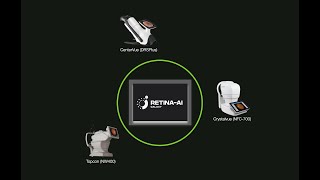
The technology aims to increase access to high-quality specialized healthcare by enabling diabetic eye screening in settings such as family doctor offices, retail clinics, and pharmacies. It is compatible with multiple camera brands, specifically the CenterVue DRSPlus, Crystalvue NFC-700, and Topcon NW400. The system generates an easy-to-read diagnostic report, with results indicating either no disease detected (retest in 12 months) or disease detected (refer to an eye care professional), aligning with American Academy of Ophthalmology (AAO) guidelines.

RETINA-AI Galaxy is indicated for use by healthcare providers to automatically detect moderate or worse Diabetic Retinopathy in adults diagnosed with diabetes who have not been previously diagnosed with more than mild diabetic retinopathy.

Reviewed by Pouyan Golshani, MD — Interventional Radiologist

Key Features

  • Autonomous detection of diabetic retinopathy
  • Multi-camera compatibility (CenterVue DRSPlus, Crystalvue NFC-700, Topcon NW400)
  • Rapid diagnosis (less than 10 seconds)
  • No human grader needed
  • No eye care specialist needed on-site
  • Generates diagnostic report
  • Suitable for primary care settings
  • Cloud-based AI detector
  • Software as a Medical Device (SaMD)
  • HIPAA Compliant

Use Cases

  • Diabetic retinopathy screening in primary care settings
  • Early detection of diabetic retinopathy to prevent vision loss
  • Improving access to specialized eye care for diabetic patients
  • Streamlining patient triage at the point-of-care
  • Enhancing HEDISu00ae Measures & CMS Star Ratings for providers
  • Creating new revenue streams for primary care physicians

What Physicians Need to Know

Retinal Image Analysis
Analyzes digital color fundus photographs to detect pathological features of Diabetic Retinopathy (DR), including identification of DR stages, vision-threatening DR, counting intraretinal hemorrhages, macula detection, and Diabetic Macula Edema (DME) detection.
Diabetic Retinopathy Screening Accuracy
Achieved high accuracy in pivotal studies. For more than mild Diabetic Retinopathy (mtmDR), sensitivity was 90.3% and specificity 85% on the DRSPlus camera. For vision-threatening Diabetic Retinopathy (vtDR), sensitivity was 100% on all five compatible cameras for definite vtDR, probable vtDR, and vtDR in the absence of Clinically Significant Diabetic Macula Edema (CSDME), each with specificity at or above 82.5%. Overall, Galaxy AI sensitivity exceeds 90% for mtmDR and 95% for vtDR on each compatible camera.
Glaucoma Detection
RETINA-AI Galaxy is *only indicated to detect diabetic retinopathy* and is not intended to detect other ophthalmic diseases like glaucoma.
Age-Related Macular Degeneration Screening
RETINA-AI Galaxy is *only indicated to detect diabetic retinopathy* and is not intended to detect other ophthalmic diseases like Age-Related Macular Degeneration.
Autonomous vs Assistive Diagnosis
Functions as an autonomous diabetic retinopathy screening device, capable of making clinical decisions without human grading. It provides a diagnostic report in under 10 seconds.
Point-of-Care Deployment
Designed for use in primary care settings, enabling same-day results for patients.
Screening Program Integration
Aims to address the scarcity of ophthalmologists by providing an automated screening solution for diabetic retinopathy in primary care. It generates actionable reports with follow-up timelines and referrals based on American Academy of Ophthalmology (AAO) Preferred Practice Patterns.
Sensitivity & Specificity Data
For more than mild DR (mtmDR): Sensitivity >90% and Specificity ~85%. For vision-threatening DR (vtDR): Sensitivity >95% and Specificity >82.5%. Imageability rates were high across compatible cameras, ranging from 94% to 99.2%.
FDA De Novo vs 510(k) Pathway
The RETINA-AI Galaxyu2122 is the first US FDA cleared technology for autonomous detection of both more-than-mild and vision-threatening diabetic retinopathy on multiple camera brands.
Physician Tip

Physicians should note that RETINA-AI Galaxy is specifically indicated for the autonomous detection of moderate or worse Diabetic Retinopathy in adults already diagnosed with diabetes. It is crucial to understand that the device does not screen for other ocular conditions like glaucoma or macular degeneration, and patients should not rely on it for detection of any other disease. Review the AI-generated results and advise patients on recommended referrals to an eye care professional for evaluation and potential treatment, consistent with AAO guidelines. If the system cannot generate a detection result due to poor image quality, retesting (potentially with pharmacologic dilation) or immediate referral to an eye care professional is necessary.

RETINA-AI Galaxy is a web application compatible with modern browsers (Chrome, Safari, Firefox, Edge). It offers seamless integration with existing Electronic Health Record (EHR) systems. The system is compatible with multiple robotic fundus cameras from CenterVue (DRSPlus, DRS), Crystalvue (NFC-700), NextSight (Nexy), and Topcon (NW400).

Details

Category Ophthalmology AI
Pricing Not publicly available
  • Contact vendor for pricing information
  • The company operates a revenue model that includes partnerships with healthcare providers and insurers, leveraging reimbursement opportunities through established CPT codes such as 92229, offering diagnostic services on a per-exam basis
DeploymentCloud-based (web app)
Compliance
BAA AvailableUnknown AI-estimated
HIPAA Compliant Yes AI-estimated
FDA Status Yes AI-estimated

The RETINA-AI Galaxy is the first US FDA cleared technology for autonomous detection of both more-than-mild and vision-threatening diabetic retinopathy on multiple camera brands. It is indicated for use by healthcare providers to automatically detect moderate or worse Diabetic Retinopathy in adults diagnosed with diabetes, using CenterVue DRSPlus, Crystalvue NFC-700, and Topcon NW400 cameras in primary care settings.

Integrations
EHR Not specified
Specialties Endocrinology, Internal Medicine, Ophthalmology

What the Web Says

RETINA-AI Galaxy is an autonomous AI software-as-a-medical-device designed to detect moderate or worse diabetic retinopathy (DR) in adults diagnosed with diabetes within primary care settings. It has undergone clinical validation and was submitted to the U.S. FDA for clearance. The system aims to increase access to diabetic eye exams, which are often missed due to various factors like cost and inconvenience. The technology provides rapid results, typically within seconds, guiding primary care providers on patient referrals to eye care professionals.

Overall: Positive

Strengths

  • Autonomous detection of moderate or worse diabetic retinopathy.
  • Increases access to diabetic eye exams in primary care settings.
  • Provides rapid results (within seconds).
  • Compatible with multiple retinal camera brands (CenterVue DRSPlus, Crystalvue NFC-700, Topcon NW400).
  • Can be operated by trained medical assistants without prior ophthalmic experience.
  • Reimbursable by Medicare and most major healthcare insurance providers with a dedicated CPT code (92229).

Limitations

  • Only detects diabetic retinopathy and not other ophthalmic or systemic diseases.
  • Patients with poor quality images may require retesting or referral to an eye care professional.
  • Not intended for screening for diabetes mellitus, only for those already diagnosed.
  • Requires good quality, in-focus, disc- and macula-centered retinal color images.
  • Limited information available from independent tech reviewers, G2, or Capterra.
  • Some general concerns about AI in medicine regarding equitable performance across diverse populations have been raised, though not specifically for RETINA-AI Galaxy.

Based on reviews from: RETINA-AI Health, YouTube (RETINA-AI Health channel), PR Newswire, Retinal Physician, ClinicalTrials.Veeva, TrialScreen, G2, Reddit

Last updated: 2026-07-27

Ratings & Reviews

No reviews yet. Be the first to review this tool!

Rate RETINA-AI Galaxy

Clinical Value
Ease of Use
Integration
Support & Docs
Value for Money

Press & Coverage

PR Newswire
RETINA-AI Health, Inc. Announces Positive Pivotal Study Results for the RETINA-AI Galaxyu2122 Autonomous Diabetic Retinopathy Screening Device. Regulatory Application Submitted to the FDA for Clearance.
RETINA-AI Health, Inc. announced positive results from its pivotal study of the RETINA-AI Galaxyu2122, a multi-device compatible autonomous diabetic retinopathy screening device, and has submitted an application to the FDA for clearance. The study results were presented at the Society for Imaging Informatics in Medicine (SIIM)'s Conference on Machine Intelligence in Medical Imaging (CMIMI21).
2021-09
DelveInsight
RETINA-AI Health, Inc. declares positive pivotal study results for the RETINA-AI Galaxyu2122 autonomous Diabetic Retinopathy screening device.
RETINA-AI Health, Inc. announced positive pivotal study results for its RETINA-AI Galaxyu2122 autonomous diabetic retinopathy screening device, and has filed for FDA clearance. DelveInsight's analysis suggests that the approval of RETINA-AI Galaxyu2122 software will significantly impact annual eye examinations for diabetic patients.
2021-09
Review of Optometry
Is Artificial Intelligence Smart Enough Yet to Help Us?
Retina-AI is developing a diabetic retinopathy algorithm called Galaxy, which can function on multiple imaging devices. A study by Retina-AI compared five different fundus cameras for detecting more-than-mild and vision-threatening diabetic retinopathy, showing promising sensitivity and specificity.
2022-09
PR Newswire
RETINA-AI Health, Inc. Closes $2.6M Bridge Round; Totaling $8.1M Raised to Build Galaxyu2122 Multi-Camera-Compatible Diabetic Retinopathy AI System. Starts Clinical Trial.
RETINA-AI Health, Inc. closed a $2.6 million bridge financing round, bringing its total raised to $8.1 million for the development of RETINA-AI Galaxyu2122 v2.0, a multi-camera-compatible autonomous AI diabetic retinopathy detection system. The company began enrollment in its Pivotal (Phase III) clinical trial for v2.0 in November 2022.
2022-12
Retinal Physician
Updates in the Diabetic Retinopathy Screening Landscape
Retina-AI Galaxy by Retina-AI Health is reportedly seeking FDA clearance, pending the results of its Phase 3 trial, which concluded on March 31, 2023. The article notes that the introduction of CPT code 92229 in 2021 has made AI-powered diabetic retinopathy screening reimbursable.
2023-10
Bryn Mawr Communications
IN DIABETES CARE
Retina-AI Galaxy (Retina-AI Health) is one of three additional systems cleared by the FDA for diabetic retinopathy screening. The 2021 introduction of CPT code 92229 has made AI-supported DR screening reimbursement possible, promoting broader acceptance in the United States.
2025-09
RETINA-AI Health
Regulatory
The RETINA-AI Galaxyu2122 is the first US FDA cleared technology for autonomous detection of both more-than-mild and vision-threatening diabetic retinopathy on multiple camera brands. It is indicated for use with specific cameras and patients should be informed that it does not treat retinopathy, but rather determines if further examination by an eye care professional is needed.
unknown

Videos

Product demos, reviews, and walkthroughs for RETINA-AI Galaxy.

View all on YouTube

Frequently Asked Questions

RETINA-AI Galaxy is FDA-cleared for the autonomous detection of moderate or worse Diabetic Retinopathy (mowDRet) in adults diagnosed with diabetes. It integrates into primary care settings by analyzing digital color fundus photographs captured by compatible non-mydriatic cameras (CenterVue DRSPlus, Crystalvue NFC-700, and Topcon NW400), providing a diagnosis in less than 10 seconds.
RETINA-AI Galaxy is the first US FDA cleared technology for autonomous detection of moderate or worse Diabetic Retinopathy, and it is ISO 13485:2016 Certified. The system is independently audited to be HIPAA compliant, employing robust security measures for data encryption in storage and transmission to protect patient health information.
While highly accurate with reported sensitivities exceeding 90% for moderate or worse Diabetic Retinopathy and 95% for vision-threatening Diabetic Retinopathy, RETINA-AI Galaxy is a screening tool, not a diagnostic replacement. It is indicated only for diabetic retinopathy detection and not for other ophthalmic or systemic diseases, requiring physician review and referral for further evaluation in cases of detected disease or unreadable images.
RETINA-AI Galaxy distinguishes itself by being the first US FDA cleared autonomous AI diabetic retinopathy detection system compatible with cameras from three different manufacturers. It offers immediate, fully-automated screening in primary care settings, reducing the need for a human grader or on-site eye care specialist, and aims to increase access to care by overcoming barriers to annual eye exams.
Specific pricing for RETINA-AI Galaxy typically involves a subscription model, with details provided upon consultation. The technology has a CPT code (92229) and is reimbursable by Medicare and most major healthcare insurance providers, potentially adding a new revenue stream for practices.
RETINA-AI Galaxy is specifically indicated for use with CenterVue DRSPlus, Crystalvue NFC-700, and Topcon NW400 cameras. It is designed to work with good quality, in-focus, disc- and macula-centered retinal color images from these compatible robotic cameras.

Related Tools

RetiVue EntireEye Imaging
RetiVue, LLC
Ophthalmology AI
RetiVue manufactures ultrawidefield retinal cameras with automatic image capture, aiming to aid in the early documentation of eye disease and prevent blindness. Their EntireEye Imaging System offers both desktop and portable options, providing true color, high-detail images with a wide field of view for patients from infancy to adulthood.
AI Optics Sentinel Camera
AI Optics
Ophthalmology AI
AI Optics' Sentinel Camera is an FDA 510(k)-cleared handheld retinal imaging system designed to capture high-quality images for retinal disease screening, with future plans for integrated AI-based screening software for diabetic retinopathy, glaucoma, and macular degeneration.
RetCAD
Thirona
Ophthalmology AI
RetCAD is a CE-certified AI software product from Thirona that analyzes color fundus images for the presence of Age-related Macular Degeneration (AMD) and Diabetic Retinopathy (DR), aiding in early detection and grading of these vision-threatening conditions.
Google Health (Ophthalmology AI)
Google Health
Ophthalmology AI
Google Health leverages AI and technology to improve healthcare globally, focusing on early disease detection, personalized wellness, and supporting healthcare professionals with advanced tools and research.
Optivate AI Scribe
Optivate
Documentation & Scribing
Optivate's AI Scribe is designed specifically for ophthalmology, capturing clinical encounters in real-time to generate structured, accurate documentation and reduce charting time.
Cybersight AI
Orbis International
Clinical Decision Support & Reference
Cybersight AI is an AI-powered clinical decision support tool from Orbis International, designed to quickly and efficiently detect diabetic retinopathy, glaucoma, and other common eye diseases from fundus images. It is available for free in low- and middle-income countries, empowering nurses and technicians in underserved regions to conduct screenings and improve patient referral compliance.

See all Ophthalmology AI tools →

Suggest an Edit → | Last Verified: 2026-04-24 | First Added: 2026-04-24
AI Tool Finder
AI-powered search. Results may not be comprehensive.