SIS Software Version

Neurology Neurosurgery Radiology

Contact for pricing
Regulatory Status Disclosed

Overview

The SIS System, including versions like 3.6.0 and 5.1.0, is a software-only device leveraging machine learning and image processing to enhance standard clinical images. It provides patient-specific, 3D anatomical models of specific brain structures, such as the subthalamic nucleus (STN) and globus pallidus externa and interna (GPe/GPi), based on the patient’s own clinical MR images. This system utilizes pre-trained deep learning neural network models to predict the shape and position of brain structures of interest. The output supplements standard clinical methods by offering additional, adjunctive information to medical professionals for viewing brain structures, particularly for planning stereotactic surgical procedures and lead output for deep brain stimulation (DBS) surgery. Beyond its AI-driven surgical planning, Surgical Information Systems (SIS) also offers a comprehensive cloud-based platform, SIS Complete, for ambulatory surgery centers (ASCs) and hospitals, streamlining operations, revenue cycle management, and clinical documentation.

Reviewed by Pouyan Golshani, MD — Interventional Radiologist

Key Features

  • Patient-specific 3D anatomical modeling of brain structures
  • Deep learning neural network models for image segmentation
  • Enhances standard clinical images for visualization
  • Image processing and fusion capabilities
  • Intraoperative functional planning
  • Integration with stereotactic image-guided surgery systems
  • Visualization of subthalamic nucleus (STN)
  • Visualization of globus pallidus externa and interna (GPe/GPi)
  • Cloud-based deployment (for SIS Complete platform)
  • Mobile features for clinical documentation (via SIS Complete)

Use Cases

  • Planning stereotactic surgical procedures
  • Planning lead output for Deep Brain Stimulation (DBS) surgery
  • Visualization aid for neurosurgical procedures
  • Supporting neurosurgeons in target localization
  • Assisting neurologists and radiologists in viewing brain structures
  • Enhancing accuracy in DBS electrode placement

What Physicians Need to Know

Brain MRI/CT Analysis
SIS (Surgical Information Sciences) offers visualization software for Deep Brain Stimulation (DBS) procedures. This software utilizes MRI and CT scans for planning and post-procedure lead placement, demonstrating an average surface distance accuracy of less than 1mm for predicting the location of the subthalamic nuclei (STN), a key target in Parkinson's disease treatment.
Mobile Notification System
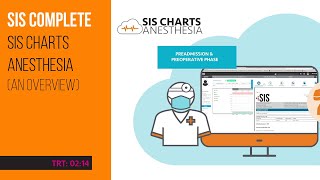
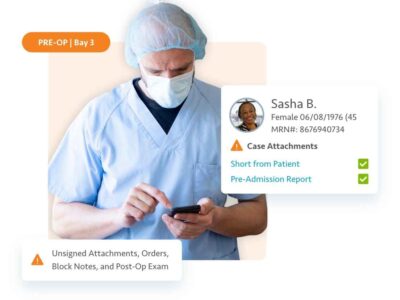
SIS Charts Physician Mobile and SIS Exchange facilitate automated notifications. Physicians can receive text message reminders for outstanding items, while patients can get text or email reminders for appointments, pre-operative and post-operative instructions, and transportation updates.
Physician Tip

For neurosurgeons utilizing Deep Brain Stimulation (DBS) procedures, the SIS visualization software can enhance surgical planning and post-operative assessment by providing highly accurate, patient-specific imaging of brain targets like the STN. The mobile notification system can streamline communication with both staff and patients, improving workflow efficiency and patient compliance with pre- and post-operative instructions.

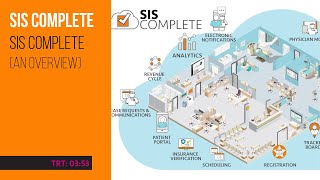
SIS Software, particularly SIS Complete, is designed as an all-in-one cloud-based solution for Ambulatory Surgery Centers (ASCs), aiming to centralize operations, clinical documentation, and patient/physician engagement. Its mobile components, like SIS Charts Physician Mobile, are integrated with the core SIS Charts platform, ensuring consistent configurations and ease of implementation. The system supports the transfer of images via web or DICOM interface, facilitating data sharing. While the platform emphasizes workflow automation and data accuracy within surgical settings, specific AI integrations for advanced neurological diagnostics beyond DBS visualization were not detailed in the provided information.

Details

Category Neurology AI, Radiology & Imaging AI, Surgical AI
Pricing Contact for pricing
DeploymentCloud-based (for SIS Complete platform, likely applies to SIS System as well)
Compliance
BAA AvailableUnknown AI-estimated
HIPAA CompliantUnknown AI-estimated
FDA Status 1 AI-estimated

SIS Software version 3.6.0 received 510(k) clearance (K192304) on September 13, 2019. It is intended for use in viewing, presentation, and documentation of medical imaging, including modules for image processing, image fusion, and intraoperative functional planning, where the 3D output aids in stereotactic image-guided surgery and visualization of the subthalamic nuclei (STN). An updated version, SIS System 5.1.0 (K210071), received clearance on March 31, 2021, incorporating deep learning convolutional neural network models and adding visualization targets for the globus pallidus externa and interna (GPe/GPi).

Integrations
EHR Not specified
Specialties Neurology, Neurosurgery, Radiology

Ratings & Reviews

No reviews yet. Be the first to review this tool!

Rate SIS Software Version

Clinical Value
Ease of Use
Integration
Support & Docs
Value for Money

Press & Coverage

X-ray Interpreter (RadAI Slice)
SIS Software version 3.3.0 | FDA Radiology AI Device - X-ray Interpreter
SIS Software version 3.3.0, a medical imaging application, received FDA approval on March 19, 2019. It assists clinicians by enhancing and visualizing brain MRI images, specifically the subthalamic nucleus (STN), using AI and image processing techniques to create 3D models for stereotactic surgical procedures.
2019-03
accessdata.fda.gov
Surgical Information Sciences, Inc. March 31, 2021 510(k) Clearance
A modification to SIS Software version 3.6.0, the SIS System version 5.1.0, received FDA clearance on March 31, 2021. Changes include an updated deep learning algorithm for brain image segmentation, new visualization targets (GPe/GPi), and functionality to determine directional lead orientation.
2021-03
accessdata.fda.gov
Surgical Information Sciences, Inc. June 14, 2024 510(k) Clearance
The SIS System, a modification to version 6.0.0, received FDA clearance on June 14, 2024, with the primary change being the addition of new brain structures for prediction, specifically supporting Vim based on pre-trained deep learning neural network models.
2024-06
Bioworld
Regulatory actions for May 2, 2019 +
SIS software, version 3.3.0, a picture archiving and communication system that creates a 3D anatomical model of the patient's brain, received 510(k) clearance from the U.S. FDA to market new visualization capabilities for deep brain stimulation surgery.
2019-05
Innolitics
Definitive Guide to AI/ML SaMD Ground Truthing
SIS Software version 3.3.0 from Surgical Information Sciences, Inc. is mentioned in a guide about AI/ML SaMD ground truthing, highlighting its use of adjudication for device sensitivity and specificity compared to ground truth established by expert neuroradiologist readers.
2025-09
ACS Publications
A New Freeze Fracture Method for Specimen Preparation in Cryo-Transmission Electron Microscopy | Langmuir
A research article from April 2004 discusses the use of SIS-Software, version 3.11, for digital contrast enhancement and image analysis in cryo-transmission electron microscopy.
2004-04
ResearchGate
Effects of Combined Training on Fatigue in Multiple Sclerosis: A Systematic Review and Meta-analysis of Randomized Controlled Trials
A systematic review and meta-analysis from January 2025 utilized 'sis software, version 4' to assess overall mean correlations for criterion validity and compute weighted mean effect sizes in studies examining the effects of combined training on fatigue in multiple sclerosis.
2025-01
Oxford Academic
DDX24 modulates angiogenesis by promoting CCR4-NOT complex-dependent mRNA decay
A January 2026 article references the use of Octet Analysis Software (version 12.2) for calculating affinity constants and Octet biolayer interferometry (BLI) Discovery Software (version 12.2, Sartorius) for generating binding and dissociation curves.
2026-01

Videos

Product demos, reviews, and walkthroughs for SIS Software Version.

View all on YouTube

Frequently Asked Questions

The latest SIS software versions often integrate AI to optimize surgical planning by analyzing patient data for risk assessment and predicting outcomes, thereby assisting in selecting the most suitable surgical techniques. During surgery, AI can enhance precision through robotic assistance and provide real-time insights for decision-making, contributing to improved patient safety and efficiency.
Key AI features in modern SIS software may include predictive analytics for case duration and resource allocation, computer vision for real-time workflow awareness, and AI-powered tools for automating clinical documentation. These features aim to reduce administrative burden, improve operational efficiency, and provide surgeons with enhanced decision support, ultimately leading to better patient outcomes and reduced physician burnout.
For AI functionality in SIS software to be compliant with regulations like HIPAA and GDPR, it must incorporate robust data encryption, strict access controls, and audit trails to protect electronic Protected Health Information (ePHI). Vendors typically need to sign a Business Associate Agreement (BAA) to legally commit to these privacy and security standards. Public AI tools are generally not HIPAA compliant due to data privacy concerns.
AI components in healthcare software, especially those used for diagnosis or treatment, are often regulated by bodies like the FDA as Software as a Medical Device (SaMD). The FDA reviews these AI/ML-enabled devices through pathways such as 510(k) clearance, with a focus on safety and effectiveness. The level of regulatory scrutiny depends on the risk classification of the AI's intended use.
Pricing for AI features in healthcare software can vary, often involving an initial upfront fee, recurring subscription or leasing fees, and annual maintenance. There may be additional costs for specific AI modules, customization, integration with existing systems, and ongoing support or updates. Data preparation for custom AI models can also incur significant pre-implementation expenses.
Limitations of AI in surgical software include potential biases from training data, lack of external validation, and challenges in handling the complex and diverse nature of human anatomy. These are typically addressed through continuous monitoring, rigorous validation, and ensuring that AI serves as a supportive tool rather than replacing human judgment, with physicians maintaining independent review of recommendations.
Leading alternatives to SIS software that offer robust AI capabilities often include other comprehensive perioperative management systems or specialized AI-driven platforms. Companies like Caresyntax offer surgical intelligence platforms that aggregate data and apply AI for risk identification and process optimization. Robotic surgery systems from Intuitive Surgical, Medtronic, and Johnson & Johnson also integrate AI for enhanced precision and decision support.

Related Tools

Cercare Medical Oncology Virtual Expert
Cercare Medical
Neurology AI
Cercare Medical's Oncology Virtual Expert is an AI-powered brain tumor segmentation module that provides fast, consistent, and semi-automated tumor analysis from standard MRI data, designed for on-premise deployment within existing clinical radiology workflows.
CoLumbo C-Spine
Smart Soft Healthcare AD
Clinical Decision Support & Reference
CoLumbo C-Spine is an AI-powered software that processes and analyzes cervical spine MRI exams, assisting clinicians in diagnosis and assessment.
MeRT System
Wave Neuroscience
Mental & Behavioral Health AI
MeRT (Magnetic e-Resonance Therapy) is an advanced, personalized form of TMS that uses your own brainwave data to guide treatment. It's a non-invasive, drug-free option designed to help the brain communicate more efficiently so symptoms of conditions like depression, anxiety, PTSD, TBI, autism, and more can improve.
Brainomix 360 Hyperdensity
Brainomix Limited
Neurology AI
Brainomix 360 Hyperdensity is an AI-powered neuroimaging software tool that detects and quantifies brain hyperdensities on CT scans, forming a crucial part of the Brainomix 360 Stroke platform for rapid and accurate stroke assessment.
SOMNUM
HoneyNaps
Clinical Decision Support & Reference
SOMNUM is an AI-enabled medical software tool by Honeynaps Co., Ltd. that provides comprehensive sleep analysis to aid in the diagnosis and management of sleep disorders.
DETECT-ME/CFS project
DETECT-ME/CFS project (ME/CFS Research Foundation)
Clinical Decision Support & Reference
The DETECT-ME/CFS project is developing an AI-supported clinical decision support system to improve the rapid and reliable diagnosis of Myalgic Encephalomyelitis/Chronic Fatigue Syndrome.

See all Neurology AI tools →

More from Surgical Information Sciences

SIS Software
Surgical Information Sciences
Practice Management & Scheduling
Surgical Information Sciences provides AI-powered software for deep brain stimulation (DBS) surgical planning and comprehensive cloud-based solutions for Ambulatory Surgery Centers (ASCs) covering practice management, EMR, RCM, and compliance.
SIS System
Surgical Information Sciences
Clinical Decision Support & Reference
The SIS System, featuring the FDA-cleared SIS Score, provides patient-specific risk assessments for spinal surgery to aid physicians in clinical decision-making and patient counseling.

View company profile →

Suggest an Edit → | Last Verified: 2026-04-19 | First Added: 2026-04-19
AI Tool Finder
AI-powered search. Results may not be comprehensive.