IDx-DR

by Digital Diagnostics  · Based in United States → — Autonomous AI that instantly detects disease.
Endocrinology Internal Medicine Ophthalmology

Contact for pricing
Regulatory Status Disclosed

Overview

About IDx-DR (now LumineticsCore®)

IDx-DR, now known as LumineticsCore®, is a pioneering autonomous artificial intelligence (AI) diagnostic system developed by Digital Diagnostics. It is designed to automatically detect more-than-mild diabetic retinopathy (mtmDR) in adults (22 years of age or older) who have been diagnosed with diabetes and have not been previously diagnosed with diabetic retinopathy.

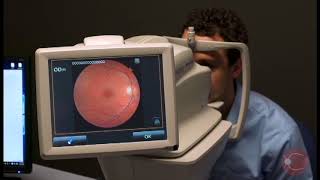
The system operates by analyzing two 45-degree fundus images per eye (one macula-centered and one optic disc-centered) captured by a trained operator using a Topcon NW400 non-mydriatic fundus camera, often without the need for pupil dilation. These images are submitted to a secure, cloud-based AI algorithm that processes them within minutes, providing a rapid diagnostic report.

LumineticsCore® delivers one of three possible outcomes: exam quality insufficient, negative for more than mild diabetic retinopathy (retest in 12 months), or more than mild diabetic retinopathy detected (refer to an eye care professional). A key feature is its autonomous nature, meaning that for negative results, no physician overread is required, enabling frontline care providers to offer specialty-level diagnostics in primary care settings.

The system aims to increase patient access to early disease detection, improve compliance with annual diabetic eye screenings, and reduce the diagnostic burden on specialists, ultimately helping to prevent vision loss due to diabetic retinopathy.

Reviewed by Pouyan Golshani, MD — Interventional Radiologist

Key Features

  • Autonomous AI diagnostic system for mtmDR detection
  • Uses Topcon NW400 non-mydriatic fundus camera for image acquisition
  • Provides rapid diagnostic results within minutes
  • No physician overread required for negative screening results
  • Cloud-based AI algorithm for image analysis
  • High sensitivity (87%) and specificity (90%) for mtmDR detection
  • Outputs results in JPG, PDF, and XML formats
  • Includes clear follow-up instructions for patient care
  • Robust cybersecurity measures for data protection
  • Designed for integration into existing clinical workflows

Use Cases

  • Diabetic retinopathy screening in primary care settings
  • Increasing access to annual diabetic eye exams
  • Early detection of diabetic retinopathy to prevent vision loss
  • Reducing diagnostic burden on ophthalmology specialists
  • Improving patient compliance with recommended screenings
  • Supporting teleophthalmology programs for remote diagnosis

What Physicians Need to Know

Retinal Image Analysis (Fundus/OCT)
IDx-DR (now LumineticsCore) analyzes digital color fundus images, specifically requiring one optic disc-centered and one macula-centered image per eye, acquired using a Topcon TRC-NW400 nonmydriatic retinal camera. It does not use OCT for its diagnostic function.
Diabetic Retinopathy Screening Accuracy
In its pivotal clinical study, IDx-DR demonstrated a sensitivity of 87.2% and a specificity of 90.7% for detecting more than mild diabetic retinopathy (mtmDR). Other studies report variations, with some showing higher sensitivity (e.g., 96.8% for referable DR, 99.3% for RDR) and varying specificity. The system is designed to prioritize avoiding false negatives over false positives.
Glaucoma Detection
IDx-DR is explicitly not intended to detect glaucoma or other concomitant eye diseases.
Age-Related Macular Degeneration Screening
IDx-DR is not intended to detect Age-Related Macular Degeneration (AMD) or other concomitant eye diseases.
Autonomous vs Assistive Diagnosis
IDx-DR is an autonomous AI diagnostic system, meaning it is FDA-authorized to make a clinical decision regarding the presence of mtmDR without requiring a physician to interpret the images or results.
Point-of-Care Deployment
The system is designed for deployment in primary care offices and other point-of-care settings to increase access to diabetic retinopathy screening, particularly for patients who might otherwise miss annual eye exams.
Screening Program Integration
IDx-DR can be integrated into existing teleophthalmology and primary care workflows, facilitating increased patient adherence to annual diabetic eye exams and improving screening rates.
Sensitivity & Specificity Data
Pivotal trial data showed 87.2% sensitivity and 90.7% specificity for detecting more than mild diabetic retinopathy (mtmDR). Other studies have reported pooled sensitivity of 0.95 (95% CI: 0.82-0.99) and specificity of 0.91 (95% CI: 0.84-0.95) in a meta-analysis. The system prioritizes high sensitivity to minimize missed diagnoses.
FDA De Novo vs 510(k) Pathway
IDx-DR was the first FDA De Novo-cleared autonomous AI diagnostic system in any medical field (April 2018). The De Novo pathway is used for novel, low-to-moderate risk devices that lack a suitable predicate, establishing a new classification for future similar devices.
Physician Tip

IDx-DR (LumineticsCore) is an autonomous AI system specifically for screening more than mild diabetic retinopathy (mtmDR) in adults with diabetes who have no prior DR diagnosis. It's crucial to remember it does not screen for other ocular conditions like glaucoma or AMD. For positive results or ungradable images, immediate referral to an eye care professional is essential. The system requires images from a Topcon TRC-NW400 camera, and proper image acquisition is vital for accurate results. Integrate this tool to enhance DR screening rates in primary care, but always counsel patients on its specific diagnostic scope and the importance of follow-up care.

IDx-DR operates as a cloud-based software that analyzes fundus images captured by the Topcon TRC-NW400 camera. It is designed to integrate into existing clinical workflows, including teleophthalmology programs and electronic health record (EHR) systems, to streamline the screening process. Results are generated rapidly, enabling real-time decision-making at the point of care.

Details

Category Ophthalmology AI
Pricing Contact for pricing
  • Software pricing not publicly available; approximately $25 per patient for screening; Topcon TRC-NW400 camera costs $15,000-$22,000
DeploymentCloud-based software with a local client application for image acquisition.
Compliance
BAA AvailableUnknown AI-estimated
HIPAA CompliantUnknown AI-estimated
FDA Status 1 AI-estimated

IDx-DR received De Novo clearance (DEN180001) from the FDA in April 2018 as the first autonomous AI diagnostic system for detecting more-than-mild diabetic retinopathy (mtmDR) in adults (22 years or older) diagnosed with diabetes who have not been previously diagnosed with DR, for use with the Topcon NW400 fundus camera. A subsequent 510(k) clearance (K213037) was granted on June 17, 2022, for an updated version (v2.3) of the system.

Integrations
EHR Not specified
Specialties Endocrinology, Internal Medicine, Ophthalmology

What the Web Says

IDx-DR, now known commercially as LumineticsCore or AEye (Optomed), is the first FDA-authorized autonomous AI diagnostic system for detecting more-than-mild diabetic retinopathy (DR) in adults with diabetes. It analyzes retinal images captured by a fundus camera, providing a diagnosis without requiring a clinician to interpret the images. This technology aims to increase access to DR screening, particularly in primary care settings where ophthalmologists may not be readily available.

Overall: Positive

Strengths

  • Autonomous AI diagnosis reduces reliance on specialist availability and enables early intervention.
  • Increases access to diabetic retinopathy screening in primary care settings.
  • Can be operated by staff with minimal training (e.g., four hours), making it scalable and cost-effective.
  • Provides rapid results (within minutes), allowing for immediate referral if needed.
  • High sensitivity and specificity for detecting more-than-mild DR, with reported sensitivity around 87-94% and specificity around 89-90%.
  • Overestimates disease severity more often than it underestimates, which is considered a safer error for a screening device.

Limitations

  • Only detects diabetic retinopathy; it does not diagnose other eye diseases and does not replace a comprehensive ophthalmologic examination.
  • Requires specific compatible fundus camera hardware, which can be an additional investment for healthcare settings.
  • Positive findings still require ophthalmologist follow-up for in-person evaluation and treatment planning.
  • Can have a substantial number of false positives, particularly in classifying mild DR, potentially leading to unnecessary referrals.
  • Requires high-quality retinal images; blurred or poorly illuminated images can impact accuracy, and a significant percentage of images may be unanalyzable.
  • Less effective at detecting earlier stages of the disease compared to severe cases.

Based on reviews from: SmarterWay.AI, FDA, Review of Optometry, Review of Ophthalmology, Retinal Physician, PMC (Real-world performance of the AI diagnostic system IDx-DR), accessdata.fda.gov, AAFP, PMC (Accuracy of Autonomous Artificial Intelligence-Based Diabetic Retinopathy Screening), American Medical Association, MedCity News, Optometry Times, University of Iowa Health Care, American Academy of Ophthalmology, AI News Trends, Reddit (r/medicine, r/Ophthalmology), G2, Capterra, PubMed, Xtalks, Retina Specialist

Last updated: 2026-07-21

Ratings & Reviews

No reviews yet. Be the first to review this tool!

Rate IDx-DR

Clinical Value
Ease of Use
Integration
Support & Docs
Value for Money

Press & Coverage

American Academy of Ophthalmology
AI device for detecting diabetic retinopathy earns swift FDA approval
IDx-DR, the first AI device for diabetic retinopathy screening, received FDA approval in April 2018. This software allows primary care physicians to screen adult patients for DR without an eye specialist.
2018-04
Medscape
FDA Approves Marketing For First AI Device for Diabetic Retinopathy Detection
The FDA permitted marketing for IDx-DR, the first medical device using AI to detect more than a mild level of diabetic retinopathy in adults with diabetes. The device analyzes eye images taken with a Topcon NW400 retinal camera.
2018-04
Xtalks
IDx-DR Becomes First FDA-Approved AI-Based Diagnostic for Diabetic Retinopathy - Xtalks
IDx-DR, the first AI-based diagnostic for diabetic retinopathy, was cleared by the FDA and demonstrated 87.4% sensitivity and 89.5% specificity in detecting more than mild diabetic retinopathy in a multi-center trial.
2018-08
MedTech Dive
IDx publishes AI test data that supported landmark approval | MedTech Dive
Clinical trial data supporting the FDA's approval of IDx-DR, the first autonomous AI diagnostic system, was published in Nature Digital Medicine. The 900-patient trial showed IDx-DR consistently detected diabetic retinopathy with high sensitivity and specificity.
2018-08
VentureBeat
Idx raises $33 million for AI diagnostic systems that detect eye disease and other conditions
IDx secured $33 million in funding to accelerate the adoption of IDx-DR and develop other AI diagnostic systems for conditions like glaucoma and Alzheimer's. This funding followed its FDA clearance and clinical implementation at University of Iowa Health Care.
2018-09
American Family Physician (AAFP)
IDx-DR for Diabetic Retinopathy Screening | AFP - AAFP
IDx-DR is a reliable AI-powered screening tool for diabetic retinopathy in primary care, approved by the FDA for adults 22 and older with diabetes. It aims to reduce screening barriers, though upfront costs and declining reimbursements may be a challenge.
2020-03
PR Newswire
Digital Diagnostics, formerly IDx, Expands Global Impact of Healthcare Autonomous AI with Acquisition of 3Derm Systems, Inc. - PR Newswire
Digital Diagnostics, formerly IDx, acquired 3Derm Systems, Inc. in August 2020, expanding its autonomous AI platform to include dermatology and further democratizing healthcare access globally.
2020-08
Digital Diagnostics
Digital Diagnostics Sheds Light on AI Tech with LumineticsCoreu00ae Product Rebrand
In March 2023, Digital Diagnostics rebranded its flagship AI diagnostic system, formerly known as IDx-DR, to LumineticsCoreu00ae. This new name aims to better reflect the system's use of science, technology, and imaging to autonomously diagnose disease.
2023-03

Videos

Product demos, reviews, and walkthroughs for IDx-DR.

View all on YouTube

Frequently Asked Questions

IDx-DR, now LumineticsCore, is an autonomous AI system cleared by the FDA for detecting more than mild diabetic retinopathy in adults with diabetes. It integrates into primary care by using a Topcon NW400 camera to capture retinal images, which are then analyzed by the AI software in the cloud. The system provides a result within minutes, indicating whether a referral to an eye care professional is needed or if rescreening in 12 months is appropriate.
IDx-DR was the first FDA-cleared autonomous AI diagnostic system, receiving a Breakthrough Device designation as a Class II medical device. Digital Diagnostics, the manufacturer, assumes liability for the AI's performance. Physicians are still responsible for reviewing results, counseling patients, and making appropriate referral decisions.
IDx-DR is designed solely to detect diabetic retinopathy and diabetic macular edema; it does not screen for other ocular conditions like glaucoma or cataracts. It has specific exclusion criteria, including patients with existing severe retinopathy, certain ocular histories, visual symptoms, or pregnancy. The system also requires high-quality images from a specific camera, and while accurate, false positives and negatives can occur.
Besides IDx-DR (LumineticsCore), other FDA-cleared autonomous AI systems for diabetic retinopathy screening include EyeArt (Eyenuk) and AEYE Health. While all aim to increase access to screening, they may differ in compatible cameras, the number of images required, and specific performance metrics like sensitivity and specificity. Head-to-head comparisons across diverse patient datasets are still being studied.
The initial investment includes the Topcon NW400 retinal camera, which costs approximately $15,000 to $22,000. Beyond the camera, there is a per-patient fee for each successfully analyzed image by the IDx-DR software, with some reports indicating around $25 per screening or $64.01 per eye evaluation. CMS has established a national payment for the service using CPT code 92229.
If IDx-DR detects more than mild diabetic retinopathy, the patient should be immediately referred to an eye care professional for further evaluation and treatment. For a negative result, rescreening is recommended in 12 months. If the system cannot generate a result due to image quality or other issues, the patient should be retested or referred to an eye care provider.

Related Tools

RetiVue EntireEye Imaging
RetiVue, LLC
Ophthalmology AI
RetiVue manufactures ultrawidefield retinal cameras with automatic image capture, aiming to aid in the early documentation of eye disease and prevent blindness. Their EntireEye Imaging System offers both desktop and portable options, providing true color, high-detail images with a wide field of view for patients from infancy to adulthood.
AI Optics Sentinel Camera
AI Optics
Ophthalmology AI
AI Optics' Sentinel Camera is an FDA 510(k)-cleared handheld retinal imaging system designed to capture high-quality images for retinal disease screening, with future plans for integrated AI-based screening software for diabetic retinopathy, glaucoma, and macular degeneration.
RetCAD
Thirona
Ophthalmology AI
RetCAD is a CE-certified AI software product from Thirona that analyzes color fundus images for the presence of Age-related Macular Degeneration (AMD) and Diabetic Retinopathy (DR), aiding in early detection and grading of these vision-threatening conditions.
Google Health (Ophthalmology AI)
Google Health
Ophthalmology AI
Google Health leverages AI and technology to improve healthcare globally, focusing on early disease detection, personalized wellness, and supporting healthcare professionals with advanced tools and research.
Optivate AI Scribe
Optivate
Documentation & Scribing
Optivate's AI Scribe is designed specifically for ophthalmology, capturing clinical encounters in real-time to generate structured, accurate documentation and reduce charting time.
Cybersight AI
Orbis International
Clinical Decision Support & Reference
Cybersight AI is an AI-powered clinical decision support tool from Orbis International, designed to quickly and efficiently detect diabetic retinopathy, glaucoma, and other common eye diseases from fundus images. It is available for free in low- and middle-income countries, empowering nurses and technicians in underserved regions to conduct screenings and improve patient referral compliance.

See all Ophthalmology AI tools →

Suggest an Edit → | Last Verified: 2026-04-21 | First Added: 2026-04-21

Investors who backed IDx-DR

Funded through the company that built this tool.

AI Tool Finder
AI-powered search. Results may not be comprehensive.